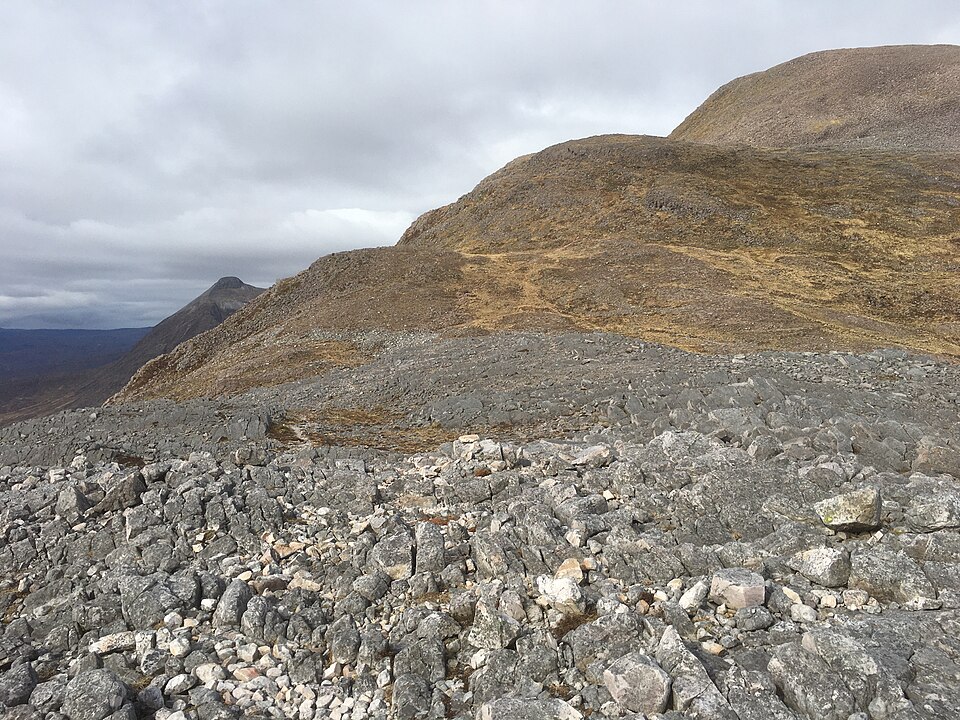
You can get away with a cheap rucksack and an old fleece for years, but footwear is the one thing on a Munro that will punish a bad decision all day, every step. Scottish hill ground is uniquely demanding — bog, wet rock, loose scree, tussock and steep grass, often all in the same outing — and the right footwear is the difference between a great day and a blistered, twisted-ankle ordeal. The eternal question is boots or trail shoes, and the honest answer is that it depends.
The case for walking boots
For most people climbing most Munros, a good pair of walking boots remains the sensible default. Boots give you ankle support on the rough, uneven, often pathless ground that defines Scottish hillwalking, where a single awkward placement on a hidden rock can turn an ankle. They keep your feet warmer and drier through bog and burn crossings, take a crampon for winter and early spring snow, and shrug off the relentless wet that defines the Highlands. If you are buying a single pair to do the whole round in all but full winter conditions, buy boots.
Look for a stiff-ish sole that does not twist easily in the hand, a deep aggressive tread for grip on wet grass and mud, and enough waterproofing to survive a day of bog. Leather boots last longest and mould to your feet; fabric boots are lighter and cheaper but wear out faster.
The case for trail shoes
Lightweight trail or "approach" shoes have a devoted following, and for good reason. They are dramatically lighter, which over a long day genuinely saves energy, and they are far more breathable on hot summer ascents. On dry, well-pathed hills — many of the easier Munros, and the increasingly good stalkers' paths across the Highlands — a grippy trail shoe is faster, cooler and perfectly capable.
The trade-offs are real, though. You sacrifice ankle support, your feet will get wet sooner and colder in standing water, and you cannot fit a crampon. Trail shoes are an excellent second pair for fit summer walkers on good ground — but a riskier choice as your only footwear for the wild, trackless, boggy hills of the far north-west.
Fit matters more than the badge
Whatever you choose, fit beats brand every time. A few rules that hold for boots and shoes alike:
- Try them on in the afternoon, when your feet have swollen slightly, wearing the socks you will actually walk in.
- Check the downhill test — kick the toe gently against the floor or a slope; your toes should not jam against the front. Munro descents are long, and bruised toenails come from boots that are a size too short.
- Heel lock is everything for blisters. Your heel should not lift as you walk. Lacing technique can help, but the boot has to hold the heel to begin with.
- Break them in before the big day. Wear new footwear on short local walks first. A first Munro is the worst possible place to discover a hotspot.
Make them last the round
Good footwear is an investment, and a little care stretches it a long way. Rinse off mud and grit after every walk — grit is what grinds away seams and linings. Dry boots slowly and naturally, never on a radiator or by a fire, which cracks leather and weakens glue. Re-proof leather and fabric regularly so the waterproofing keeps working, and replace worn-out laces and footbeds rather than the whole boot. Treated well, a quality pair of boots can carry you through a large chunk of all 282 Munros.
Whichever you walk in, the rest of the kit list still matters — the full Munro bagging packing list covers what goes in the pack once your feet are sorted. And as you wear that footwear in across the Highlands, keep a record of where it has taken you: the Munros app logs every summit, so by the time your boots are ready for retirement you will have a complete map of the round they helped you climb.
Related guides
- Complete Munro bagging packing list — everything else you carry
- Your first Munro walkthrough — planning a first hill from scratch
- Easiest Munros — good ground to test new footwear
Browse Related Hubs
Track your Munros
Log summits, get summit weather, and follow GPS routes for all 282 Munros. Free on the App Store.
Download the Free App