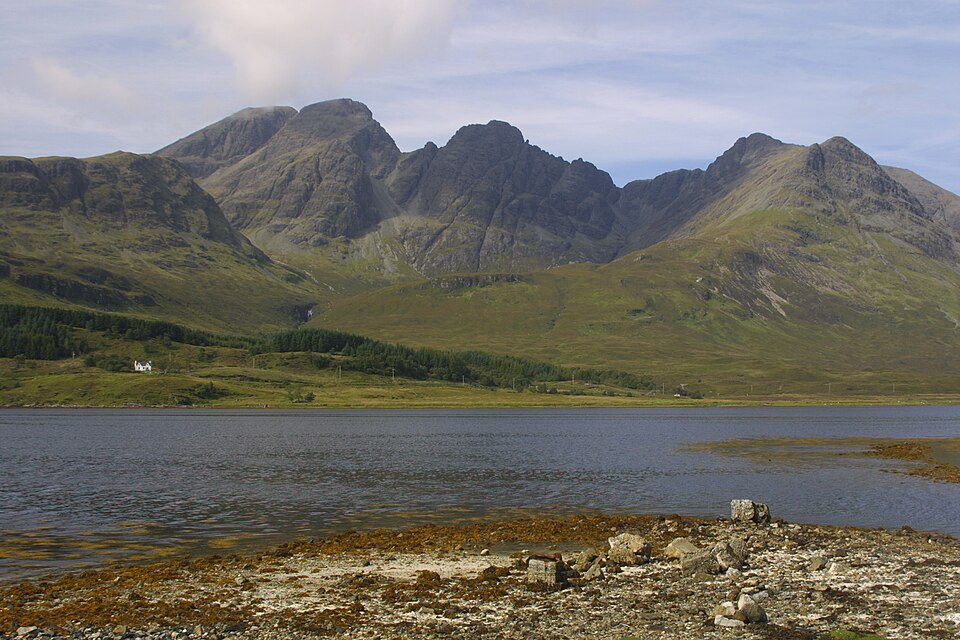
If you've spent your weekends ticking off Wainwrights in the Lake District and someone mentions Munros, it's natural to assume they're the same idea in a different postcode. They're not. Both are much-loved lists of British hills, both inspire a lifetime of happy weekends, and both have devoted followings — but in scale, seriousness and character they're genuinely different beasts. Here's how they compare, and what a seasoned fell-bagger should know before heading north.
Two lists, two very different definitions
The Munros are the 282 Scottish mountains over 3,000 feet (914.4m), first catalogued by Sir Hugh Munro in his 1891 Tables. The defining criterion is height: to be a Munro, a peak must top 3,000 feet and be considered a separate mountain rather than a subsidiary top. It's an objective, altitude-based list.
The Wainwrights are the 214 Lake District fells that Alfred Wainwright chose to include in his seven-volume Pictorial Guide to the Lakeland Fells, published between 1955 and 1966. Here's the key difference: there is no height rule. A fell is a Wainwright simply because Wainwright decided it belonged in his books. Some are barely 300m; the criterion is his judgement and affection, not altitude. One list is defined by a measurement, the other by one man's taste.
Scale and height
The numbers tell the story. Every Munro is over 914m. Ben Nevis, the highest, reaches 1,345m. By contrast, the highest Wainwright — Scafell Pike, which is also England's highest point — is 978m, which would place it comfortably mid-table among the Munros. Plenty of Wainwrights are gentle fells you can climb in an hour or two before lunch.
What this means in practice is that a typical Munro day involves considerably more ascent, more distance and more time on the hill than a typical Wainwright day. You'll often be climbing 900m or more from the glen floor, and a round trip of 5-7 hours is normal rather than exceptional. The fitness you built in the Lakes will serve you well, but the days are longer.
Terrain and seriousness
This is the difference that catches people out. The Lake District is compact, well-trodden and beautifully served by paths. You're rarely far from a road, a village, a café or another walker. The fells are steep and can absolutely be serious in bad weather, but the safety net is close at hand.
The Highlands are on a different scale of wildness. Many Munros sit deep in remote country where the nearest road may be hours away and you might not see another soul all day. Paths are often faint or absent, the ground is rougher, and there's no reassuring line of walkers ahead to follow. Weather arrives faster and hits harder, and mobile signal is patchy to non-existent. The seriousness comes not from technical difficulty — most Munros are walks — but from remoteness, scale and exposure to the elements.
Remoteness and the weather
A Wainwright-bagger is used to checking the forecast, but Scottish mountain weather operates in a higher gear. Summit conditions can be dramatically worse than the valley, systems roll in off the Atlantic with little warning, and a benign morning can become a serious afternoon. Cloud that reduces visibility to a few metres over a featureless plateau is a navigational challenge on a scale you rarely meet in the Lakes.
Remoteness amplifies all of it. If the weather turns on a Wainwright, you're usually not far from an easy escape. If it turns on a remote Munro, your escape might be a long walk out over pathless ground with no shelter. It's why understanding the forecast, covered in our guide to Scottish mountain weather, and being genuinely confident with a map and compass, as in our navigation skills guide, matter even more here than they do at home.
The culture of bagging
Both hobbies share the same joyful compulsion — the list, the tick, the quiet satisfaction of a completed round — and both have their traditions. Wainwright-bagging is intimate and richly documented, following the great man's own routes and his hand-drawn pages. Completing all 214 is a wonderful achievement earned across a manageable, well-mapped patch of England.
Munro-bagging is a bigger, wilder undertaking that can span decades and the length of the country, from the Southern Highlands to the far north-west and the Isle of Skye. Completing a round — becoming a "Munroist" — is registered, celebrated, and for many a life's project. If you enjoy the mental thrill of hill-lists more broadly, Scotland also has Corbetts, Grahams and Donalds; our guide to Munros vs Corbetts, Grahams and Donalds explains how they all fit together.
What a Wainwright-bagger should know first
The single most important adjustment is respect for scale and seriousness. Your fell-walking fitness and hill sense are a real head start — you already know how to read the sky, pace a climb and handle rough weather — but treat your first Munros as a step up, not a lateral move. Expect longer days, bigger ascents, wilder ground and weather that demands more of your kit and your judgement.
Practically, that means: pick a straightforward, well-pathed first Munro; make sure your navigation is genuinely solid before you rely on it in cloud; carry proper layers and a headtorch even in summer; and start early to leave a margin. Our guide to the best Munros for beginners is a good shortlist of forgiving first hills, and your first Munro walkthrough takes you through a day step by step.
When you're ready to start ticking, the Munros app maps all 282 peaks with routes, difficulty ratings and summit-specific weather — the natural companion for a bagger moving from a well-known patch of England to the wide, wild expanse of the Highlands.
So which is better? Neither, of course. They're different pleasures. The Lakes will always be home to the loveliest compact hill-walking in Britain, and the Munros offer something grander and more serious. Plenty of walkers cherish both — and there's no better preparation for a first Munro than a few hundred happy days on the fells.
Related guides
- Munros vs Corbetts, Grahams and Donalds — the other Scottish hill lists, explained
- Best Munros for Beginners — forgiving first hills for your Highland debut
- Your First Munro Walkthrough — a Munro day from car park to summit
Browse Related Hubs
Track your Munros
Log summits, get summit weather, and follow GPS routes for all 282 Munros. Free on the App Store.
Download the Free App