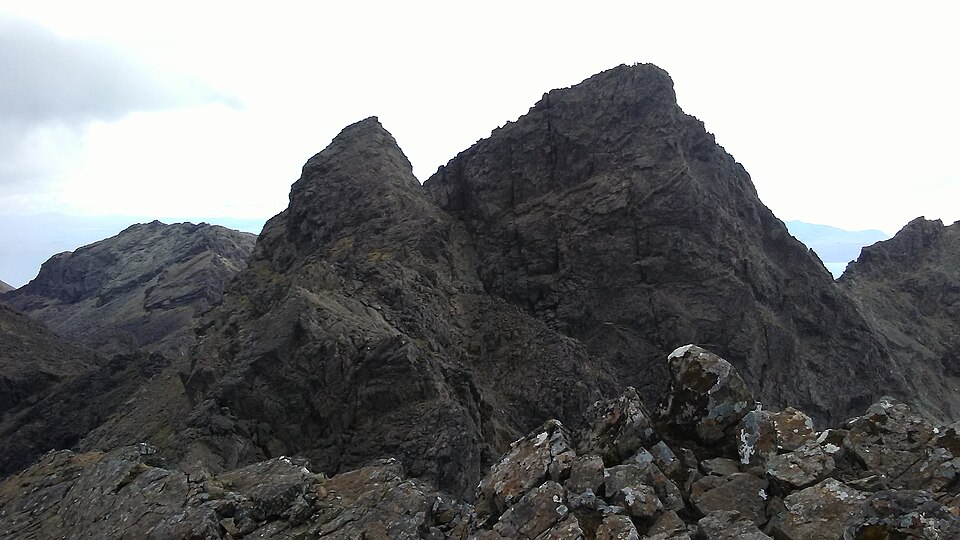
It's a fair question, and it deserves an honest answer rather than either reassurance or scaremongering. So here it is: Munros are not dangerous for a prepared, sensible walker on a good day — thousands of people climb them safely every weekend. But they are genuinely hazardous for the unprepared, and Scotland's mountains injure and occasionally kill people every year. The difference between those two outcomes is almost never luck. It's skills, judgement and respect.
The mountains themselves don't change. What changes is who walks into them and how ready they are. This guide walks through the real risks — not the imaginary ones — and exactly how each is managed.
Weather is the big one
If you take away a single thing, make it this: Scottish mountain weather is the primary hazard, and it is far more severe than the conditions at the car park. Summit temperatures can be 10-15°C colder than the glen, wind speeds routinely double or triple, and rain that's merely unpleasant at valley level becomes a genuine problem when you're wet, cold and hours from shelter. Hypothermia is possible in July.
The good news is that weather is also the most predictable and manageable risk. Mountain-specific forecasts tell you what you're walking into, and the honest response to a bad forecast is simply not to go, or to pick a lower, shorter objective. Learn to read a proper mountain forecast in our guide to understanding Scottish mountain weather, and see exactly which forecasts to trust in how to check Munro weather. Turning back because of the forecast isn't failure. It's the single most reliable safety decision you can make.
Navigation in cloud
On a clear day you can see the path, the summit and half of Scotland. In cloud you can see about ten metres, every slope looks the same, and the featureless plateaus of the Cairngorms or the Monadhliath become genuinely disorienting. Most people who get lost aren't reckless — they simply walked up in fine weather and got caught out when the cloud came down, with no way to find their route off.
The answer is to carry a map and compass and know how to use them, before you need them. A phone with offline mapping is a superb tool, but batteries die, screens crack and cold drains power fast, so it can never be your only method. Practise the core skills — taking a bearing, pacing, timing — on easy days when the stakes are low. Our guide to navigation skills for Scottish mountains covers everything you need to move confidently when the view disappears.
Winter changes everything
A Munro in August and the same Munro in February are, in effect, two entirely different mountains. Winter brings snow, ice, avalanche risk, brutal wind chill and daylight that runs out by mid-afternoon. Grassy summer paths become sheets of hard névé where a slip means an uncontrolled slide. Winter walking demands an ice axe, crampons and — crucially — the training to use them, plus the ability to read avalanche forecasts.
None of this means winter is off-limits. Winter days on the hill are among the finest you'll ever have. It means winter is a separate discipline you build up to, not something you stumble into because a summer route looked fine on the map. If you're heading out between roughly November and April, read the winter Munro bagging guide first and take the extra kit and caution seriously.
Exposure and scrambling
Most Munros are walks. A minority involve scrambling — using your hands on steep, exposed rock where a fall would be serious. The Aonach Eagach, the Cuillin of Skye, and sections of An Teallach are famous for good reason, and they are not beginner ground. The danger here is mismatch: getting onto terrain that's harder or more exposed than you expected or are comfortable with.
Manage it by knowing your route before you set off. Check the grade, read a description, and be honest about your own head for heights. There is no shame in choosing a straightforward hill, and plenty of the finest Munros involve nothing more technical than walking uphill. Build exposure tolerance gradually, and never feel pressured onto a ridge that frightens you.
River crossings and benightment
Two underrated risks catch people out. The first is river crossings. A burn that was a trickle on the way up can become an impassable torrent after a few hours of rain, and drownings do happen — often to people who pushed on rather than turning back or finding another line. Learn to assess and, where necessary, refuse a crossing in our guide to river crossings in the Scottish mountains.
The second is benightment — being caught out after dark. It's rarely dangerous in itself, but it turns a manageable day into a cold, disorienting ordeal and is behind a large share of mountain rescue callouts. The fix costs nothing: carry a headtorch on every walk, even a short summer one, start early, and know your realistic pace so you can judge whether you'll be down in daylight.
Phone signal, and going alone
Mobile coverage in the Highlands is patchy to non-existent, so never assume you can call for help. Register for the emergency SMS service (text 999) in advance, as a text sometimes gets through where a call won't, and always leave your route and expected return time with someone. If you don't come back, that message is what triggers a search.
Walking solo multiplies the consequences of any mistake — there's no one to help if you twist an ankle in a remote corrie. It's not forbidden, and many experienced walkers relish it, but it demands extra margin and discipline; our solo Munro bagging safety guide explains how to do it sensibly. Whether alone or in company, carry a small first aid kit and know the basics, covered in mountain first aid essentials.
Who actually gets into trouble
Look at the pattern behind most incidents and it's remarkably consistent. People get into difficulty because they underestimated the hill, wore the wrong footwear, had no way to navigate in cloud, ignored a bad forecast, or pressed on when the sensible call was to turn back. Almost none of these are bad luck. They're decisions — and decisions are things you control.
Which is the reassuring part. Do the prepared, unglamorous things — check the forecast, carry the right kit, learn to navigate, start early, know when to turn around — and you remove the overwhelming majority of the risk. Tools help too: the Munros app gives you route information, difficulty ratings and summit-specific weather so you can match the hill to the day and to your experience before you leave the house.
So, are Munros dangerous? Treated casually, yes. Treated with respect and a bit of skill, they're one of the safest great adventures available to anyone — a lifetime of wild, beautiful days out that carry real but entirely manageable risk. Prepare properly, stay humble about the weather, and the hills will look after you.
Related guides
- Understanding Scottish Mountain Weather — the single biggest risk, explained
- Navigation Skills for Scottish Mountains — how to stay found when the cloud comes down
- Solo Munro Bagging Safety Guide — managing the extra risks of walking alone
Browse Related Hubs
Track your Munros
Log summits, get summit weather, and follow GPS routes for all 282 Munros. Free on the App Store.
Download the Free App