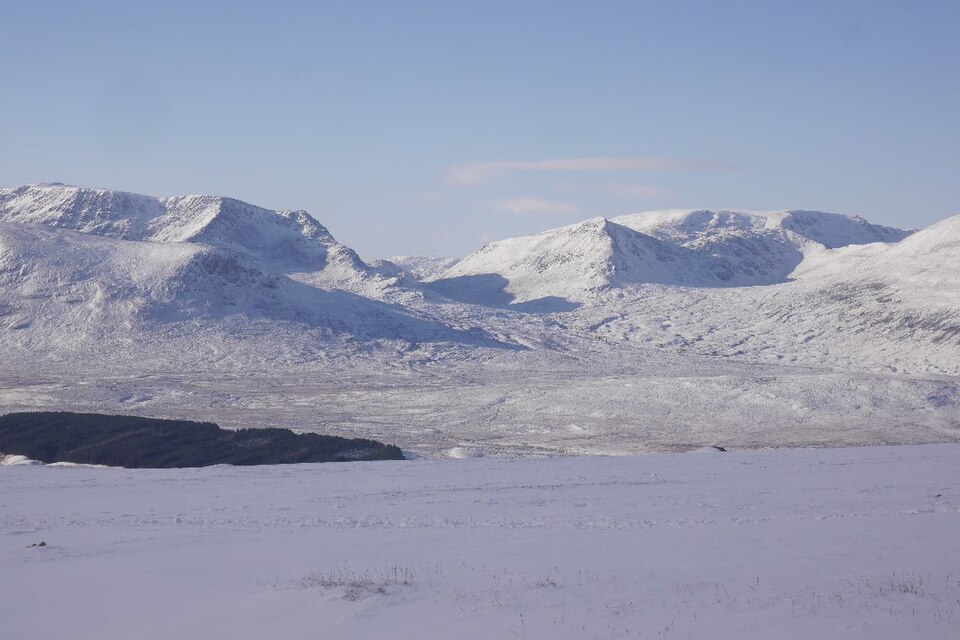
Dogs love mountains, and mountains love dogs. There's a particular joy in watching a collie bound across a summit ridge with the kind of enthusiasm that makes you briefly forget your burning quads. But taking a dog on a Munro requires planning beyond what you'd do for a human companion.
The Access Rules
The Scottish Outdoor Access Code allows dogs on open land, but with important conditions:
- Keep your dog under close control at all times — this means on a short lead or reliably obedient to voice commands
- Dogs must be on a lead near livestock — especially during lambing season (March–May)
- On lead on grouse moors during nesting season (April–August) — signs usually indicate this
- Pick up after your dog — even on a mountain. Carry bags and pack out waste
Bag it in the appOffline maps, routes & summit weather for all 282 Munros — free on the App Store.
Get the appBest Dog-Friendly Munros
The ideal dog Munro has: a well-maintained path, no scrambling sections requiring hands, no steep exposure, and no livestock on the approach. Here are some excellent choices:
- Ben Chonzie: Gentle gradient, Land Rover track most of the way, minimal exposure. Perhaps the best first Munro for dogs.
- Schiehallion: Good path, no scrambling until the very top. The boulder field near the summit can be tricky for smaller dogs but most manage fine.
- Ben Lomond: Wide, well-maintained path. Busy in summer which means your dog needs to be comfortable around other walkers and dogs.
- Cairn Gorm: Well-worn path from the car park. Open terrain with good visibility.
- Ben Lawers: Straightforward ridge walk. Note: Ben Lawers is NTS-managed and requests dogs on leads to protect rare alpine plants.
Munros to Avoid with Dogs
- The Inaccessible Pinnacle, Skye: Requires rock climbing. Unless your dog has climbing skills, this is a definite no.
- Aonach Eagach: Exposed knife-edge ridge with scrambling. Too dangerous for dogs (and many humans).
- Any Cuillin ridge peak: Steep, exposed gabbro rock that can damage dog paws and requires scrambling.
- Routes through lambing fields in spring: Even a well-behaved dog can panic sheep. Use alternative routes or leave the dog at home March–May.
What to Carry for Your Dog
- Water: At least 500ml extra. Dogs need more water than you'd think at altitude, especially on warm days. A collapsible bowl weighs nothing.
- Food: High-energy treats for the walk, plus their normal meal if it's a long day.
- Lead: Always carry one, even if your dog walks off-lead. You never know when you'll encounter livestock or wildlife.
- Poo bags: Non-negotiable. Pack out everything.
- Towel: For the car afterwards. Your seats will thank you.
- First aid: Dog-specific items — tweezers for thorns, antiseptic for paw cuts, tick remover.
Safety Considerations
- Paw health: Rocky terrain can cut paws. Check regularly, especially on sharp quartzite. Dog boots exist but most dogs hate them. Build up distance gradually.
- Heat: Dogs overheat faster than humans and can't shed heat efficiently. On warm days, take frequent breaks, ensure water access, and watch for excessive panting.
- Cold: Short-haired breeds can get cold quickly at altitude. Consider a dog coat for winter walks.
- Ticks: Check your dog thoroughly after every hill walk. Scottish ticks can transmit Lyme disease to dogs as well as humans.
- Fitness: Build up your dog's hillwalking fitness gradually, just as you would your own. A couch potato dog shouldn't start with a 12-hour day on Ben Nevis.
Munros in this article
Browse Related Hubs
Track your Munros
Log summits, get summit weather, and follow GPS routes for all 282 Munros. Free on the App Store.
Download the Free App