Ben Nevis
1,345m
Fort William
“Venomous Mountain”
1,345mHeight
21.6kmRound trip
7.5–9.8hWalk time
ChallengingDifficulty 3/5
Photo: Wikimedia Commons · CC BY-SA 3.0
“Venomous Mountain”
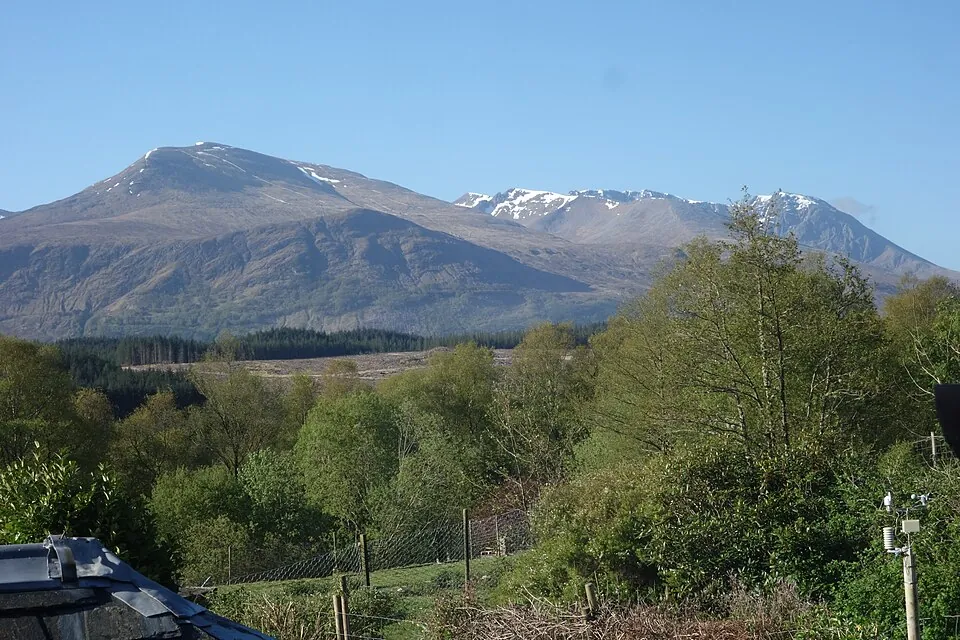
Ben Nevis is a 1,345m Munro in the Fort William region, its Gaelic name meaning “venomous mountain”. It stands 1st of the 282 Munros by height. The usual ascent — Ben Nevis via the Mountain Track — is a 21.6km round trip taking 7.5–9.8 hours, rated challenging (3/5).
There are 2 routes to the summit of Ben Nevis, ranging from 13.7km.
The ascent of Ben Nevis offers two contrasting experiences depending on your chosen route. The Mountain Track provides a…
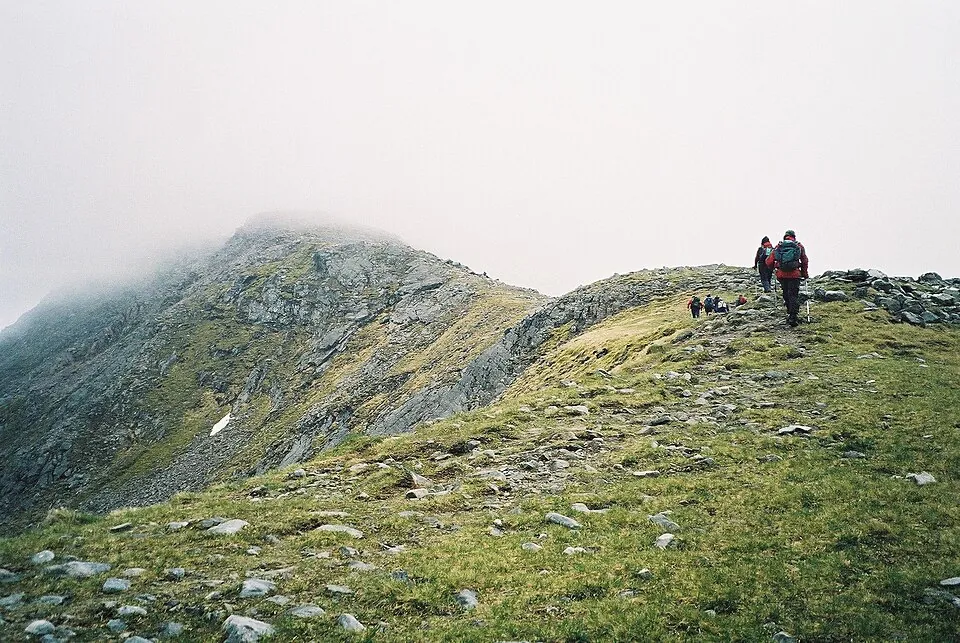
The ascent of Ben Nevis offers two contrasting experiences depending on your chosen route. The Mountain Track provides a steady, well-maintained path that zigzags relentlessly upward, with the gradient easing occasionally before continuing its persistent climb. You'll find the surface generally dry underfoot, though the rocky terrain becomes increasingly rugged as you gain altitude.
For experienced mountaineers, the CMD Arete route presents a far more serious undertaking. This spectacular ridge approach demands scrambling skills and a good head for heights, with exposed sections that require careful movement and absolute concentration in challenging weather.
Ben Nevis demands respect in all seasons, with weather conditions changing rapidly at Scotland's highest summit. Summer…
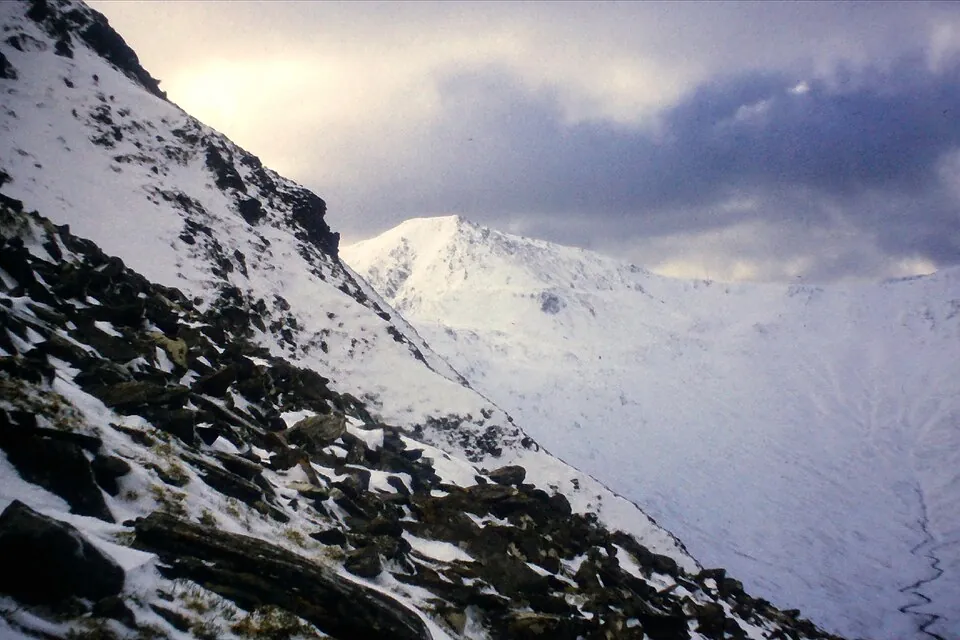
Ben Nevis demands respect in all seasons, with weather conditions changing rapidly at Scotland's highest summit. Summer months from May to September offer the longest daylight hours and the most stable weather windows, though you should never underestimate this mountain even in midsummer. The summit can experience arctic conditions year-round, with snow lingering well into late spring.
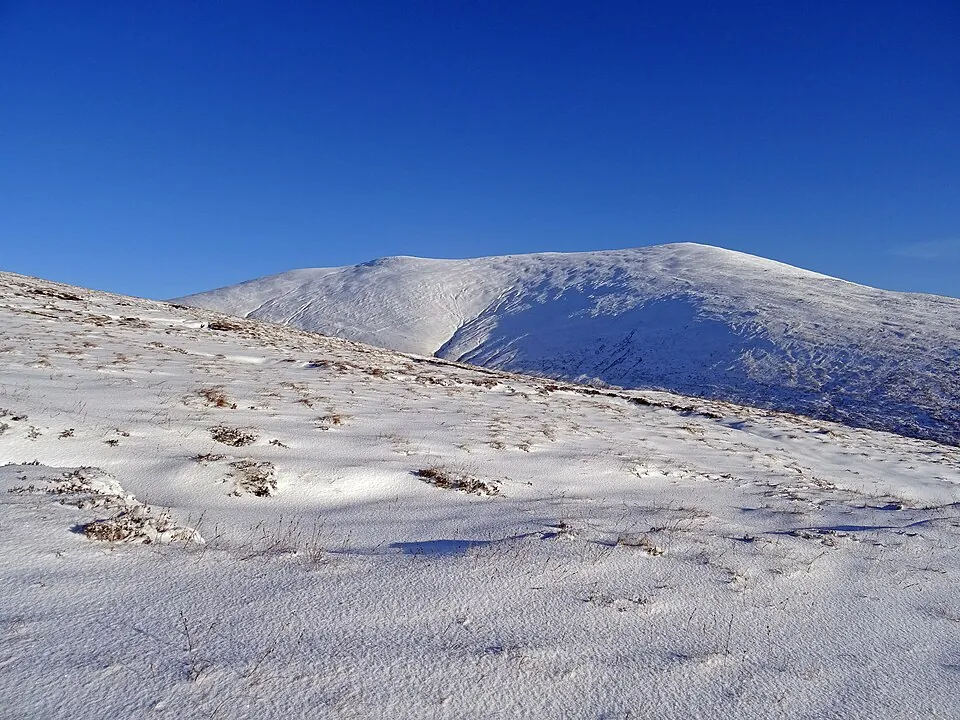
Winter climbing on Ben Nevis is a serious mountaineering expedition requiring ice axe, crampons, and winter skills. Visibility can deteriorate within minutes, and the plateau navigation becomes treacherous in cloud. Late spring and early autumn provide excellent conditions for experienced walkers, with fewer crowds than peak summer.
Access to Ben Nevis is straightforward, with the Mountain Track beginning at the Ben Nevis Visitor Centre, where you'll…
Access to Ben Nevis is straightforward, with the Mountain Track beginning at the Ben Nevis Visitor Centre, where you'll find ample parking, toilets, and information boards. This facility sits just off the A82 north of Fort William, clearly signposted and easy to locate. The car park can fill quickly during peak season, so an early start is advisable.
For the CMD Arete route, you'll start from the North Face Car Park, which provides a different approach to Britain's highest mountain. Fort William offers excellent public transport links by bus and train, making Ben Nevis accessible without a car if you're planning to use the Mountain Track.
The summit of Ben Nevis is a broad, boulder-strewn plateau that can be disorienting in mist. You'll find the substantial…
The summit of Ben Nevis is a broad, boulder-strewn plateau that can be disorienting in mist. You'll find the substantial summit cairn alongside the ruins of the old observatory, remnants of the Victorian weather station that once stood here. The true summit sits at the southern edge of the plateau, marked by the trig point and cairn.
On clear days, the views are simply breathtaking, stretching across the Western Highlands in every direction. The summit plateau offers little natural shelter from the elements, and the temperature can be dramatically lower than at sea level. The sheer cliffs of the north face drop away spectacularly, though you should approach the edge with extreme caution, especially in poor visibility.
The ascent of Ben Nevis takes you through distinct ecological zones, beginning in rough grassland and heather moorland…
The ascent of Ben Nevis takes you through distinct ecological zones, beginning in rough grassland and heather moorland at lower elevations. As you climb, you'll notice the vegetation becoming increasingly sparse, transitioning to montane heath dominated by mosses and lichens. The western location brings higher rainfall, supporting lush growth at lower altitudes.
Red deer frequent the lower slopes, particularly in early morning or evening. Above 900 metres, you enter the realm of ptarmigan and mountain hare, though spotting these superbly camouflaged creatures requires patience and sharp eyes. Golden eagles patrol these skies, and you might glimpse ravens performing aerial acrobatics around the summit crags.
Ben Nevis kills people every year, and you must take this mountain seriously regardless of the season or your chosen…
Ben Nevis kills people every year, and you must take this mountain seriously regardless of the season or your chosen route. Navigation skills are essential, as the summit plateau becomes a dangerous maze in mist, with cliffs dropping away unexpectedly on the northern side. Carry full navigation equipment including map, compass, and GPS, and know how to use them in zero visibility.
Pack warm, waterproof clothing even on seemingly pleasant days, as conditions at 1345 metres bear no resemblance to Fort William's weather. Phone signal is unreliable on much of the mountain. Carry sufficient water and emergency supplies. The CMD Arete route demands scrambling experience and should never be attempted by inexperienced walkers or in poor conditions.
Explore more peaks near Fort William.
Common questions about climbing Ben Nevis.
Ben Nevis stands at 1,345 metres (4,413 feet), making it the 1st tallest of all 282 Munros in Scotland.
The name Ben Nevis translates from Scottish Gaelic as “Venomous Mountain”.
Climbing Ben Nevis typically takes between 7.3 and 9.8 hours round trip. This varies with fitness, weather, and the route chosen — there are 2 routes to the summit.
There is dedicated parking at the standard starting point for the main route up Ben Nevis, in the Fort William area. The exact car park location, map pin and arrival guidance are in the free Munros app.
Ben Nevis is rated Very Hard (difficulty 5/5). Route difficulty varies across the 2 available routes.
The most popular route up Ben Nevis covers 13.7km, 7.3–9.5 hours round trip. There are 2 routes to the summit in total, ranging from Challenging to Very Hard difficulty.
Ben Nevis (difficulty 3/5 at 1,345m in the Fort William area) suits walkers with solid hillwalking experience. Expect rough or boggy ground on sections but no technical scrambling.
Ben Nevis is in the Fort William region of Scotland. Nearby Munros include Am Bodach, An Gearanach, Aonach Beag (Nevis Range).
Step-by-step directions, GPS navigation, exact parking and offline maps for Ben Nevis — free in the Munros app.
Free — Download on theApp StoreTrack all 282 Munros, plan routes, and log every summit. Join 2,400+ hillwalkers already using Munros.app.