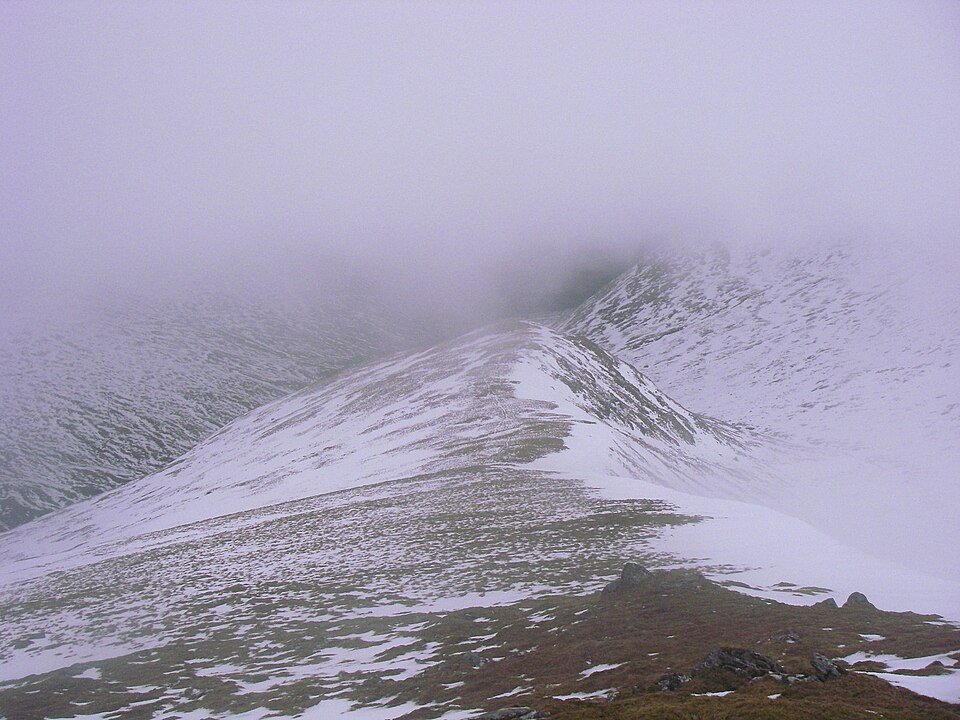
Sooner or later every Munro bagger hits a puzzling term: Munro Tops. You'll see a peak over 3,000 feet that isn't on the list of 282, or a ridge with two summits where only one "counts". The distinction confuses newcomers because both are over 3,000 feet — so what's the difference, and do you need the Tops to finish your round? Here's the clear answer.
Munros versus Munro Tops
The Scottish Mountaineering Club's tables divide all Scottish summits over 3,000 feet (914.4m) into two categories:
- Munros — summits considered separate mountains in their own right. There are 282 of them, and these are what you need for compleation.
- Munro Tops — summits over 3,000 feet that are subsidiary to a nearby Munro: a secondary high point on the same mountain mass rather than a distinct peak. There are currently 227 of these.
So the full tables list over 500 points above 3,000 feet, but only 282 carry the status of "Munro". A Top is a real summit at a real height — it simply isn't judged to be a mountain of its own.
Why the distinction exists — and why it's fuzzy
When Sir Hugh Munro compiled his original 1891 tables, he distinguished "separate mountains" from "tops" but never published a precise rule for the difference. Unlike the later Corbetts (which have a strict 500-foot re-ascent rule), Munro status has always rested partly on editorial judgement — a mix of drop (how far the ground falls between summits), distance, and the overall shape and character of the mountain. That subjectivity is exactly why the list has been revised over the years, with peaks occasionally promoted from Top to Munro or demoted the other way as surveys improve and opinion shifts. It's also why the total number of Munros has changed across editions.
Do the Tops count toward compleation?
No. To become a compleatist you need only the 282 Munros. The 227 Tops are entirely optional. Many baggers happily finish their round without ever chasing a single Top as a distinct objective — though in practice you'll climb plenty of them anyway, because they sit right on the ridges between Munros you're crossing.
That said, a dedicated minority go further and climb all the Munros and all the Tops — a much bigger undertaking that adds hundreds of summits and takes you onto some genuinely rough, rarely trodden ground. It's a connoisseur's challenge rather than the standard goal, and finishing it is a notable achievement in its own right.
Should you bother with the Tops?
For most people, the honest answer is: climb them when they're on your way, but don't build your round around them. A Top that lies along a ridge you're already traversing costs little extra and often gives a better viewpoint or a more complete outing. Making a special trip for a remote Top only makes sense once you've caught the completist bug. If you're just starting out, keep it simple — focus on the 282, and let the Tops take care of themselves. For how the wider family of hills fits together, see our guide to Munros, Corbetts, Grahams and Donalds.
Related guides
- Munros, Corbetts, Grahams and Donalds explained
- The complete Munro tick list — all 282 peaks
- Compleating your Munro round
- Munros tracking app — track all 282 and watch your round build
Browse Related Hubs
Track your Munros
Log summits, get summit weather, and follow GPS routes for all 282 Munros. Free on the App Store.
Download the Free App