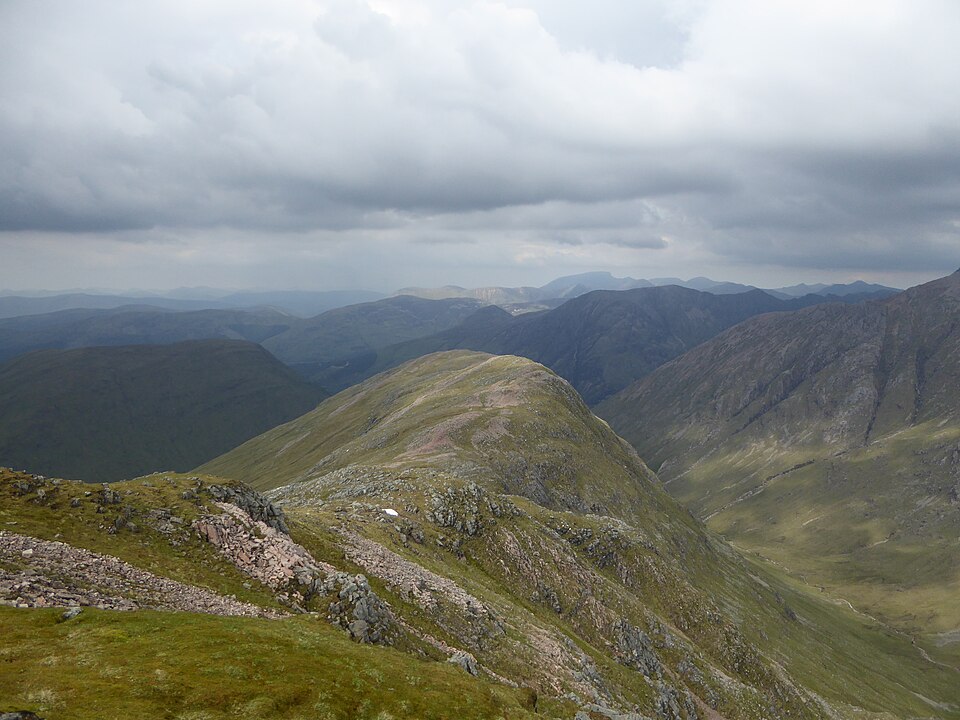
Somewhere between walking uphill and rock climbing sits scrambling: moving over steep, rocky ground where you use your hands as well as your feet. Some of the finest Munro days involve it — narrow ridges, airy arêtes, rock towers with a summit at the top. But "scramble" covers everything from a bit of easy hands-on rock to ground where a slip would be fatal, so it pays to understand what the grades actually mean before you commit.
Britain uses a three-grade scrambling system. The grades describe difficulty and seriousness, but they're not exact — conditions, your height, and the exact line you take all change how a scramble feels. Treat them as a guide, not a promise.
What the grades are trying to tell you
Two things run through all three grades: the technical difficulty of the moves, and the exposure — the drop beneath you and the consequence of a slip. A route can be technically easy but badly exposed, which is why grades and your own head for heights don't always line up. Beyond Grade 3 you're into graded rock climbing, where a rope and belaying aren't optional.
Grade 1: hands out of pockets
Grade 1 is the gateway. You'll use your hands for balance and to pull up the occasional step, but the difficulties are short and the route-finding is usually obvious — follow the crest. Most fit hillwalkers with a good head for heights can manage Grade 1 in dry, calm conditions without a rope.
The catch is that Grade 1 can still be seriously exposed. The classic example is the Aonach Eagach in Glen Coe, the notched ridge linking its two Munros. Technically it's rarely hard, but it's continuously narrow with big drops on both sides and no easy escape once you're committed — a genuinely serious Grade 1 that has caught out many people expecting a walk. The Carn Mor Dearg Arête, the elegant curving ridge that gives the finest approach to Ben Nevis, is another famous Grade 1: airy, exposed, and unforgettable in good conditions. Our roundup of the best Munro ridge walks covers more of these.
Grade 2: proper moves and real exposure
Grade 2 steps things up. The scrambling is longer and more sustained, the moves are harder and more definite, and the exposure is often greater. Route-finding gets trickier — the easiest line isn't always obvious, and wandering off it can land you on much harder or looser ground. Many competent scramblers still solo Grade 2 in dry conditions, but this is where a lot of people start wanting a rope for the crux moves, especially if anyone in the party is less sure.
The Forcan Ridge on The Saddle in Glen Shiel is a superb Grade 2: a sharp, exposed crest with several steps that need committing moves, and a real feeling of being up in the air. It's a big jump in seriousness from a standard hillwalk, and a good yardstick for whether you're ready for harder ground.
Grade 3: the top of scrambling, the edge of climbing
Grade 3 is at the boundary with rock climbing. The hardest moves are technical and sustained, the exposure is severe, and a slip is very likely to be fatal. Most people should use a rope on Grade 3, and you need to know how to use it properly — placing protection or belaying, not just carrying it as a comfort blanket.
Curved Ridge on Buachaille Etive Mor is the great Scottish example: a magnificent Grade 3 line up the front of the mountain to the summit of Stob Dearg, sustained and exposed, and a rite of passage for aspiring scramblers. It's a serious undertaking that deserves respect and dry rock — see our full guide to climbing Buachaille Etive Mor. The Cuillin of Skye take it further still: the Black Cuillin ridge is the most demanding mountaineering in Britain, with the Inaccessible Pinnacle requiring a roped climb to reach its summit, and route-finding that defeats people every year. Our guide to the Skye Cuillin is essential reading before you go anywhere near it — most people rightly hire a guide.
Rock and weather change everything
A scramble's grade assumes dry rock. Add water and the picture shifts completely. Wet gabbro on Skye keeps a surprising amount of grip, but wet schist and greasy, lichen-covered rock — common on many mainland ridges — can turn a comfortable Grade 1 into a nervous, sketchy affair. Cold, wind and cloud make it worse: numb hands grip badly, gusts unbalance you on a crest, and mist hides the line so you stray onto harder ground.
The honest rule is simple: drop your ambitions in poor conditions. A ridge that's a joy in dry, still weather can be a trap in rain and wind. There's no shame in turning back — the ridge will still be there next time.
Progressing safely from walking to scrambling
Build up in order, not in leaps:
- Get solid on the hill first. Be confident with navigation, fitness and Scottish weather before you add rock — see navigation skills for Scottish mountains.
- Start on easy Grade 1 in perfect conditions, and see how you feel about the exposure before pushing on.
- Learn ropework properly before you need it — ideally on a scrambling course with a qualified instructor, not by guessing on a ledge.
- Carry a helmet on anything with loose rock or other parties above; rockfall is a real hazard on popular routes.
- Know your escape options and set a turnaround, because retreat off a committing ridge can be harder than going on.
When you're researching a scramble, having the route and your live position to hand makes a real difference — in the Munros app you can study the ridgelines, download the map for offline use, and check where you are on the crest when the cloud drops and one rocky top looks much like the next.
Above all, be honest with yourself about exposure and consequence. The grade tells you how hard the moves are; only you can judge whether you're comfortable with a fatal drop under your boots.
Related guides
- Best Munro Ridge Walks — the classic Grade 1 crests to cut your teeth on.
- How to Climb Buachaille Etive Mor — Curved Ridge and the walkers' route in detail.
- Munro Bagging on the Skye Cuillin — Britain's hardest ridge, and how to approach it.
Browse Related Hubs
Track your Munros
Log summits, get summit weather, and follow GPS routes for all 282 Munros. Free on the App Store.
Download the Free App