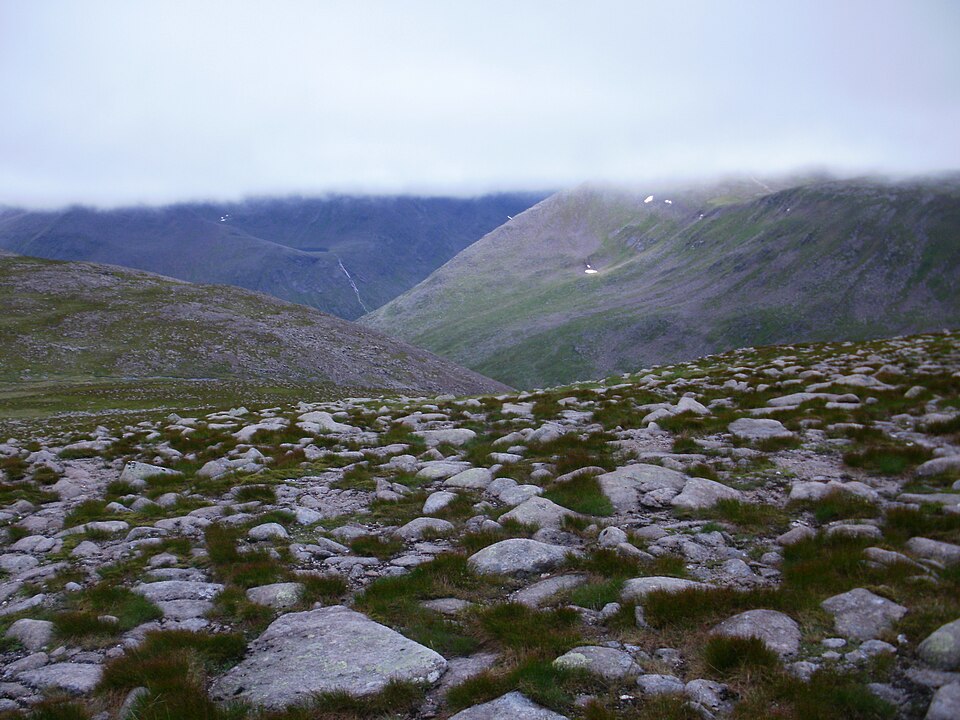
Scottish mountain weather changes by the hour and by the hundred metres, and dressing for it is less about owning expensive kit than understanding a simple principle: layering. Rather than one big warm coat, you carry several thinner layers you can add and remove as you climb, sweat, stop and descend. Get the system right and you stay comfortable from a warm car park to a freezing, windblown summit and back. Get it wrong and you are either soaked in your own sweat or dangerously cold.
The golden rule: no cotton
Before the layers, the material. Cotton — including jeans and ordinary t-shirts — absorbs water, stays wet, and draws heat from your body as it dries. On a hill where you will sweat on the climb and cool rapidly on the top, wet cotton against the skin is genuinely dangerous, which is the grain of truth in the old hillwalkers' phrase "cotton kills". Choose synthetic fabrics or merino wool throughout: both move moisture away from your skin and keep insulating even when damp.
Layer 1: the base layer
Against the skin goes a thin base layer whose job is to wick sweat away, not to keep you warm. A synthetic or merino long-sleeved top works year-round — merino has the advantage of resisting odour on multi-day trips. This is the layer you will often walk in on the ascent, with everything else in the pack.
Layer 2: the mid layer (insulation)
Over the base goes the insulating layer that traps warm air. A fleece is the classic, reliable choice; a light synthetic or down "puffy" jacket packs smaller and is warmer for its weight. On cold days you might carry two thinner insulating layers rather than one thick one, giving you finer control. A key habit: pull the warm layer on the moment you stop, before you start to cool, and take it off before you overheat on the move.
Layer 3: the shell (wind and rain)
On the outside goes a waterproof, windproof shell — jacket and, crucially, overtrousers — that blocks the rain and wind the other layers cannot. In Scotland this layer is not optional, whatever the forecast: wind chill on an exposed summit is fierce, and a shell that keeps the wind out is often more important than the warmth underneath. A good hood that fits over a hat and adjusts properly is worth more than a high price tag.
Don't forget the extremities
Most heat is lost from the parts people skimp on. Carry a warm hat and gloves on every hill day, even in summer — the summit is colder than you think — and consider a spare pair of gloves, since wet gloves are useless gloves. Good walking socks (wool or synthetic, never cotton) and the right footwear complete the system from the feet up.
Putting it together on the hill
The whole point of layering is constant small adjustments. Start the climb slightly cool, knowing you will warm up; strip down to the base layer as you sweat uphill; add the mid and shell layers the moment you stop or reach the windy tops. Carry every layer even on a fine day, because Scottish weather does not negotiate. The full Munro packing list sets the clothing alongside everything else you carry, and a quick check of the summit forecast tells you how many layers to expect to need. Log the day in the Munros app once you are warm, dry and back at the car.
Related guides
- Boots or trail shoes? — the footwear half of the system
- Complete Munro bagging packing list — clothing in context
- Understanding Scottish mountain weather — what you are dressing for
Browse Related Hubs
Track your Munros
Log summits, get summit weather, and follow GPS routes for all 282 Munros. Free on the App Store.
Download the Free App