Beinn Fhionnlaidh (Càrn Eige)
“File/Notch Cairn”
“File/Notch Cairn”
Beinn Fhionnlaidh (Càrn Eige) is a 1,005m Munro in the Loch Ness region, its Gaelic name meaning “file/notch cairn”. It stands 133rd of the 282 Munros by height. The usual ascent — Càrn Eige circuit from Loch Mullardoch — is a 36km round trip taking 10.7–13.9 hours, rated hard (4/5).
There is 1 route to the summit of Beinn Fhionnlaidh (Càrn Eige), covering 36km.
The ascent of Beinn Fhionnlaidh as part of the Càrn Eige circuit from Loch Mullardoch represents one of Scotland's most…
The ascent of Beinn Fhionnlaidh as part of the Càrn Eige circuit from Loch Mullardoch represents one of Scotland's most epic mountain expeditions. The 36-kilometre route takes 10.7 to 13.9 hours to complete, traversing some of the most remote terrain in the Scottish Highlands. The difficulty rating of 4 out of 5 reflects the serious nature of this undertaking, combining extreme distance with complex navigation across high mountain ridges far from any escape routes.
The approach to Beinn Fhionnlaidh involves many kilometres of walking before you even begin climbing, with a bog level of 3 out of 5 meaning wet ground in sections. As you progress around the circuit, you'll encounter varied terrain from stalker's paths through pathless mountain ridges to rocky summit areas. The sustained nature of this expedition tests stamina, navigation skills, and mental determination.
Beinn Fhionnlaidh sits within a vast wilderness area where self-sufficiency and sound judgment are essential for safe completion.
The Càrn Eige circuit including Beinn Fhionnlaidh is strictly a midsummer undertaking for most walkers, requiring the…
The Càrn Eige circuit including Beinn Fhionnlaidh is strictly a midsummer undertaking for most walkers, requiring the very longest days of June and early July. Even with maximum daylight, the 10.7 to 13.9-hour duration leaves little margin for delays or navigation errors. This is emphatically not a route to attempt when daylight is limited, and many experienced walkers choose to wild camp or use a bothy to split the expedition over two days.
The Loch Ness region experiences changeable Highland weather, with Atlantic systems bringing frequent rainfall and strong winds. Summer offers the most stable conditions, but you should still be prepared for poor weather even in July and August. Cloud can persist at altitude for days, making navigation particularly challenging across the featureless sections of the high plateau.
Winter ascents are extremely serious mountaineering expeditions combining technical winter climbing with the challenges of a very long approach through remote, potentially avalanche-prone terrain. Check forecasts meticulously and be prepared to postpone if conditions look unfavourable for Beinn Fhionnlaidh and the wider circuit.
The starting point for the Càrn Eige circuit is Glen Affric Road End, reached via a long single-track road from Cannich.…
The starting point for the Càrn Eige circuit is Glen Affric Road End, reached via a long single-track road from Cannich. The drive to the road end takes you through one of Scotland's most beautiful glens, with approximately 20 kilometres of single-track driving from Cannich itself. Parking at Glen Affric Road End is limited and can fill quickly during peak season, so arrive very early for this all-day expedition.
From Inverness, the journey to the starting point takes approximately 90 minutes to 2 hours, with the initial section on good roads before the single-track glen road. The remote nature of Glen Affric means no facilities are available beyond the road end, so you must be completely self-sufficient. Mobile phone signal is extremely limited in the glen and will be completely absent throughout the circuit including Beinn Fhionnlaidh.
The commitment required for this route begins even before you leave the car park; inform someone of your detailed plans and expected return time, and consider carrying an emergency beacon given the extreme remoteness.
At 1005 metres, the summit of Beinn Fhionnlaidh is a significant milestone within the larger Càrn Eige circuit. The…
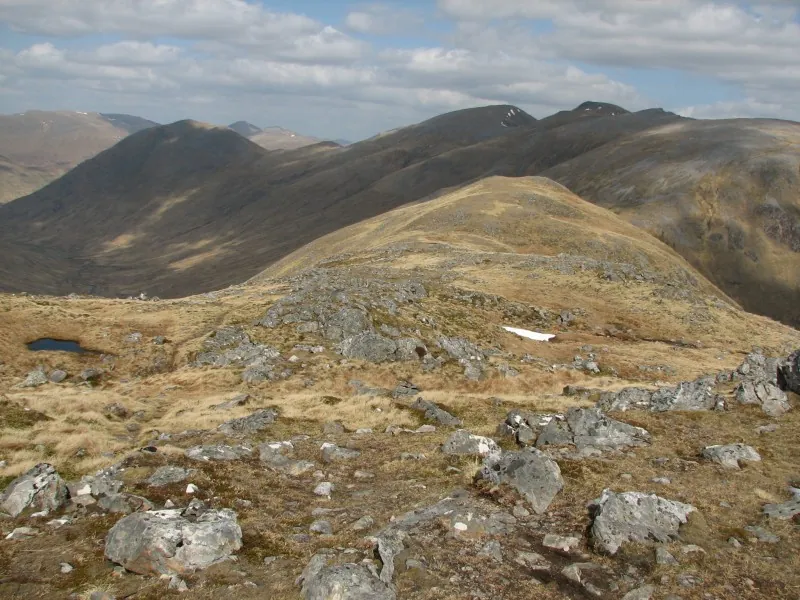
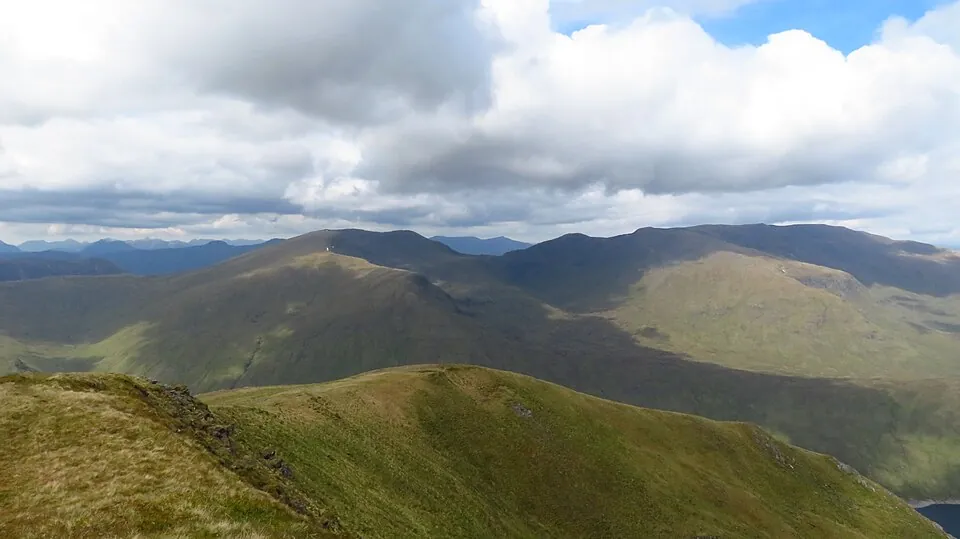
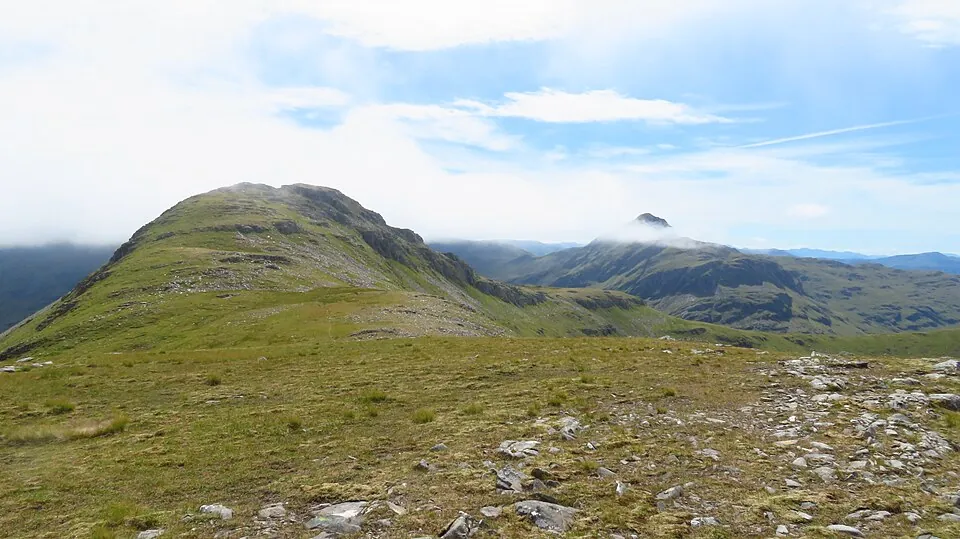
At 1005 metres, the summit of Beinn Fhionnlaidh is a significant milestone within the larger Càrn Eige circuit. The rocky top, marked by a cairn, provides sweeping views across the northern Highlands when weather permits. The sense of remoteness from this summit is profound, with vast expanses of mountain wilderness extending in every direction and hardly a sign of human presence visible.
Clear conditions reveal an exceptional panorama, though the summit of Beinn Fhionnlaidh is just one of several high peaks you'll traverse on the circuit. Natural shelter is limited on this exposed top, so you won't want to linger long in poor weather. The onward ridge towards the next summit is visible in good visibility, but in cloud the featureless terrain requires meticulous navigation.
The summit experience combines achievement with the knowledge that you still have many kilometres to travel before returning to the glen, requiring you to manage your energy and time carefully.
The Glen Affric approaches to Beinn Fhionnlaidh traverse ancient Caledonian pinewood remnants in the lower sections,…
The Glen Affric approaches to Beinn Fhionnlaidh traverse ancient Caledonian pinewood remnants in the lower sections, rare habitats supporting species like red squirrels and Scottish crossbills. As you climb beyond the treeline, heather moorland and blanket bog dominate, with red deer abundant throughout the area. The remoteness and size of this wilderness support healthy deer populations largely undisturbed by human activity.
Above 900 metres on Beinn Fhionnlaidh, you enter true montane habitat where ptarmigan survive in their specialized alpine niche. The high plateau areas support mountain hare populations, their coats turning white in winter for camouflage against snow. Golden eagles hunt across these vast glens, and the remote nature of the Càrn Eige circuit makes this excellent territory for spotting these magnificent raptors.
The eastern location creates slightly drier conditions than western mountains, with vegetation patterns reflecting this continental influence. In summer, dotterel may be present on the highest plateaux, these rare waders favouring the most remote mountain tops. The sheer scale of wilderness surrounding Beinn Fhionnlaidh creates one of Scotland's most important areas for mountain wildlife.
The Càrn Eige circuit including Beinn Fhionnlaidh is one of Scotland's most demanding single-day mountain expeditions,…
The Càrn Eige circuit including Beinn Fhionnlaidh is one of Scotland's most demanding single-day mountain expeditions, suitable only for very experienced hillwalkers with proven navigation skills and exceptional fitness. The 36-kilometre distance and 10.7 to 13.9-hour duration require meticulous planning and honest assessment of your capabilities.
Many walkers choose to bivvy or use Alltbeithe youth hostel to split the route over two days, significantly reducing the daily demands.
Carry comprehensive emergency equipment including bivvy bag, head torch with spare batteries, substantial extra food, water purification capability, and full first aid kit. The remoteness means rescue could take many hours even in summer, making self-sufficiency absolutely critical. Navigation equipment including map, compass, GPS device, and absolute competence in their use is essential for safe completion, particularly across the featureless high plateau sections.
The bog level of 3 out of 5 requires waterproof boots and gaiters throughout. Pack far more food and water than you think you'll need, as the sustained effort over 11+ hours depletes reserves rapidly. Weather on Beinn Fhionnlaidh and the circuit can be severe even in summer, with exposure to wind a particular concern on the high ridges. Mobile signal is completely absent, so leave detailed plans with a responsible person and consider carrying an emergency beacon.
Start extremely early, ideally at first light, to maximize available daylight. Be prepared to turn back if weather deteriorates, you fall behind schedule, or fatigue becomes a safety concern. This is not a route for developing your skills; you should already be a highly experienced and competent mountain navigator before attempting the Càrn Eige circuit.
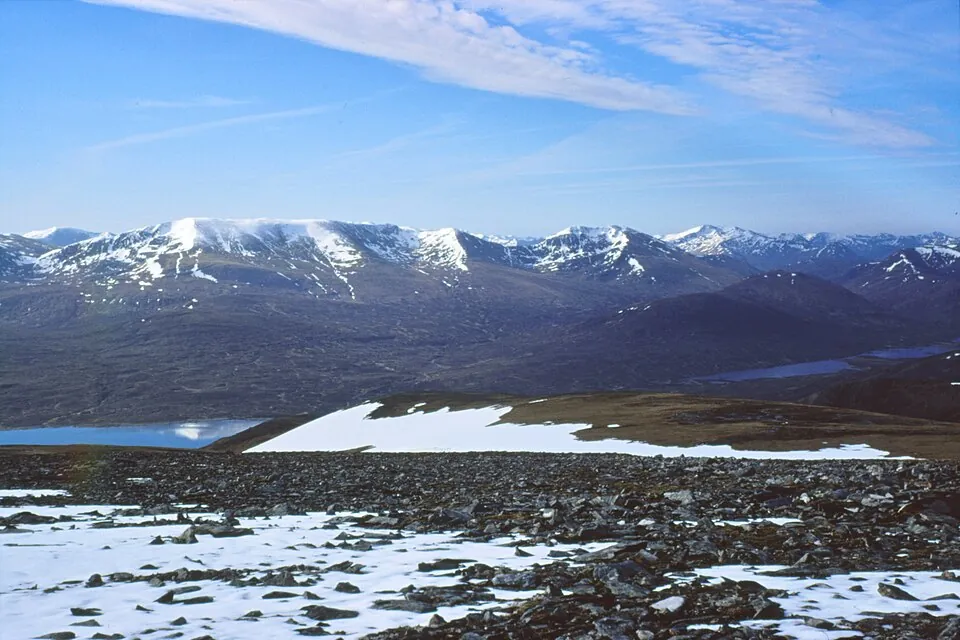
Explore more peaks near Loch Ness.
Common questions about climbing Beinn Fhionnlaidh (Càrn Eige).
Beinn Fhionnlaidh (Càrn Eige) stands at 1,005 metres (3,297 feet), making it the 133rd tallest of all 282 Munros in Scotland.
The name Beinn Fhionnlaidh (Càrn Eige) translates from Scottish Gaelic as “File/Notch Cairn”.
Climbing Beinn Fhionnlaidh (Càrn Eige) typically takes between 10.7 and 13.9 hours round trip. This varies with fitness, weather, and the route chosen.
There is dedicated parking at the standard starting point for the main route up Beinn Fhionnlaidh (Càrn Eige), in the Loch Ness area. The exact car park location, map pin and arrival guidance are in the free Munros app.
Beinn Fhionnlaidh (Càrn Eige) is rated Hard (difficulty 4/5).
The most popular route up Beinn Fhionnlaidh (Càrn Eige) covers 36km, 10.7–13.9 hours round trip.
Beinn Fhionnlaidh (Càrn Eige) (difficulty 4/5 at 1,005m) is best suited to experienced hillwalkers in the Loch Ness area. Expect sustained steep terrain and the need for confident navigation in poor visibility.
Beinn Fhionnlaidh (Càrn Eige) is in the Loch Ness region of Scotland. Nearby Munros include An Riabhachan, An Socach (Affric), An Socach (Mullardoch).
Step-by-step directions, GPS navigation, exact parking and offline maps for Beinn Fhionnlaidh (Càrn Eige) — free in the Munros app.
Free — Download on theApp StoreTrack all 282 Munros, plan routes, and log every summit. Join 2,400+ hillwalkers already using Munros.app.