Cona' Mheall
“Adjoining Hill”
“Adjoining Hill”
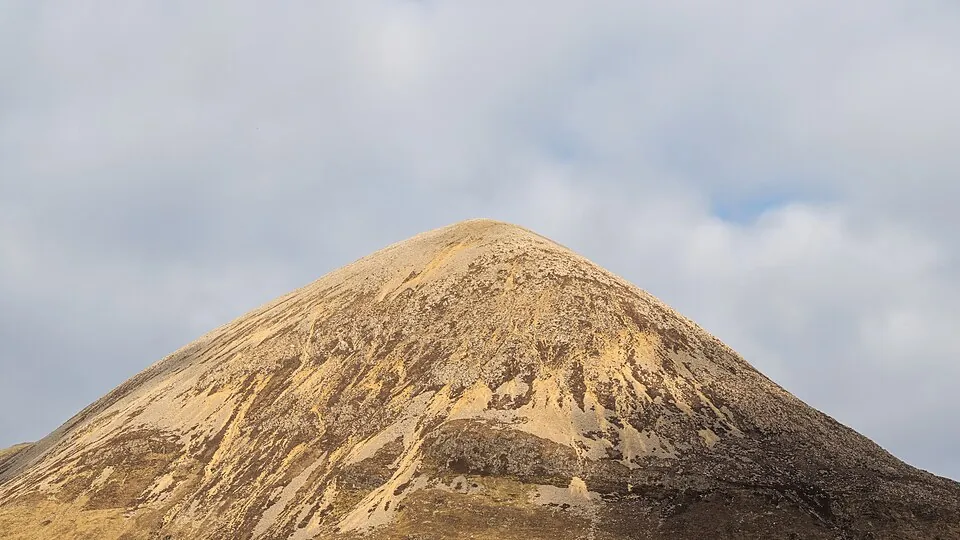
Cona' Mheall is a 978m Munro in the Ullapool region, its Gaelic name meaning “adjoining hill”. It stands 179th of the 282 Munros by height. The usual ascent — Beinn Dearg group from Inverlael — is a 26.1km round trip taking 9.1–11.8 hours, rated hard (4/5).
There is 1 route to the summit of Cona' Mheall, covering 26.1km.
The ascent of Cona' Mheall as part of the Beinn Dearg group from Inverlael is a serious and demanding expedition across…
The ascent of Cona' Mheall as part of the Beinn Dearg group from Inverlael is a serious and demanding expedition across remote Highland terrain. This 26.1-kilometre route requires nine to twelve hours of sustained effort, testing physical endurance and navigation skills across challenging ground. From Inverlael Car Park, you'll venture deep into the mountains north of Ullapool, following paths initially before the route becomes increasingly pathless and wet.
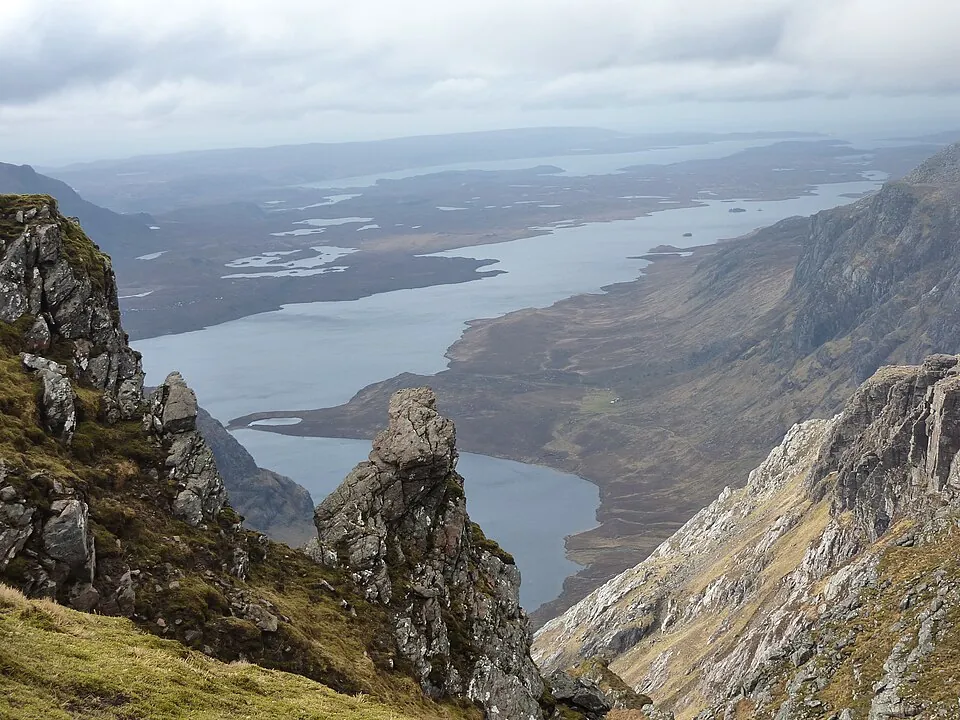
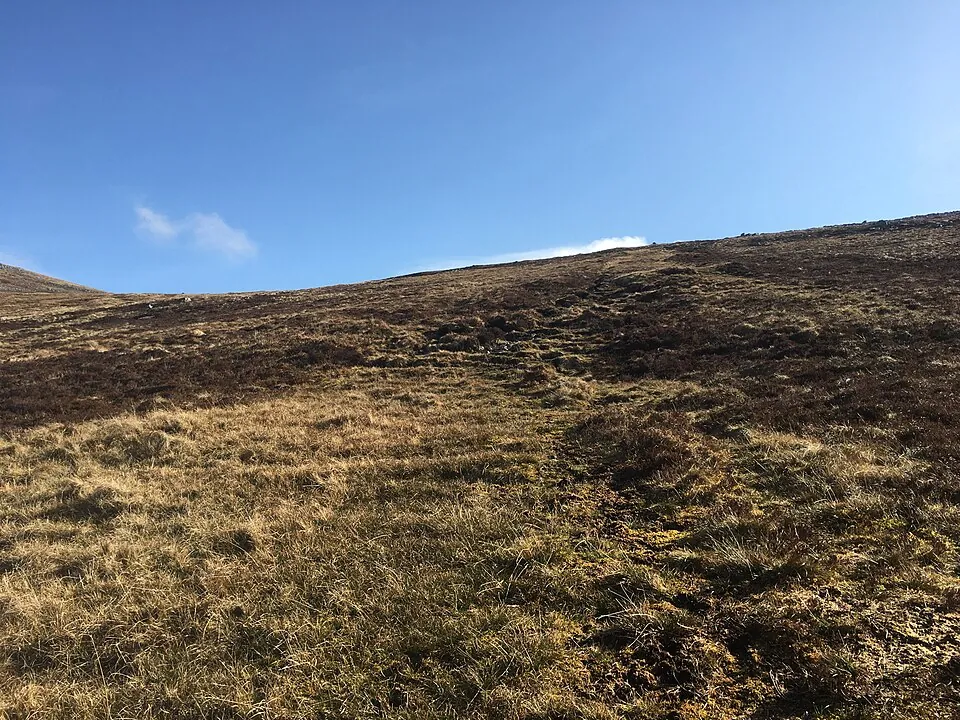
The terrain is characteristically Highland: wet, boggy, and complex, with the 4/5 bog level meaning you'll be navigating saturated ground for much of the day. Cona' Mheall at 978 metres sits within this wild landscape, its name meaning 'Adjoining Hill'. The gradient varies throughout the circuit, with steep sections interspersed with gentler terrain across the broad connecting ridges.
Path quality is variable—some sections follow stalkers' tracks while others demand careful navigation across tussocky, waterlogged moorland. This is remote hillwalking where the distance, terrain, and commitment combine to create a genuinely serious mountain day. The sense of wilderness here is profound, with few signs of human presence beyond the initial kilometres.
Cona' Mheall demands careful timing given the Beinn Dearg circuit's length and the notoriously wet terrain. Summer…
Cona' Mheall demands careful timing given the Beinn Dearg circuit's length and the notoriously wet terrain. Summer offers the longest daylight hours—essential for a route that can take twelve hours to complete—though you should start very early even in midsummer to ensure finishing in daylight. The northern latitude and west coast influence mean this region receives substantial rainfall, with the already high bog levels becoming even worse during or after wet periods.
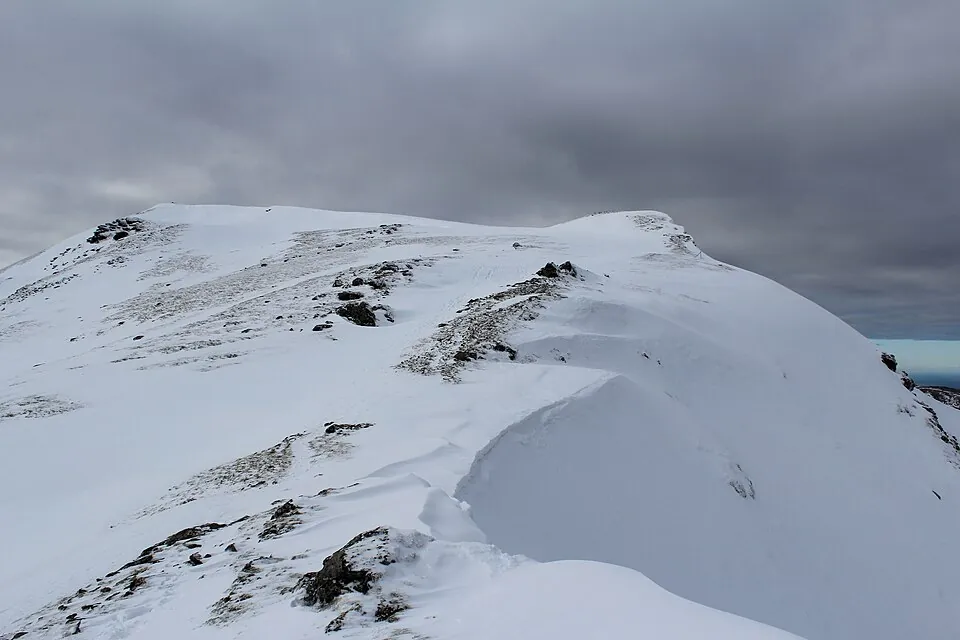
Late spring through early autumn provides the most reliable weather windows, though 'reliable' is relative in the northwest Highlands where conditions can change rapidly. Winter transforms Cona' Mheall into an exceptionally serious expedition requiring winter mountaineering skills, with the combination of extreme remoteness, shortened daylight, and harsh conditions making it suitable only for elite mountaineers.
The circuit's exposure means wind is a constant factor, while cloud and mist can persist for days in this region. Navigation across the complex, pathless terrain becomes extremely challenging in poor visibility. Plan this expedition only when a multi-day high-pressure system is established, and be prepared to postpone if conditions are marginal.
Access to Cona' Mheall begins at Inverlael Car Park, located off the A835 approximately 10 kilometres south of Ullapool.…
Access to Cona' Mheall begins at Inverlael Car Park, located off the A835 approximately 10 kilometres south of Ullapool. The car park is well-signposted and offers reasonable facilities with space for numerous vehicles and basic toilets. From Inverness, the drive north through Garve and past Loch Glascarnoch takes about an hour, following the main route to Ullapool.
The location is straightforward to reach, though the remote surroundings are immediately apparent from the parking area. Ullapool is the nearest substantial town, offering all necessary services and supplies, so stock up before heading to the trailhead. Mobile signal is generally good at Inverlael but becomes patchy as you gain height and non-existent deep in the mountains around Cona' Mheall.
The parking area serves multiple routes into the surrounding peaks, so you may encounter other hillwalkers, wild campers, and climbers. The dramatic landscape surrounding Inverlael provides a fitting introduction to the serious terrain ahead, with the Beinn Dearg massif rising impressively to the east.
The summit of Cona' Mheall at 978 metres provides a hard-earned viewpoint during the demanding Beinn Dearg circuit. The…
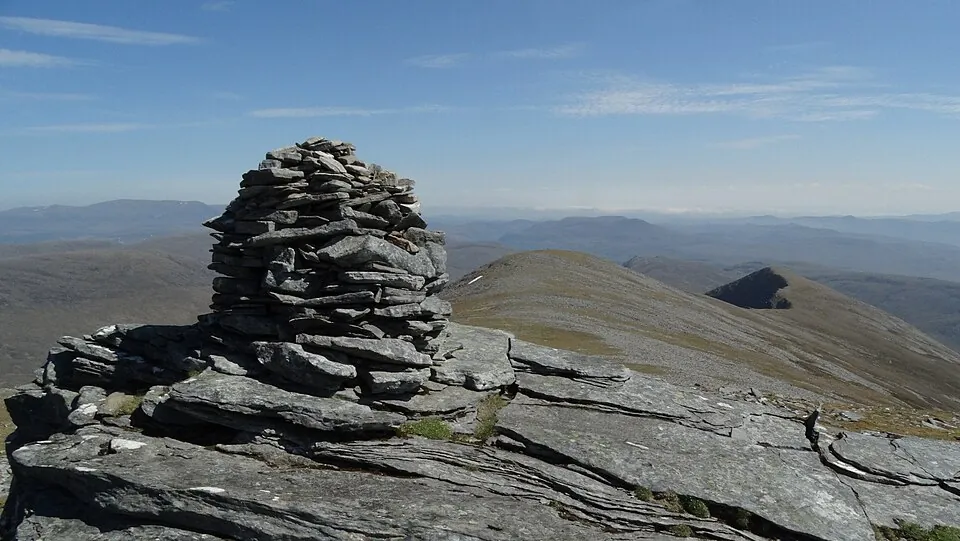
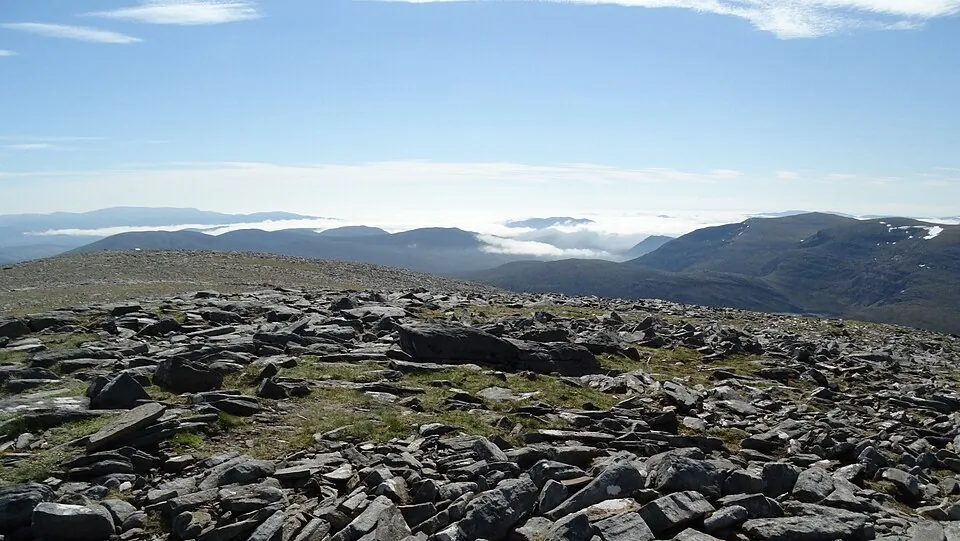
The summit of Cona' Mheall at 978 metres provides a hard-earned viewpoint during the demanding Beinn Dearg circuit. The top is characteristically rounded with a cairn marking the highest point, though the exposed position offers limited shelter from the winds that frequently sweep these northern peaks. The terrain consists of stones, gravel, and hardy grasses, with the vegetation cropped short by altitude and grazing.
Looking around from Cona' Mheall, you'll appreciate the wild character of this corner of the northwest Highlands: wave after wave of mountains extending to distant horizons with barely a road or building visible. The views extend across to the Fannaichs to the south and the wild country toward Ben More Assynt to the north, while the immediate surroundings showcase the complex terrain of the Beinn Dearg group.
The summit feels genuinely remote—this circuit sees far fewer ascents than more accessible ranges—making Cona' Mheall special for those who make the commitment. The name 'Adjoining Hill' barely captures the wild, dramatic nature of this magnificent peak. Don't linger too long given the many kilometres still to cover and the challenging terrain ahead.
Cona' Mheall and the surrounding Beinn Dearg wilderness support rich Highland ecosystems across diverse habitats. Red…
Cona' Mheall and the surrounding Beinn Dearg wilderness support rich Highland ecosystems across diverse habitats. Red deer are abundant in these northern hills, often in substantial herds, and you'll certainly encounter them throughout your circuit. The area's remoteness means they're less habituated to people than in more popular areas.
Golden eagles patrol these mountains regularly, with several breeding territories in the surrounding glens and corries—the combination of remoteness and abundant prey makes this excellent eagle habitat. The extensive bogs host unique plant communities including sphagnum mosses in multiple species, cotton grass, and insectivorous sundews and butterworts that thrive in the saturated, nutrient-poor conditions.
At higher elevations around Cona' Mheall, the vegetation transitions to montane heath with hardy grasses, sedges, and dwarf shrubs adapted to exposure and thin soils. Ptarmigan inhabit the summit ridges above 900 metres, perfectly camouflaged against the rocks in summer and snow in winter. Mountain hares browse across the hillsides, their seasonal coat changes providing camouflage year-round.
The wet northwest climate supports lush moss growth and rich lichen communities, with the rocks painted in diverse colours.
The Beinn Dearg circuit including Cona' Mheall is among the more serious single-day hillwalking expeditions in Scotland…
The Beinn Dearg circuit including Cona' Mheall is among the more serious single-day hillwalking expeditions in Scotland and demands thorough preparation. Navigation skills must be highly developed—the complex terrain, pathless sections, and multiple summits require constant attention, while poor visibility could make route-finding extremely challenging. Carry comprehensive navigation equipment including map, compass, and ideally a GPS device with the route pre-loaded. The 26.
1-kilometre distance means substantial food and water requirements; while streams are abundant, carry purification equipment and drink frequently to maintain energy. Waterproof boots and gaiters are absolutely essential given the 4/5 bog level throughout much of the route—expect to be walking through saturated ground regularly. Start very early to ensure completion in daylight, as nine to twelve hours of walking can push close to sunset even in summer.
Mobile signal is non-existent deep in the circuit, so inform someone of your detailed route and expected return time. Consider carrying a satellite communication device given the extreme remoteness. Be prepared to turn back if conditions deteriorate or you fall behind schedule—benightment in this remote terrain would be a serious situation. This expedition is only for experienced, fit hillwalkers prepared for serious Highland conditions.
Explore more peaks near Ullapool.
Common questions about climbing Cona' Mheall.
Cona' Mheall stands at 978 metres (3,209 feet), making it the 179th tallest of all 282 Munros in Scotland.
The name Cona' Mheall translates from Scottish Gaelic as “Adjoining Hill”.
Climbing Cona' Mheall typically takes between 9.1 and 11.8 hours round trip. This varies with fitness, weather, and the route chosen.
There is dedicated parking at the standard starting point for the main route up Cona' Mheall, in the Ullapool area. The exact car park location, map pin and arrival guidance are in the free Munros app.
Cona' Mheall is rated Hard (difficulty 4/5).
The most popular route up Cona' Mheall covers 26.1km, 9.1–11.8 hours round trip.
Cona' Mheall (difficulty 4/5 at 978m) is best suited to experienced hillwalkers in the Ullapool area. Expect sustained steep terrain and the need for confident navigation in poor visibility.
Cona' Mheall is in the Ullapool region of Scotland. Nearby Munros include A' Chailleach (Fannichs), A' Mhaighdean, Am Faochagach.
Step-by-step directions, GPS navigation, exact parking and offline maps for Cona' Mheall — free in the Munros app.
Free — Download on theApp StoreTrack all 282 Munros, plan routes, and log every summit. Join 2,400+ hillwalkers already using Munros.app.