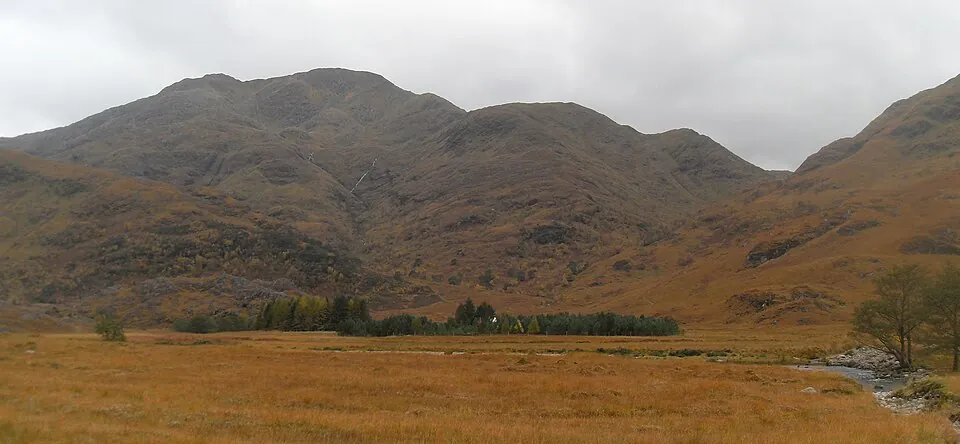
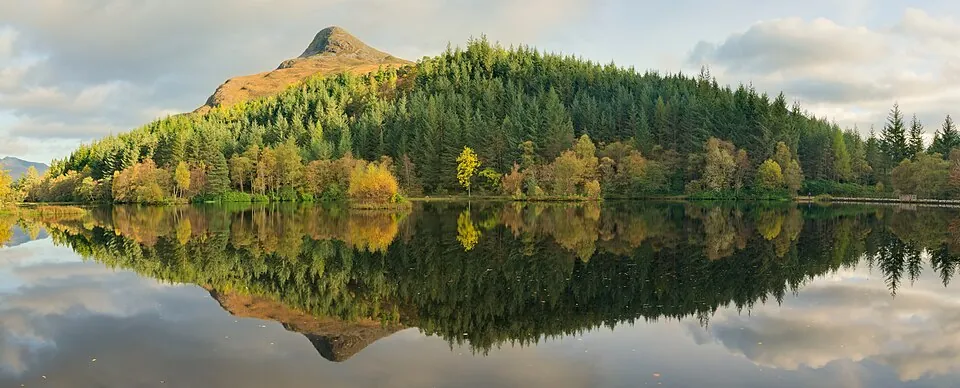
Meall Buidhe (Knoydart)
“Yellow Hill”
“Yellow Hill”
Meall Buidhe (Knoydart) is a 946m Munro in the Knoydart region, its Gaelic name meaning “yellow hill”. It stands 223rd of the 282 Munros by height. The usual ascent — Meall Buidhe and Luinne Bheinn from Inverie — is a 26.8km round trip taking 10.6–13.8 hours, rated very hard (5/5).
There are 2 routes to the summit of Meall Buidhe (Knoydart), ranging from 20km.
Meall Buidhe rises to 946 metres in the remote Knoydart peninsula, sharing its 'Yellow Hill' name with other Scottish…
Meall Buidhe rises to 946 metres in the remote Knoydart peninsula, sharing its 'Yellow Hill' name with other Scottish peaks but offering a uniquely challenging experience. The routes from Inverie cover 20 to 27 kilometres over 11 to 14 hours, with maximum difficulty rating of 5 out of 5 and severe bog levels of 4 out of 5.
The ascent of Meall Buidhe represents one of the most serious undertakings in Scottish hillwalking, demanding both physical endurance and extensive mountain experience. Knoydart's reputation as 'Britain's last wilderness' is well-deserved, and Meall Buidhe sits at the heart of this remote region. The terrain is rough, pathless, and extremely boggy, with tussocky moorland, wet peat, and complex navigation required throughout.
Meall Buidhe is commonly climbed in combination with neighbouring Luinne Bheinn, creating an exhausting but spectacular circuit. The approaches involve long, energy-sapping slogs through wet ground before the mountain proper is even reached, and once committed, there are no easy escape routes from Meall Buidhe. The remoteness and seriousness cannot be overstated—this is expedition-level hillwalking.
Given the extreme length and difficulty, Meall Buidhe should only be attempted during the longest days of summer, from…
Given the extreme length and difficulty, Meall Buidhe should only be attempted during the longest days of summer, from late May through early September, when you have maximum daylight for the 11 to 14-hour requirement. Even in midsummer, you'll need to start at first light to complete Meall Buidhe safely before darkness.
Winter attempts are the preserve of only the most experienced mountaineers, as the already serious challenges become exponentially harder with short days and harsh conditions. The western location in Knoydart means Meall Buidhe receives the full force of Atlantic weather systems, with frequent heavy rainfall and rapidly changing conditions.
The severe bog levels mean ground conditions are almost always wet, though summer offers the firmest conditions you're likely to encounter on Meall Buidhe. Cloud frequently blankets the peaks, and wind can be fierce on the exposed ridges. The remoteness of Knoydart means that if weather deteriorates significantly, you're facing a long, serious retreat with limited shelter.
Check the extended mountain forecast carefully and be prepared to postpone if conditions are anything less than favourable for Meall Buidhe—this is no place to be caught out.
Access to Meall Buidhe begins at Inverie Pier, and reaching the trailhead is an adventure in itself. There is no road…
Access to Meall Buidhe begins at Inverie Pier, and reaching the trailhead is an adventure in itself. There is no road access to Inverie—you must either take the ferry from Mallaig, which runs daily in season, or undertake a long walk-in from alternative starting points. The ferry journey takes approximately 40 minutes and provides spectacular views, but you're dependent on the schedule, and rough seas can cause cancellations.
This means your Meall Buidhe attempt must be planned around ferry times, adding complexity to an already serious day. Inverie has limited accommodation and facilities including a pub and small shop, and many people stay overnight to allow an early start on Meall Buidhe. The ferry from Mallaig typically departs mid-morning, meaning you'll likely need to stay in Knoydart to attempt Meall Buidhe, as a day trip is impractical given the walking times.
Mobile phone signal in Knoydart is extremely limited and non-existent on the hills. The very remoteness that makes Knoydart and Meall Buidhe so special also means that rescue would be extremely difficult and time-consuming, emphasising the absolute necessity of self-sufficiency and sound judgement.
The summit of Meall Buidhe at 946 metres sits at the heart of the Knoydart wilderness, offering a profound sense of…
The summit of Meall Buidhe at 946 metres sits at the heart of the Knoydart wilderness, offering a profound sense of remoteness and achievement. The cairn marks one of the most hard-won summits in Scottish hillwalking, reached after hours of challenging approach through difficult terrain. On clear days, the views from Meall Buidhe are spectacular, taking in the neighbouring peaks including Luinne Bheinn, the islands to the west, and a sea of wild mountains in every direction.
However, the exposed nature of the summit means it often sits in cloud, and wind can be fierce with no natural shelter. The broad character of the top requires careful navigation in poor visibility, which is common on Meall Buidhe. The sense of isolation is palpable—you're deep in genuine wilderness with no road access and limited escape options. This remoteness is both the appeal and the challenge of Meall Buidhe.
Remember that reaching the summit typically represents only the midpoint of your day, and you must conserve energy and manage time carefully for the long return journey through that demanding Knoydart terrain.
The Knoydart wilderness around Meall Buidhe supports exceptional Highland wildlife in one of Scotland's least disturbed…
The Knoydart wilderness around Meall Buidhe supports exceptional Highland wildlife in one of Scotland's least disturbed ecosystems. Red deer are abundant, and you're certain to encounter them on the approaches and slopes of Meall Buidhe. Golden eagles nest in the area, and the remoteness means you have a better-than-average chance of spotting these magnificent birds hunting across the ridges. White-tailed sea eagles, reintroduced to the west coast, may also be seen.
The wet, western location means vegetation is lush, with extensive bog communities including sphagnum mosses, cotton grass, and bog asphodel creating distinctive habitat. The lower slopes of Meall Buidhe support heather, bilberry, and Atlantic oakwood remnants in sheltered areas, while higher elevations transition to montane heath. The area supports otters along the coast, pine martens in wooded areas, and possibly even wildcats in this remote refuge.
Red grouse inhabit the moorland, and ring ouzels nest in suitable crags during summer. Mountain hares may be encountered on higher slopes. The very remoteness that makes approaching Meall Buidhe so challenging is precisely what preserves this rich ecological integrity, with minimal human disturbance allowing wildlife to thrive in Knoydart.
Meall Buidhe in Knoydart demands the highest level of preparation, experience, and respect. This is not a mountain for…
Meall Buidhe in Knoydart demands the highest level of preparation, experience, and respect. This is not a mountain for novices or those lacking extensive remote mountain experience. Navigation skills must be expert-level—carry map, compass, and GPS, and be thoroughly confident using them in the featureless, pathless terrain where Meall Buidhe sits. The extreme bog level of 4 out of 5 means waterproof boots and gaiters are essential, and trekking poles are invaluable.
Carry sufficient food and water for 11 to 14 hours, packing significantly more than you think you'll need as a safety margin. Mobile phone signal is non-existent, and rescue would be extremely difficult and time-consuming, so you must be completely self-sufficient on Meall Buidhe. Leave detailed plans with someone responsible, including your ferry times. Pack full waterproofs, multiple warm layers, hat, gloves, emergency shelter, first aid kit, and headtorch even in summer.
The remoteness means you must be prepared to deal with any emergency yourself. Start at first light to maximise daylight. Consider the ferry schedule carefully—missing the last ferry means an unplanned night in Knoydart. Only attempt Meall Buidhe if you have the fitness for 11 to 14 hours of sustained effort through difficult terrain, the experience to navigate and make sound decisions in challenging conditions, and the mental fortitude for this serious undertaking.
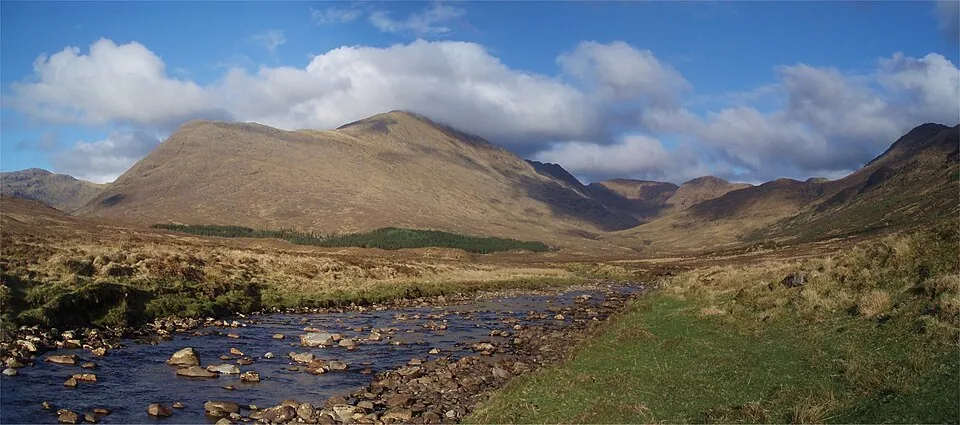
Explore more peaks near Knoydart.
Common questions about climbing Meall Buidhe (Knoydart).
Meall Buidhe (Knoydart) stands at 946 metres (3,104 feet), making it the 223rd tallest of all 282 Munros in Scotland.
The name Meall Buidhe (Knoydart) translates from Scottish Gaelic as “Yellow Hill”.
Climbing Meall Buidhe (Knoydart) typically takes between 10.6 and 13.8 hours round trip. This varies with fitness, weather, and the route chosen — there are 2 routes to the summit.
There is dedicated parking at the standard starting point for the main route up Meall Buidhe (Knoydart), in the Knoydart area. The exact car park location, map pin and arrival guidance are in the free Munros app.
Meall Buidhe (Knoydart) is rated Very Hard (difficulty 5/5). Route difficulty varies across the 2 available routes.
The most popular route up Meall Buidhe (Knoydart) covers 20km, 10.6–13.8 hours round trip. There are 2 routes to the summit in total, ranging from Very Hard to Very Hard difficulty.
Meall Buidhe (Knoydart) (difficulty 5/5 at 946m in the Knoydart area) is one of Scotland's most demanding Munros, requiring experience on exposed and technical mountain terrain.
Meall Buidhe (Knoydart) is in the Knoydart region of Scotland. Nearby Munros include Ladhar Bheinn, Luinne Bheinn, Sgùrr na Cìche.
Step-by-step directions, GPS navigation, exact parking and offline maps for Meall Buidhe (Knoydart) — free in the Munros app.
Free — Download on theApp StoreTrack all 282 Munros, plan routes, and log every summit. Join 2,400+ hillwalkers already using Munros.app.