Beinn Narnain
926m
Loch Lomond
“Mountain of the Notches”
926mHeight
20kmRound trip
5.9–7.7hWalk time
HardDifficulty 4/5
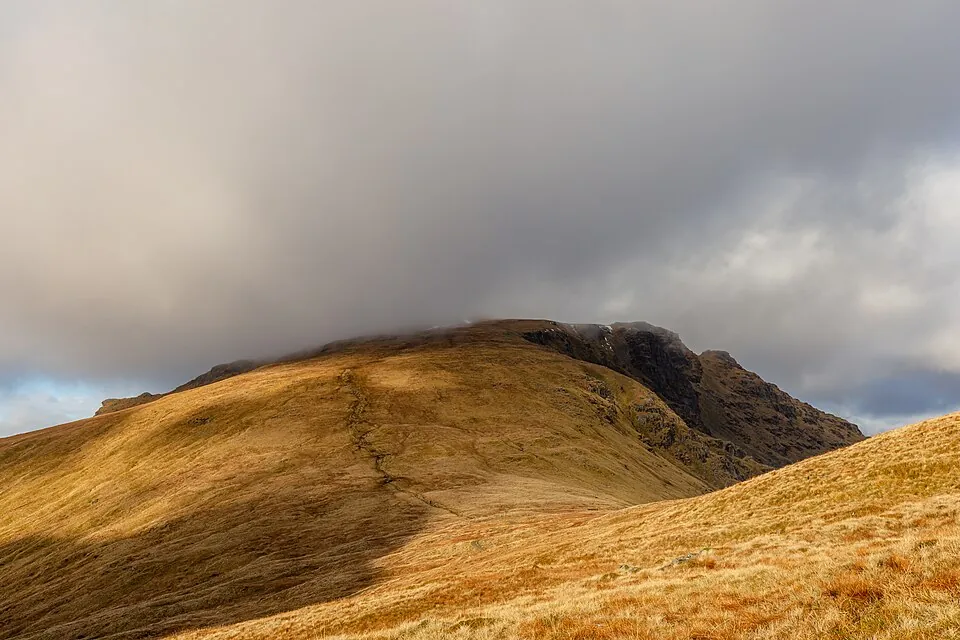
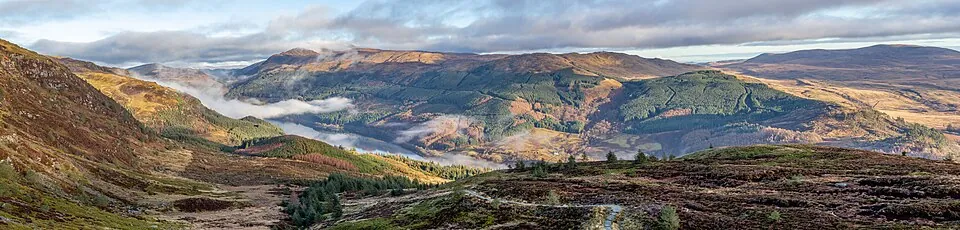
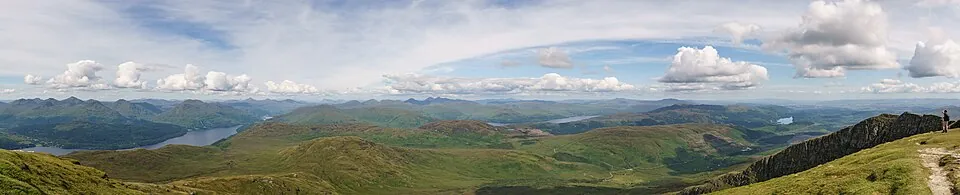
Photo: Podzemnik · CC BY-SA 4.0
“Mountain of the Notches”
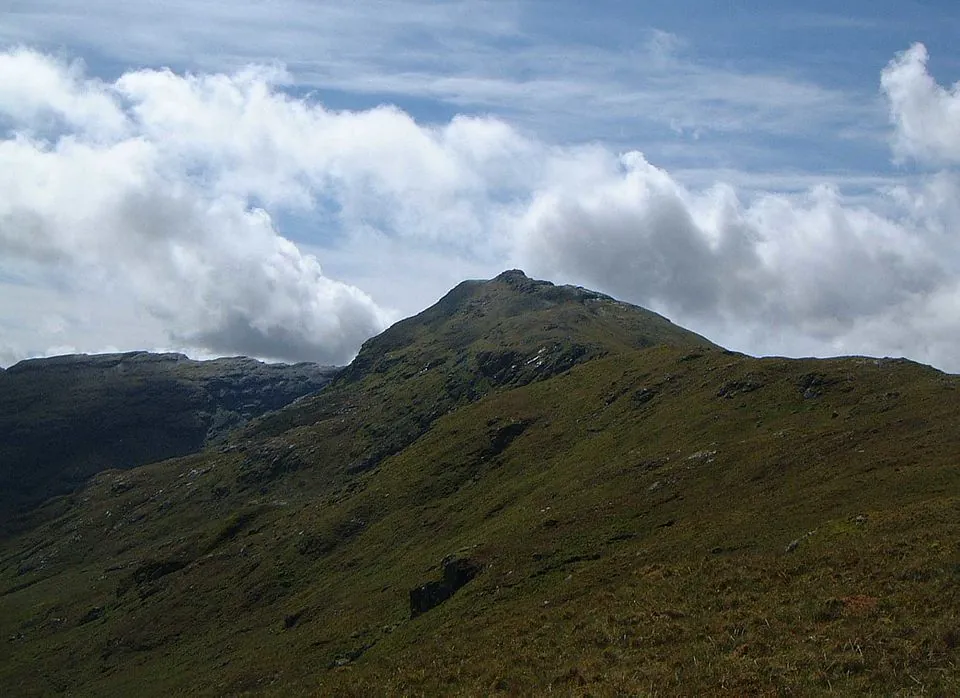
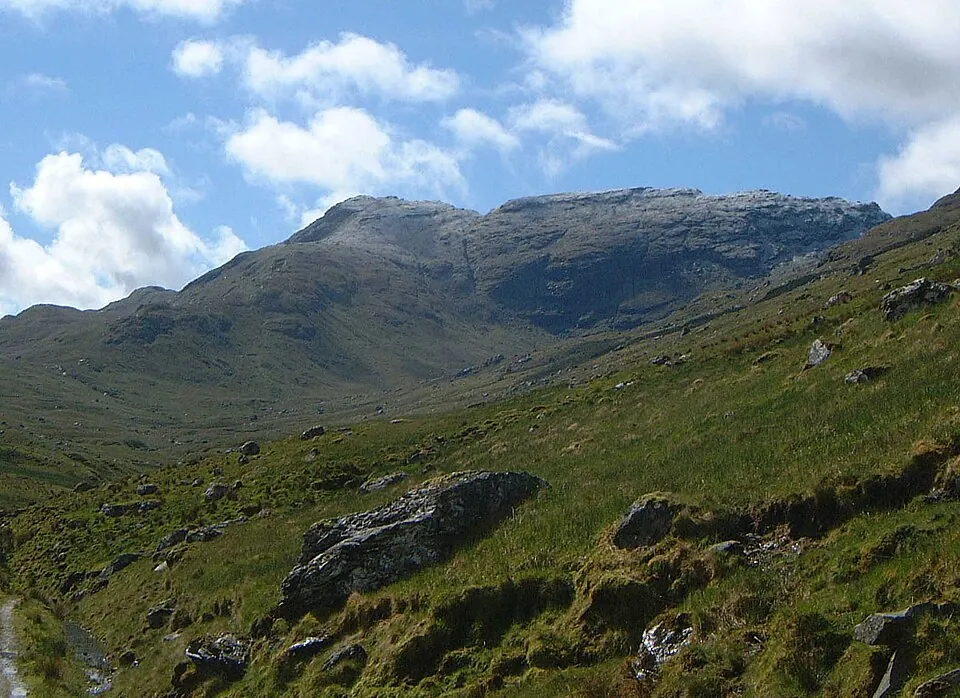
Beinn Narnain is a 926m Munro in the Loch Lomond region, its Gaelic name meaning “mountain of the notches”. It stands 261st of the 282 Munros by height. The usual ascent — Beinn Narnain and Beinn Ìme from Arrochar — is a 20km round trip taking 5.9–7.7 hours, rated hard (4/5).
There are 2 routes to the summit of Beinn Narnain, ranging from 20km.
Beinn Narnain rises to 926 metres above Arrochar, offering a steep and dramatic ascent that showcases the rugged…
Beinn Narnain rises to 926 metres above Arrochar, offering a steep and dramatic ascent that showcases the rugged character of the Arrochar Alps. From Succoth Car Park, you'll tackle 20-25 kilometres depending on your route choice, with the mountain commonly climbed alongside Beinn Ìme in a demanding 5-8 hour circuit.
The ascent of Beinn Narnain involves sustained steep climbing, with the famous Spearhead ridge providing an optional scrambling challenge that adds exposure and excitement to the route.
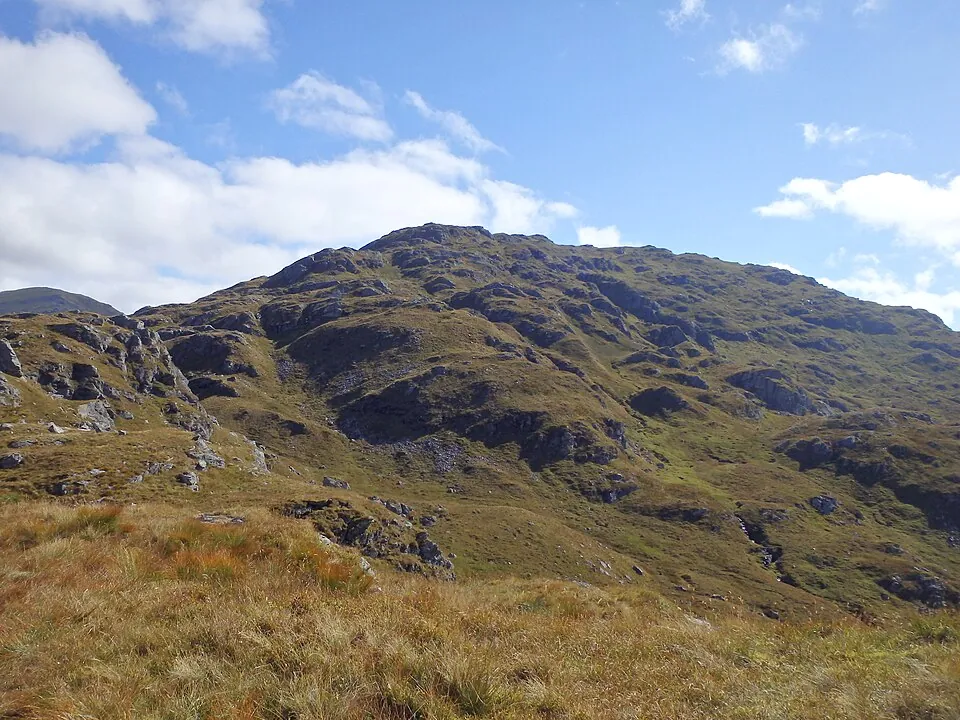
The terrain on Beinn Narnain features bog level 3/5 conditions on the approaches, with the ground becoming increasingly rocky as you gain height. The mountain's name, 'Mountain of the Notches', references the distinctive rocky character, and you'll encounter broken ground, boulders, and optional scrambling sections that require sure-footing.
The 4/5 difficulty rating reflects the steep gradients, long distances when combined with other peaks, and the technical nature of the upper mountain. Navigation requires care, particularly in cloud when the rocky terrain can be confusing.
Beinn Narnain is accessible most of the year, though late spring through early autumn provides the most stable…
Beinn Narnain is accessible most of the year, though late spring through early autumn provides the most stable conditions and generous daylight for the 5-8 hour routes. The proximity to the west coast means substantial rainfall throughout the year, with weather systems arriving rapidly off the Atlantic. Summer months offer the longest days and warmest temperatures, though the Arrochar Alps can be busy with walkers during peak season.
Winter transforms Beinn Narnain into a serious mountaineering objective, with snow and ice on the steep slopes and rocky terrain requiring winter skills, ice axes, and crampons. The Spearhead ridge becomes a serious scramble in winter conditions, suitable only for experienced mountaineers. The mountain's modest altitude compared to higher peaks means snow may be inconsistent, creating difficult mixed conditions.
Whatever the season, weather on Beinn Narnain can change rapidly, so pack for all conditions and be prepared to adapt your route or turn back if necessary.
Access to Beinn Narnain begins at Succoth Car Park near Arrochar, located just off the A83 at the head of Loch Long.…
Access to Beinn Narnain begins at Succoth Car Park near Arrochar, located just off the A83 at the head of Loch Long. This popular car park serves as the gateway to the Arrochar Alps and fills quickly during weekends and holiday periods, so early arrival is essential to secure parking. The location is approximately an hour's drive from Glasgow, making these mountains accessible for day trips from central Scotland.
Facilities at Succoth Car Park are basic, with toilets but no other services. The village of Arrochar is nearby for pre-walk supplies and post-walk refreshments. From the car park, well-established paths lead through forestry before the steep climbing to Beinn Narnain begins. Public transport options include trains to Arrochar and Tarbet station, though this adds distance to the route.
The popularity of Beinn Narnain means paths are generally clear, but parking remains the main challenge for accessing this magnificent mountain.
The summit of Beinn Narnain at 926 metres provides a spectacular rocky platform with commanding views across Loch Long,…
The summit of Beinn Narnain at 926 metres provides a spectacular rocky platform with commanding views across Loch Long, the Arrochar Alps, and the surrounding mountains. The top is marked by a substantial cairn amid the broken, rocky terrain that characterises this peak, with the Spearhead providing a distinctive landmark just below the summit. Shelter is reasonable among the boulders, though the exposed nature means strong winds are common.
The rocky summit area of Beinn Narnain can be confusing in poor visibility, with several false tops and the complex terrain requiring careful navigation, particularly if continuing to Beinn Ìme. On clear days, the views are magnificent, extending across the Southern Highlands and down to the sea lochs.
The sense of achievement is considerable, particularly if you've tackled the Spearhead, with the dramatic position on Beinn Narnain providing one of the finest viewpoints in the Arrochar range. The descent requires care, especially in wet conditions when the rocks become slippery.
The lower slopes of Beinn Narnain rise through commercial forestry before breaking into native woodland remnants and…
The lower slopes of Beinn Narnain rise through commercial forestry before breaking into native woodland remnants and then open hillside dominated by heather, bracken, and grassland. The western location and high rainfall create relatively lush conditions supporting diverse plant communities where drainage allows. Red deer are common on these hills, often encountered on the open slopes, particularly during dawn and dusk.
Higher on Beinn Narnain, vegetation becomes sparser with montane heath communities and rocky areas supporting only hardy mosses and lichens. The proximity to the coast means maritime influences affect the plant communities, with oceanic bryophytes flourishing in the humid conditions. Ravens are frequently seen and heard around the summit crags, while buzzards hunt the lower slopes. Mountain hares may be spotted on the higher ground, their coats changing with the seasons.
The rocky character of Beinn Narnain creates diverse microhabitats supporting specialist alpine plants in sheltered cracks and ledges.
Beinn Narnain demands good hillwalking skills and fitness, with the 4/5 difficulty rating reflecting steep terrain and,…
Beinn Narnain demands good hillwalking skills and fitness, with the 4/5 difficulty rating reflecting steep terrain and, if attempting the Spearhead, scrambling requiring a head for heights. Navigation skills are important, particularly in cloud when the rocky summit area becomes confusing. Carry full navigation equipment including map and compass, and know how to use them confidently before attempting this peak.
The steep, rocky terrain requires sturdy boots with good ankle support and grip, essential for the boulder fields and optional scrambling sections. The bog level 3/5 rating means waterproof boots are necessary for the lower sections. Carry sufficient water for the 5-8 hour route, with sources available on the approach but scarce higher up. Phone signal may be available at lower elevations but becomes unreliable on the mountain.
Pack full emergency equipment including waterproofs, warm layers, food, and basic first aid supplies. Weather on Beinn Narnain can change rapidly, so be prepared to turn back or avoid the Spearhead if conditions deteriorate. The descent can be hard on knees after the steep climbing, so consider using poles and allow extra time when tired.
Explore more peaks near Loch Lomond.
Common questions about climbing Beinn Narnain.
Beinn Narnain stands at 926 metres (3,038 feet), making it the 261st tallest of all 282 Munros in Scotland.
The name Beinn Narnain translates from Scottish Gaelic as “Mountain of the Notches”.
Climbing Beinn Narnain typically takes between 5.9 and 7.8 hours round trip. This varies with fitness, weather, and the route chosen — there are 2 routes to the summit.
There is dedicated parking at the standard starting point for the main route up Beinn Narnain, in the Loch Lomond area. The exact car park location, map pin and arrival guidance are in the free Munros app.
Beinn Narnain is rated Hard (difficulty 4/5). Route difficulty varies across the 2 available routes.
The most popular route up Beinn Narnain covers 20km, 5.9–7.7 hours round trip. There are 2 routes to the summit in total, ranging from Hard to Hard difficulty.
Beinn Narnain (difficulty 4/5 at 926m) is best suited to experienced hillwalkers in the Loch Lomond area. Expect sustained steep terrain and the need for confident navigation in poor visibility.
Beinn Narnain is in the Loch Lomond region of Scotland. Nearby Munros include An Caisteal, Beinn a' Chròin, Beinn Chabhair.
Step-by-step directions, GPS navigation, exact parking and offline maps for Beinn Narnain — free in the Munros app.
Free — Download on theApp StoreTrack all 282 Munros, plan routes, and log every summit. Join 2,400+ hillwalkers already using Munros.app.