Fionn Bheinn
“White/Pale Mountain”
Fionn Bheinn is a 933m Munro in the Ross-shire region, its Gaelic name meaning “white/pale mountain”. It stands 246th of the 282 Munros by height. The usual ascent — Fionn Bheinn from Achnasheen — is a 11.8km round trip taking 4.9–6.4 hours, rated challenging (3/5).
There is 1 route to the summit of Fionn Bheinn, covering 11.8km.
Fionn Bheinn offers a relatively compact Munro experience in the heart of Ross-shire. From Achnasheen Layby, you'll…
Fionn Bheinn offers a relatively compact Munro experience in the heart of Ross-shire. From Achnasheen Layby, you'll begin climbing almost immediately, following initially boggy ground before gaining the mountain's distinctive ridges. The route covers just under 12 kilometres, making Fionn Bheinn one of the shorter Munro expeditions, though don't let this fool you into underestimating the climb.
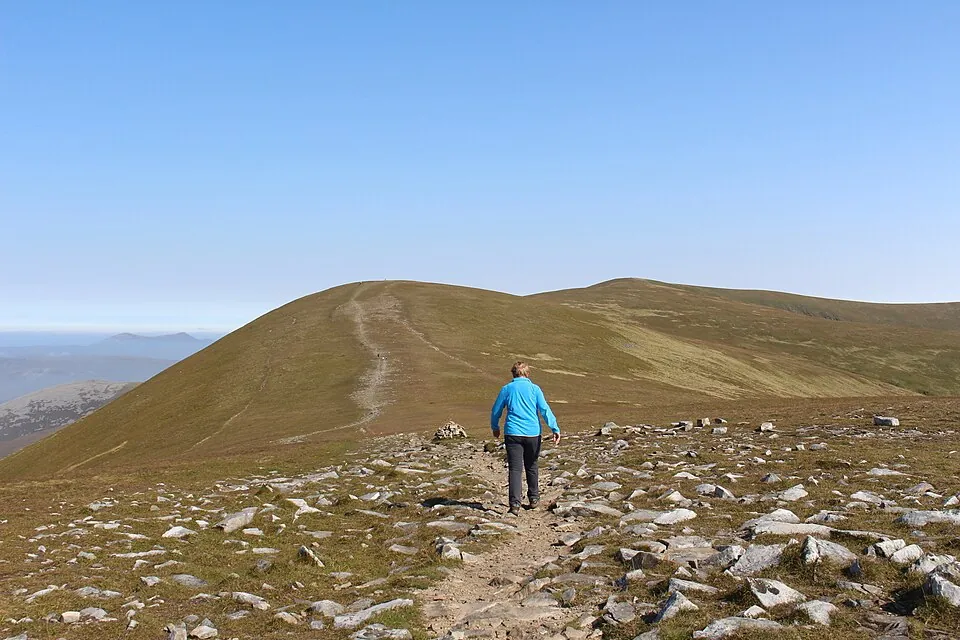
Path quality is variable, with some clear sections giving way to boggy, pathless terrain—the 3/5 bog rating means you'll encounter substantial wet ground, particularly on the lower approaches. As you gain height, the terrain becomes rockier and the going improves. Fionn Bheinn rises to 933 metres with a respectable 900 metres of ascent from the roadside start. The upper mountain features interesting rocky sections and a well-defined summit ridge.
Expect 5-6 hours of walking time, with the difficulty rating of 3/5 reflecting the navigational challenges and rough ground rather than technical climbing. The mountain stands distinctively isolated, making Fionn Bheinn a satisfying standalone objective.
Fionn Bheinn is accessible throughout much of the year, with each season bringing different character to this western…
Fionn Bheinn is accessible throughout much of the year, with each season bringing different character to this western peak. Summer from May through September offers the longest daylight and most settled weather, though the west coast location means rain is never far away. The name Fionn Bheinn means White or Pale Mountain, and you'll understand this best in winter when snow frequently covers the upper slopes, creating a striking appearance from the A832.
Winter ascents require full mountaineering skills and equipment, as the rocky upper sections can ice up and the isolated nature of Fionn Bheinn means escape options are limited. Spring brings late snow combined with lengthening days, often creating excellent conditions. The western maritime climate means Fionn Bheinn receives substantial precipitation year-round, with autumn and winter particularly wet.
The moderate altitude means conditions are generally less severe than on higher peaks, though exposure to Atlantic weather systems can bring fierce winds. Midweek visits offer more solitude on this popular peak, while fine summer weekends can see steady traffic from the convenient Achnasheen start.
Access to Fionn Bheinn couldn't be more straightforward, with the starting point at Achnasheen Layby directly beside the…
Access to Fionn Bheinn couldn't be more straightforward, with the starting point at Achnasheen Layby directly beside the A832. This convenient roadside parking spot sits at a junction where the A890 branches off towards Kyle of Lochalsh, making it easy to locate. The layby accommodates several vehicles but can fill quickly on summer weekends when Fionn Bheinn's accessibility makes it particularly popular.
Achnasheen village lies just a short distance away, offering basic facilities including a railway station on the Inverness to Kyle line—an option for those wanting a car-free Munro experience. From the layby, Fionn Bheinn rises distinctively to the north, impossible to miss with its characteristic pale appearance. The A832 provides year-round access, though winter conditions can occasionally make this exposed road challenging.
The immediate roadside start means you're climbing within minutes of leaving your vehicle, eliminating the long approach walks required by more remote peaks. Mobile signal at the start is generally good, allowing final weather checks before tackling Fionn Bheinn.
The summit of Fionn Bheinn at 933 metres delivers an impressive panorama that seems disproportionate to the mountain's…
The summit of Fionn Bheinn at 933 metres delivers an impressive panorama that seems disproportionate to the mountain's modest altitude. You'll stand on a rocky crest marked by a substantial cairn, with views extending across the complex landscape of Wester Ross. The isolated position of Fionn Bheinn means the outlook is unusually comprehensive, taking in countless peaks from Torridon to the Fannichs and beyond.
To the west, you can often glimpse the sea and Hebridean islands, while eastward the high Cairngorms form a distant backdrop. The summit area offers some shelter among the rocks, useful when winds are strong on this exposed top. Despite the relatively short approach, you'll feel a genuine sense of achievement at the top of Fionn Bheinn—this is a proper mountain summit with all the character and views you could want.
The pale quartzite rocks that give the mountain its name are particularly evident around the summit, creating a distinctive landscape. On clear days, the summit of Fionn Bheinn provides one of the finest viewpoints in the Northwest Highlands.
The lower slopes of Fionn Bheinn are dominated by heather moorland interspersed with wet flushes and boggy ground…
The lower slopes of Fionn Bheinn are dominated by heather moorland interspersed with wet flushes and boggy ground supporting typical Highland bog vegetation. Cotton grass waves in the breeze across damp areas, while sphagnum mosses create colourful patches in the wettest spots. Red deer are abundant throughout the area—you'll almost certainly encounter them, particularly on the mountain's flanks during early morning or evening.
As you climb Fionn Bheinn, vegetation transitions through heather to montane grassland and finally to rocky ground near the summit. The western maritime climate supports richer plant communities than comparable peaks further east, with mosses and ferns thriving in the humid conditions. Watch for golden eagles—this corner of Ross-shire hosts several pairs, and the isolated position of Fionn Bheinn makes it an ideal hunting ground.
Ravens are constant companions, while buzzards patrol the lower slopes. Mountain hares inhabit the upper mountain, their coats turning white for winter camouflage. The area around Fionn Bheinn is less botanically rich than some limestone peaks, but the quartzite geology creates distinctive plant communities on well-drained sites.
Despite the short distance and convenient access, Fionn Bheinn demands proper mountain skills and equipment. Navigation…
Despite the short distance and convenient access, Fionn Bheinn demands proper mountain skills and equipment. Navigation can be challenging, particularly in mist when the broad slopes and multiple ridges become confusing—carry map, compass, and ideally a GPS device. The boggy ground on the lower mountain means progress is slower than you might expect from the modest 12-kilometre distance, so allow adequate time for your ascent of Fionn Bheinn.
Take full hillwalking kit including waterproofs and warm layers, as conditions at 933 metres can be dramatically different from the roadside start. Carry sufficient food and water for a 5-6 hour day, though streams are generally plentiful on this wet mountain. Mobile signal fades once you begin climbing, so ensure someone knows your plans before setting out.
The rocky sections on upper Fionn Bheinn require care, particularly in wet or icy conditions when they become slippery. Weather can deteriorate rapidly in this western location, and the isolated position of Fionn Bheinn means you're exposed to whatever systems blow in from the Atlantic. Start with a stable forecast and be prepared to turn back if conditions worsen significantly on the mountain.
Explore more peaks near Ross-shire.
Common questions about climbing Fionn Bheinn.
Fionn Bheinn stands at 933 metres (3,061 feet), making it the 246th tallest of all 282 Munros in Scotland.
The name Fionn Bheinn translates from Scottish Gaelic as “White/Pale Mountain”.
Climbing Fionn Bheinn typically takes between 4.9 and 6.4 hours round trip. This varies with fitness, weather, and the route chosen.
There is dedicated parking at the standard starting point for the main route up Fionn Bheinn, in the Ross-shire area. The exact car park location, map pin and arrival guidance are in the free Munros app.
Fionn Bheinn is rated Challenging (difficulty 3/5).
The most popular route up Fionn Bheinn covers 11.8km, 4.9–6.4 hours round trip.
Fionn Bheinn (difficulty 3/5 at 933m in the Ross-shire area) suits walkers with solid hillwalking experience. Expect rough or boggy ground on sections but no technical scrambling.
Fionn Bheinn is in the Ross-shire region of Scotland. Nearby Munros include Ben Wyvis.
Step-by-step directions, GPS navigation, exact parking and offline maps for Fionn Bheinn — free in the Munros app.
Free — Download on theApp StoreTrack all 282 Munros, plan routes, and log every summit. Join 2,400+ hillwalkers already using Munros.app.