Gleouraich
“Roaring/Noise”
“Roaring/Noise”
Gleouraich is a 1,035m Munro in the Loch Ness region, its Gaelic name meaning “roaring/noise”. It stands 101st of the 282 Munros by height. The usual ascent — Gleouraich and Spidean Mialach from Invergarry — is a 12.1km round trip taking 6.7–8.7 hours, rated hard (4/5).
There are 2 routes to the summit of Gleouraich, ranging from 12.1km.
The ascent of Gleouraich from Loch Quoich is a challenging and rewarding expedition into the remote hills north of Glen…
The ascent of Gleouraich from Loch Quoich is a challenging and rewarding expedition into the remote hills north of Glen Garry. Routes covering 12-14 kilometres typically combine Gleouraich with neighbouring Spidean Mialach, taking 6-8 hours through demanding terrain. The mountain's name, meaning Roaring or Noise, hints at the wild character of this landscape where winds and weather create atmospheric soundscapes.
The route involves significant ascent from the lochside, with steep sections testing your legs and lungs before you reach the main ridge. Moderate bog levels characterise the lower approaches, so waterproof boots are essential. Once on the ridge connecting to Spidean Mialach, the going becomes easier underfoot but remains exposed. The paths are less developed than on more popular Munros, requiring confident navigation skills.
Gleouraich rewards with spectacular ridge walking and a genuine sense of remoteness, though the 4/5 difficulty rating reflects the sustained effort and commitment required.
Gleouraich is best climbed during late spring through early autumn when daylight hours are generous and conditions most…
Gleouraich is best climbed during late spring through early autumn when daylight hours are generous and conditions most stable. The Loch Ness region receives substantial rainfall year-round due to Atlantic weather systems funnelling through the Great Glen, so waterproofs are essential regardless of season.
Summer offers the longest days and most reliable weather for tackling Gleouraich, though midges can be ferocious in July and August, particularly around the lochside and lower glens. Winter ascents become serious mountaineering expeditions, with shortened daylight, snow and ice requiring full winter skills, and the remote location limiting margin for error.
Autumn brings spectacular colours to the hillsides and often settled spells in September, but October sees rapidly shortening days. Spring can be magnificent on Gleouraich, with fresh growth and lengthening days, but snow persists at altitude well into May. Whatever the season, check detailed forecasts and be prepared for conditions to deteriorate rapidly in this exposed location.
Access to Gleouraich begins from the Loch Quoich area, reached via a long, single-track road heading west from the A87…
Access to Gleouraich begins from the Loch Quoich area, reached via a long, single-track road heading west from the A87 near Invergarry. The drive along Loch Garry and Loch Quoich is spectacular but demands concentration, with passing places and potential encounters with deer or sheep. Parking is available at the Loch Quoich Layby, which serves as the starting point for several routes including Gleouraich.
The remote location means facilities are non-existent, so come prepared with everything you need for the day. The approach from Invergarry takes around 40 minutes of driving, and the single-track nature means you should allow extra time. From the layby, the route to Gleouraich initially follows stalkers' paths before climbing onto the open hillside.
The remote setting of Gleouraich means you're committing to a serious mountain day with limited escape options once you leave the road. Mobile signal is virtually non-existent, reinforcing the need for self-sufficiency and proper preparation.
The summit of Gleouraich reaches 1035 metres, marked by a cairn on a rocky crown with impressive views across the wild…
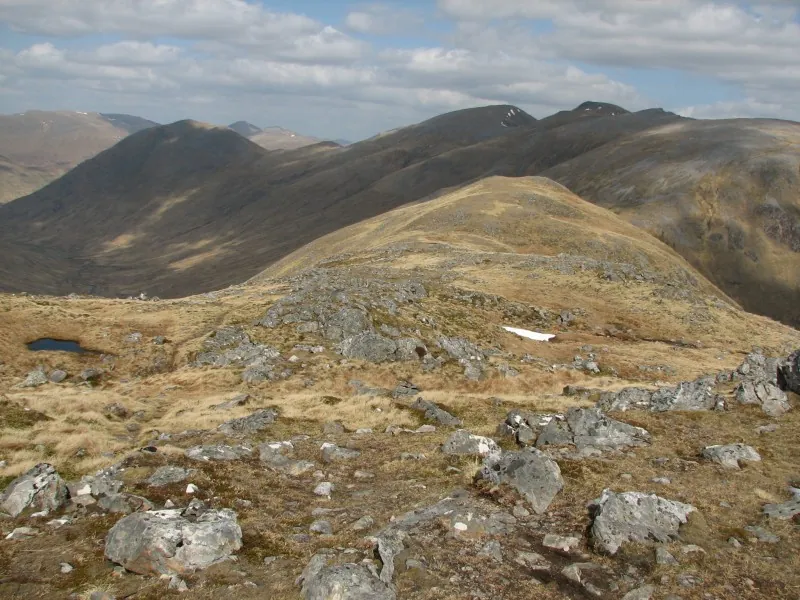
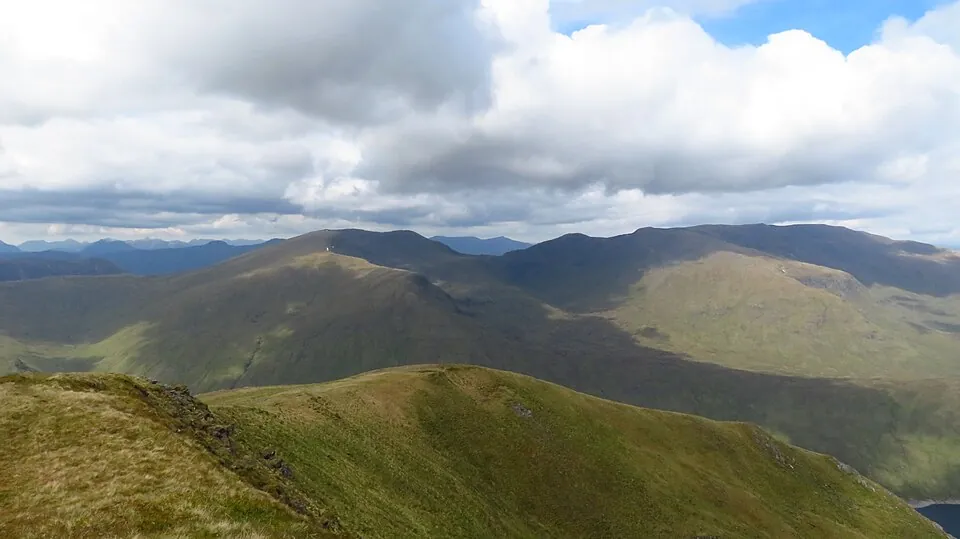
The summit of Gleouraich reaches 1035 metres, marked by a cairn on a rocky crown with impressive views across the wild country of Knoydart and the Rough Bounds. The panorama extends west to the islands of the Inner Hebrides, north across Loch Quoich to Glen Shiel, and east toward the Great Glen. On clear days, the summit of Gleouraich provides magnificent vistas of some of Scotland's most remote and dramatic mountains.
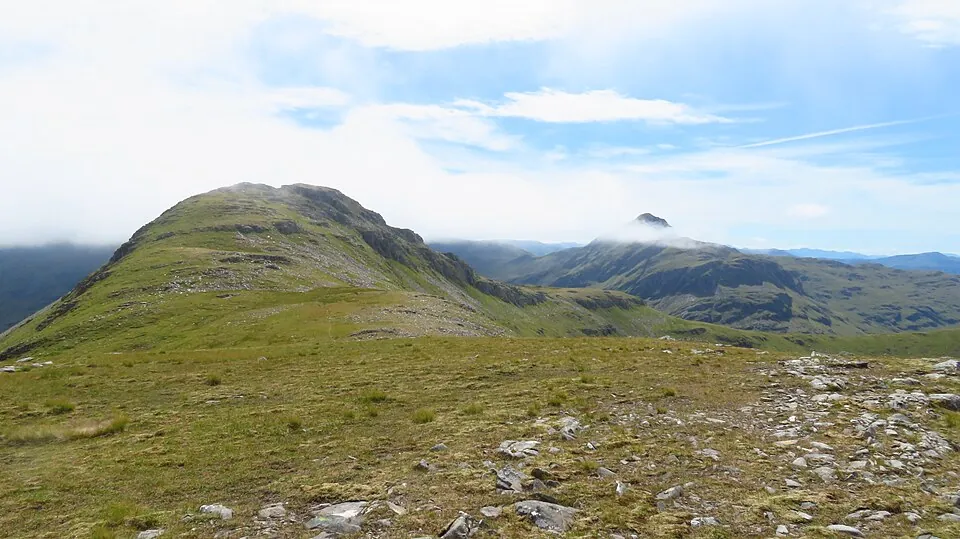
The summit area is exposed to prevailing south-westerly winds, and shelter is minimal, so you'll want full windproof layers even on seemingly calm days. The rocky summit contrasts with the grassy ridges leading to neighbouring peaks, giving Gleouraich a distinctly alpine character. The sense of remoteness is profound, with few other hillwalkers venturing to these distant hills.
Standing atop Gleouraich, you're in genuinely wild country where the roaring winds that give the mountain its name are often your primary companion.
The western location of Gleouraich creates a lush, wet environment supporting rich vegetation communities. Lower slopes…
The western location of Gleouraich creates a lush, wet environment supporting rich vegetation communities. Lower slopes feature heather, bracken, and extensive bog vegetation including sphagnum mosses and cotton grass. As you climb Gleouraich, birch and rowan woodlands give way to heather moorland and then montane heath, with bilberry and crowberry dominating the higher ground.
Red deer are abundant throughout this region, and you'll likely encounter them at various altitudes on Gleouraich. Golden eagles nest in the area, soaring on thermals or hunting across the hillsides. Ravens are common, their calls echoing off the crags. Ptarmigan inhabit the highest ground above 900 metres, well-camouflaged against the rocky terrain.
The wet climate of the Loch Ness region supports particularly rich bryophyte communities, with mosses and liverworts thriving in the humid conditions. Alpine plants including starry saxifrage and moss campion flourish in rock crevices where drainage is good despite the overall high rainfall around Gleouraich.
The remote and demanding nature of Gleouraich requires thorough preparation and strong mountain skills. Navigation is…
The remote and demanding nature of Gleouraich requires thorough preparation and strong mountain skills. Navigation is critical, particularly in poor visibility when the broad ridges can be disorienting. Carry map, compass, and GPS, and be confident using them in challenging conditions. The distance and terrain demand you pack adequate food, water, and emergency supplies including shelter and first aid kit.
Mobile signal is virtually non-existent for the entire route to Gleouraich, so inform someone of your plans and expected return time before setting out. The wet conditions mean waterproof boots and gaiters are essential, along with full waterproof and windproof clothing. Weather in this region can deteriorate rapidly, with winds strengthening dramatically and visibility dropping to metres.
The 4/5 difficulty rating reflects genuine challenges that demand fitness, experience, and sound judgment. Don't underestimate Gleouraich; its remoteness means any mistake or accident becomes significantly more serious than on more accessible mountains.
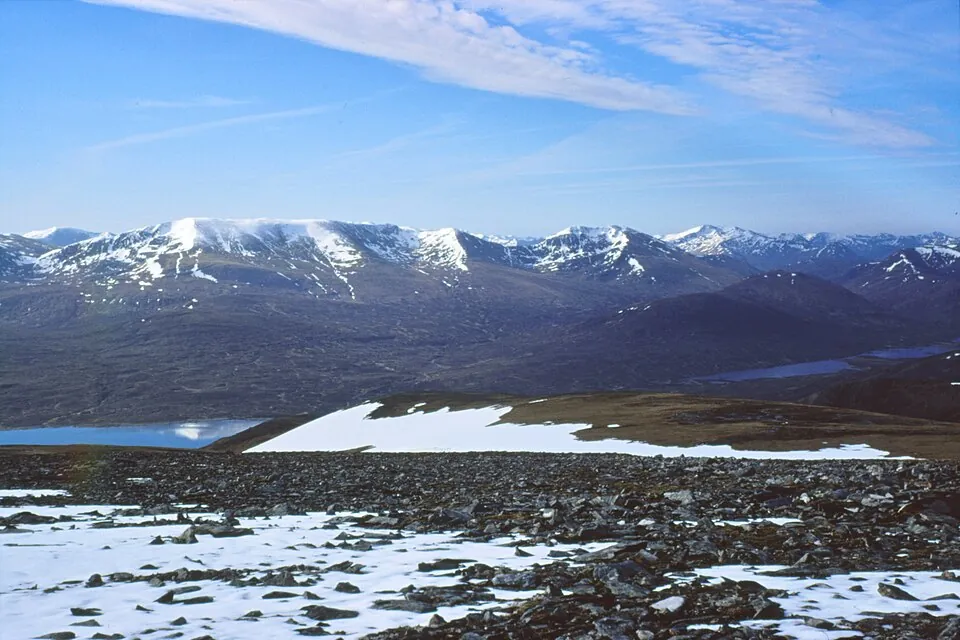
Explore more peaks near Loch Ness.
Common questions about climbing Gleouraich.
Gleouraich stands at 1,035 metres (3,396 feet), making it the 101st tallest of all 282 Munros in Scotland.
The name Gleouraich translates from Scottish Gaelic as “Roaring/Noise”.
Climbing Gleouraich typically takes between 6.7 and 8.7 hours round trip. This varies with fitness, weather, and the route chosen — there are 2 routes to the summit.
There is dedicated parking at the standard starting point for the main route up Gleouraich, in the Loch Ness area. The exact car park location, map pin and arrival guidance are in the free Munros app.
Gleouraich is rated Hard (difficulty 4/5). Route difficulty varies across the 2 available routes.
The most popular route up Gleouraich covers 12.1km, 6.7–8.7 hours round trip. There are 2 routes to the summit in total, ranging from Hard to Hard difficulty.
Gleouraich (difficulty 4/5 at 1,035m) is best suited to experienced hillwalkers in the Loch Ness area. Expect sustained steep terrain and the need for confident navigation in poor visibility.
Gleouraich is in the Loch Ness region of Scotland. Nearby Munros include An Riabhachan, An Socach (Affric), An Socach (Mullardoch).
Step-by-step directions, GPS navigation, exact parking and offline maps for Gleouraich — free in the Munros app.
Free — Download on theApp StoreTrack all 282 Munros, plan routes, and log every summit. Join 2,400+ hillwalkers already using Munros.app.