Màm Sodhail
1,181m
Loch Ness
“Breast of the Barns”
1,181mHeight
36kmRound trip
10.7–13.9hWalk time
HardDifficulty 4/5
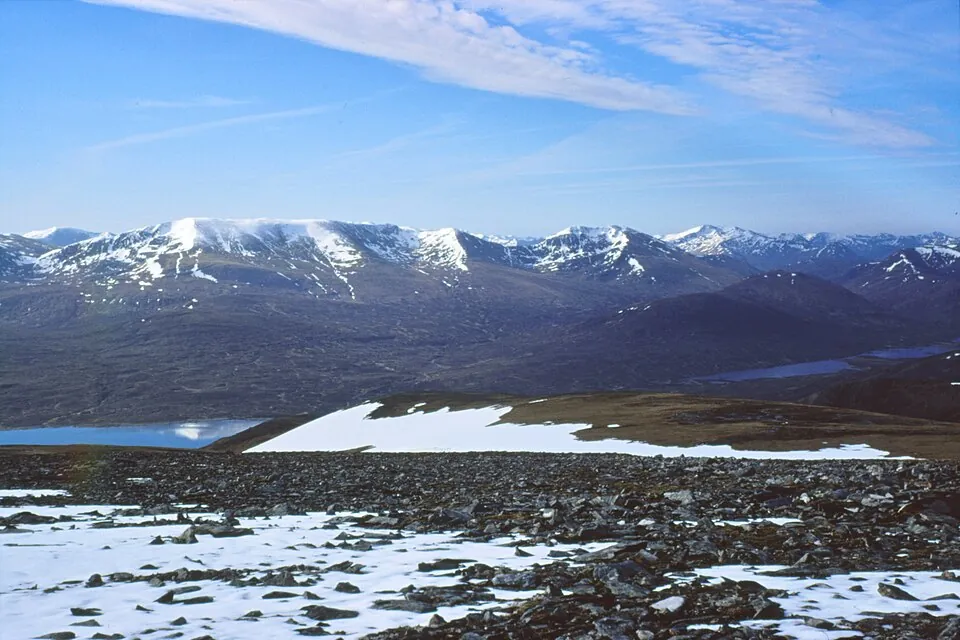
Photo: GeographBot · CC BY-SA 2.0
“Breast of the Barns”
Màm Sodhail is a 1,181m Munro in the Loch Ness region, its Gaelic name meaning “breast of the barns”. It stands 15th of the 282 Munros by height. The usual ascent — Càrn Eige circuit from Loch Mullardoch — is a 36km round trip taking 10.7–13.9 hours, rated hard (4/5).
There is 1 route to the summit of Màm Sodhail, covering 36km.
Màm Sodhail, rising to 1181 metres as one of Scotland's highest Munros, presents a serious challenge involving long…
Màm Sodhail, rising to 1181 metres as one of Scotland's highest Munros, presents a serious challenge involving long distances through remote terrain. The Càrn Eige circuit from Loch Mullardoch is the classic approach, covering a demanding 36 kilometres that typically requires 11 to 14 hours of walking time. The route is rated 4 out of 5 for difficulty, with moderate bog levels of 3 out of 5, making it somewhat drier underfoot than many neighbouring peaks.
The ascent of Màm Sodhail typically forms part of a wider circuit that includes Càrn Eige, requiring you to maintain stamina over an extended mountain day. The terrain varies from stalkers' paths in the lower reaches to rougher ground higher up, with the final approaches to Màm Sodhail involving sustained climbing across broad, grassy slopes. The mountain's meaning, 'Breast of the Barns', reflects its rounded, breast-like summit dome.
The sheer scale and remoteness of Màm Sodhail demand that you're well-prepared for a long day in the hills with limited escape options once committed.
The length and remoteness of any approach to Màm Sodhail mean this mountain is best tackled during the long days of late…
The length and remoteness of any approach to Màm Sodhail mean this mountain is best tackled during the long days of late spring through early autumn, from May through September. The 11 to 14-hour time requirement demands maximum daylight, and attempting Màm Sodhail outside these months is a serious undertaking requiring winter mountaineering skills and exceptionally short-day planning.
At 1181 metres, Màm Sodhail rises well into the zone where weather conditions can be significantly harsher than in the glens, with summit temperatures often 10 degrees cooler and wind speeds much higher. The Loch Ness region receives substantial rainfall throughout the year, and Màm Sodhail can be cloud-covered for extended periods even when conditions are pleasant at lower elevations.
Summer offers the most stable weather windows, though you should still expect the possibility of rain and wind. Always check the mountain weather forecast specifically, not just general predictions, as conditions on the high tops around Màm Sodhail can differ dramatically from those in the glens.
Access to Màm Sodhail begins at Glen Affric Road End, one of the most scenic approaches in the Highlands. The…
Access to Màm Sodhail begins at Glen Affric Road End, one of the most scenic approaches in the Highlands. The single-track road through Glen Affric runs west from Cannich, passing through ancient Caledonian pine forest before reaching the road end car park. This narrow road requires careful driving, with passing places demanding attention and courtesy.
Parking is available at the road end, though the car park can fill quickly during popular periods, particularly in summer, so an early start is strongly recommended for Màm Sodhail attempts. The drive from Inverness takes approximately an hour to reach Cannich, then another 30 to 40 minutes along the glen road. Mobile phone signal becomes unreliable beyond Cannich and is essentially non-existent at the trailhead, so inform someone of your plans before setting out.
The nearest facilities, including fuel and supplies, are in Cannich, so ensure you're fully prepared before driving to the Màm Sodhail trailhead.
The summit of Màm Sodhail at 1181 metres is one of the highest points in the Scottish Highlands, offering commanding…
The summit of Màm Sodhail at 1181 metres is one of the highest points in the Scottish Highlands, offering commanding views across a vast wilderness of peaks and glens. The top itself is a broad, rounded dome that can feel exposed to the wind, which often blows strongly at this altitude. The cairn on Màm Sodhail marks a hard-won achievement, typically reached after many hours of walking through remote terrain.
On clear days, the panorama is spectacular, with waves of mountains rolling away in every direction, emphasising the scale of the Highlands and your position deep within them. However, the summit often sits in cloud, and when visibility is poor, the featureless nature of the top requires careful navigation. There's little natural shelter on the exposed summit of Màm Sodhail, so even brief stops can see you cooling quickly in the wind.
Remember that reaching the top is only halfway, and you face the same long journey back, so manage your time and energy carefully on the summit of Màm Sodhail.
The approaches to Màm Sodhail pass through Glen Affric, one of Scotland's most ecologically significant areas, with…
The approaches to Màm Sodhail pass through Glen Affric, one of Scotland's most ecologically significant areas, with remnant Caledonian pine forest in the lower reaches. Red deer are abundant throughout the area, and you're likely to encounter them on the slopes leading to Màm Sodhail. Golden eagles and ptarmigan inhabit the higher reaches, with ptarmigan particularly associated with the summit plateaus above 900 metres where Màm Sodhail sits.
The lower slopes support heather moorland interspersed with bilberry and crowberry, while the higher elevations transition to montane heath with hardy grasses and cushion plants. In the corries and damper areas, you'll find mosses and ferns thriving in the wet climate characteristic of this western region. Red grouse may burst from the heather on the lower approaches, and ravens are common throughout.
The area around Màm Sodhail supports wildcat and pine marten populations, though these elusive creatures are rarely seen. During summer months, the mountain burns come alive with wildflowers, adding colour to the landscape.
The serious and remote nature of Màm Sodhail demands thorough preparation and mountain experience. Navigation skills are…
The serious and remote nature of Màm Sodhail demands thorough preparation and mountain experience. Navigation skills are essential—carry map, compass, and GPS, and be confident using them in poor visibility, as the broad ridges can be featureless in mist. The 36-kilometre distance means you must pace yourself carefully and carry sufficient food and water, though streams are available for refilling on the Màm Sodhail circuit.
Mobile phone signal is non-existent in this remote area, so leave detailed plans with a responsible person. Despite the moderate bog level, waterproof boots are essential, and gaiters are advisable. Pack full waterproofs, warm layers including hat and gloves, and emergency shelter regardless of the forecast, as weather on Màm Sodhail can change rapidly. Start early to maximise daylight and allow for the long hours required.
This is not a mountain for inexperienced walkers—you should have completed other long mountain days before attempting Màm Sodhail. Ensure you're physically fit enough for 11 to 14 hours of sustained walking with significant elevation gain.
Explore more peaks near Loch Ness.
Common questions about climbing Màm Sodhail.
Màm Sodhail stands at 1,181 metres (3,875 feet), making it the 15th tallest of all 282 Munros in Scotland.
The name Màm Sodhail translates from Scottish Gaelic as “Breast of the Barns”.
Climbing Màm Sodhail typically takes between 10.7 and 13.9 hours round trip. This varies with fitness, weather, and the route chosen.
There is dedicated parking at the standard starting point for the main route up Màm Sodhail, in the Loch Ness area. The exact car park location, map pin and arrival guidance are in the free Munros app.
Màm Sodhail is rated Hard (difficulty 4/5).
The most popular route up Màm Sodhail covers 36km, 10.7–13.9 hours round trip.
Màm Sodhail (difficulty 4/5 at 1,181m) is best suited to experienced hillwalkers in the Loch Ness area. Expect sustained steep terrain and the need for confident navigation in poor visibility.
Màm Sodhail is in the Loch Ness region of Scotland. Nearby Munros include An Riabhachan, An Socach (Affric), An Socach (Mullardoch).
Step-by-step directions, GPS navigation, exact parking and offline maps for Màm Sodhail — free in the Munros app.
Free — Download on theApp StoreTrack all 282 Munros, plan routes, and log every summit. Join 2,400+ hillwalkers already using Munros.app.