Sgùrr a' Mhaoraich
“Peak of the Shellfish”
Sgùrr a' Mhaoraich is a 1,027m Munro in the Loch Ness region, its Gaelic name meaning “peak of the shellfish”. It stands 108th of the 282 Munros by height. The usual ascent — Sgùrr a' Mhaoraich from Loch Quoich — is a 19.1km round trip taking 6–7.8 hours, rated hard (4/5).
There is 1 route to the summit of Sgùrr a' Mhaoraich, covering 19.1km.
Sgùrr a' Mhaoraich rises to 1027 metres above the wild country north of Loch Quoich. The ascent from Loch Quoich is a…
Sgùrr a' Mhaoraich rises to 1027 metres above the wild country north of Loch Quoich. The ascent from Loch Quoich is a serious undertaking, covering 19.1 kilometres of demanding terrain. Starting from the lochside parking, you'll face a long approach through rough, pathless country before the main climbing begins. The route is graded 4/5 for difficulty, reflecting both the distance and the navigational challenges.
Underfoot conditions include significant bog, particularly on the lower and middle slopes, with a bog level of 3/5 making waterproof boots and gaiters essential. As you gain height, the terrain becomes firmer and rockier, with the gradient steepening towards the summit of Sgùrr a' Mhaoraich. Path quality varies from faint tracks to completely pathless sections where navigation skills become critical.
The mountain can be climbed alone or combined with Sgùrr a' Chaorachain for a two-Munro expedition, though this extends an already long day considerably. The surrounding landscape is wild and remote, with few signs of human presence. Allow 6-8 hours for Sgùrr a' Mhaoraich alone, or a full day if tackling neighbouring peaks. The return journey retraces your route, with tired legs facing the same boggy approach sections that tested you on the way in.
Sgùrr a' Mhaoraich is best climbed between May and September when daylight hours are longest and conditions are most…
Sgùrr a' Mhaoraich is best climbed between May and September when daylight hours are longest and conditions are most favourable. The western Highlands receive substantial rainfall throughout the year, and the significant bog on the approach becomes particularly challenging after wet periods. Summer offers the most reliable weather windows, though Highland conditions remain notoriously unpredictable.
The long approach and 6-8 hour round trip demand an early start, essential for safe completion in daylight outside the midsummer months. Winter ascents of Sgùrr a' Mhaoraich are serious undertakings requiring full winter mountaineering skills, ice axe, crampons, and avalanche awareness. The corries and steep slopes can be heavily loaded with snow, creating significant avalanche risk.
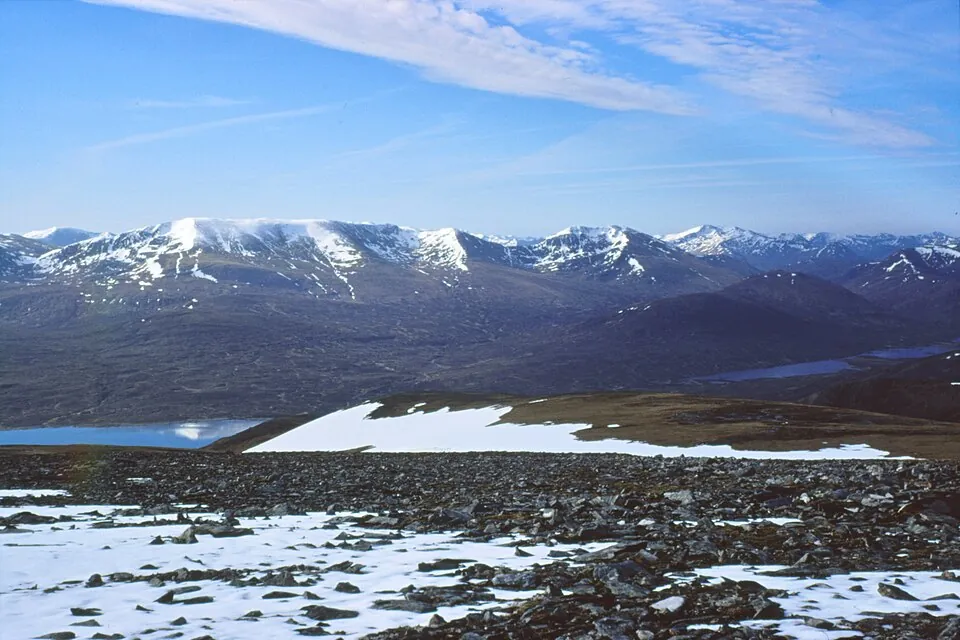
Spring can offer excellent conditions with consolidated snow, but demands winter equipment and experience. Autumn brings spectacular colours to the glens but increasingly unsettled weather and rapidly diminishing daylight. At over 1000 metres, the summit sits well into the cloud base on many days, with visibility often limited and winds strong even when lower elevations are calm.
Midges in the glen and lower slopes can be oppressive from late May through August, particularly during calm, damp evenings. Check mountain weather forecasts carefully and be flexible with plans, as the remote location makes retreat from poor conditions prolonged and difficult.
Access to Sgùrr a' Mhaoraich begins at Loch Quoich in the remote western Highlands. The parking area is reached via a…
Access to Sgùrr a' Mhaoraich begins at Loch Quoich in the remote western Highlands. The parking area is reached via a narrow, winding single-track road that branches west from the A87 at Invergarry. This scenic but demanding road passes Loch Garry before hugging the shores of Loch Quoich itself, eventually reaching the small parking area near the dam. The road requires careful driving, with passing places, wandering sheep, and occasional deer demanding constant attention.
Allow 40 minutes from Invergarry, and enjoy the beautiful journey through some of Scotland's wildest country. Parking at Loch Quoich is limited, so arrive early during good weather or peak season to guarantee a space. There are no facilities whatsoever at the trailhead, so come fully self-sufficient with all food, water, and equipment.
Mobile phone signal is completely absent in this remote location, so download maps, route information, and weather forecasts before leaving civilisation. The nearest shops, fuel, and facilities are in Fort Augustus or Invergarry, both 40-60 minutes away. Respect estate access, particularly during stalking season from August through October when alternative routes may be requested or the mountain may be temporarily closed to allow deer management.
Close all gates and leave no trace of your visit.
The summit of Sgùrr a' Mhaoraich at 1027 metres is a rewarding, exposed peak with exceptional views across some of…
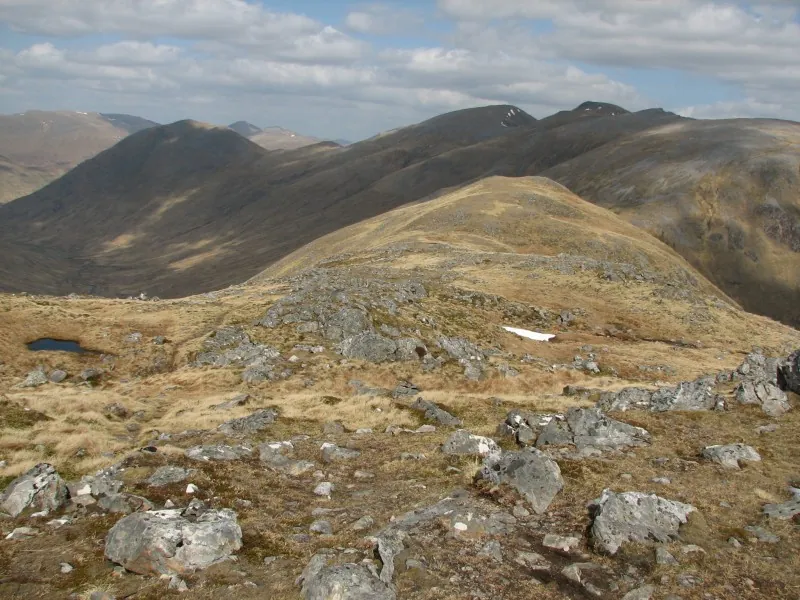
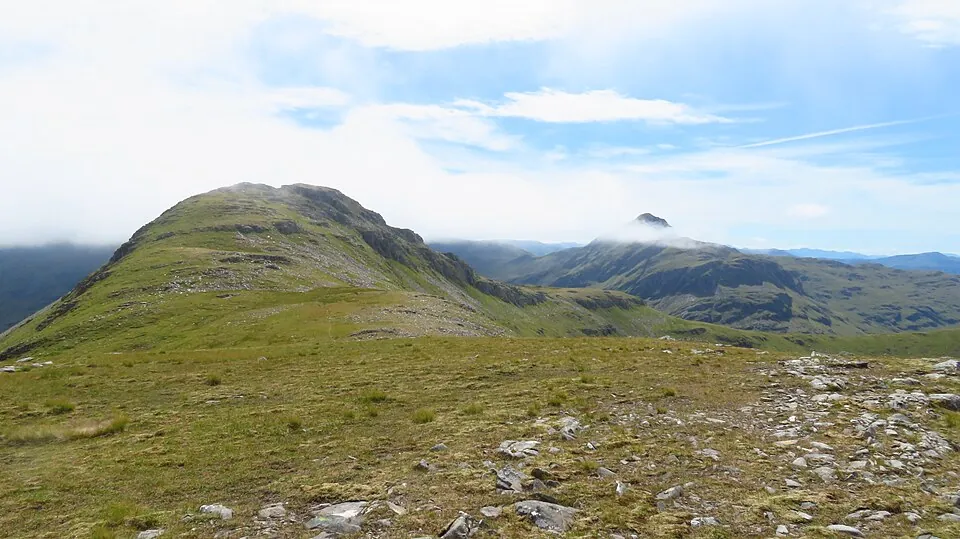
The summit of Sgùrr a' Mhaoraich at 1027 metres is a rewarding, exposed peak with exceptional views across some of Scotland's wildest country. The top is marked by a cairn on rocky, windswept ground with steep drops on several sides. The terrain is典ically Highland, with shattered schist, coarse mountain gravel, and sparse alpine vegetation clinging to the thin soil.
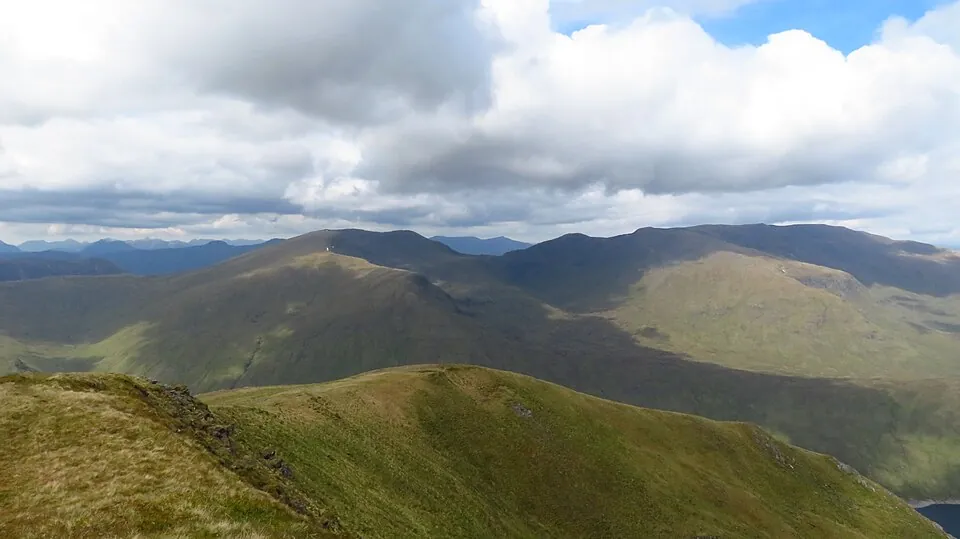
On clear days, the panorama extends west to the rugged peaks of Knoydart, north across a sea of remote mountains, and east towards Glen Garry. The summit offers a profound sense of wilderness and remoteness, with Loch Quoich far below and virtually no signs of human habitation in any direction. Shelter from the wind is non-existent, so don't plan on lingering if conditions are harsh.
The name 'Peak of the Shellfish' is curious given the mountain's inland location, possibly referring to ancient sea fossils or a misunderstanding of the Gaelic. If you've combined Sgùrr a' Mhaoraich with neighbouring peaks, the summit provides a welcome high point and a chance to appreciate your circuit. In winter, cornices can form on the lee edges, requiring careful approach and retreat.
The descent requires sustained concentration, particularly in poor visibility when the pathless terrain and complex topography can make navigation challenging even with map and compass.
The ecology around Sgùrr a' Mhaoraich reflects the wet, wild character of the western Highlands. The lower slopes are…
The ecology around Sgùrr a' Mhaoraich reflects the wet, wild character of the western Highlands. The lower slopes are dominated by heather moorland interspersed with boggy sections where sedges, cotton grass, and sphagnum mosses thrive. As you climb through the middle elevations, the vegetation transitions to alpine heath with bilberry, crowberry, and mat grass replacing the heather.
The rocky upper slopes support montane communities of mosses, lichens, and hardy flowering plants including starry saxifrage and moss campion. Red deer are abundant throughout the area, particularly visible during dawn and dusk on the lower hillsides and in the corries. Golden eagles patrol these skies, their massive wingspans unmistakable as they soar on thermals scanning for prey.
Above 900 metres, ptarmigan inhabit the summit areas, their cryptic plumage changing seasonally to match the landscape. Ravens are frequent companions, their acrobatic flight and croaking calls echoing across the crags. Mountain hares frequent the higher slopes, white in winter and brown in summer. The western location means Sgùrr a' Mhaoraich receives higher rainfall than eastern mountains, supporting luxuriant moss growth on boulders and in sheltered gullies.
In spring, ring ouzels return to breed on the rocky slopes, their white chest crescents distinctive against dark plumage. The remoteness ensures wildlife encounters are often undisturbed and memorable.
Climbing Sgùrr a' Mhaoraich requires thorough preparation and realistic assessment of your mountain fitness. The…
Climbing Sgùrr a' Mhaoraich requires thorough preparation and realistic assessment of your mountain fitness. The 19-kilometre round trip covers demanding terrain with significant bog, so ensure you're physically prepared for sustained effort over rough ground. Navigation skills are essential, particularly on the pathless sections where mist can create serious route-finding challenges. Carry map, compass, and GPS device, and be confident in using them in zero visibility.
The bog level of 3/5 means waterproof boots with good ankle support and gaiters are highly recommended to keep feet dry and comfortable. Pack sufficient food and water for a 6-8 hour day, as there are no facilities and streams may be unreliable in dry spells. Mobile phone signal is absent throughout, so inform someone responsible of your plans and expected return time.
The remoteness means self-rescue is your only option in case of injury, so consider carrying a personal locator beacon for emergencies. Weather can deteriorate rapidly at altitude, so pack warm layers, full waterproofs, and emergency shelter even on seemingly stable days. If combining Sgùrr a' Mhaoraich with Sgùrr a' Chaorachain, be realistic about your fitness, the extended distance, and available daylight.
Winter conditions demand full mountaineering skills and equipment including ice axe and crampons. Respect stalking season access arrangements between August and October, and be prepared to postpone if requested by the estate.
Explore more peaks near Loch Ness.
Common questions about climbing Sgùrr a' Mhaoraich.
Sgùrr a' Mhaoraich stands at 1,027 metres (3,369 feet), making it the 108th tallest of all 282 Munros in Scotland.
The name Sgùrr a' Mhaoraich translates from Scottish Gaelic as “Peak of the Shellfish”.
Climbing Sgùrr a' Mhaoraich typically takes between 6 and 7.8 hours round trip. This varies with fitness, weather, and the route chosen.
There is dedicated parking at the standard starting point for the main route up Sgùrr a' Mhaoraich, in the Loch Ness area. The exact car park location, map pin and arrival guidance are in the free Munros app.
Sgùrr a' Mhaoraich is rated Hard (difficulty 4/5).
The most popular route up Sgùrr a' Mhaoraich covers 19.1km, 6–7.8 hours round trip.
Sgùrr a' Mhaoraich (difficulty 4/5 at 1,027m) is best suited to experienced hillwalkers in the Loch Ness area. Expect sustained steep terrain and the need for confident navigation in poor visibility.
Sgùrr a' Mhaoraich is in the Loch Ness region of Scotland. Nearby Munros include An Riabhachan, An Socach (Affric), An Socach (Mullardoch).
Step-by-step directions, GPS navigation, exact parking and offline maps for Sgùrr a' Mhaoraich — free in the Munros app.
Free — Download on theApp StoreTrack all 282 Munros, plan routes, and log every summit. Join 2,400+ hillwalkers already using Munros.app.