Sgùrr Bàn
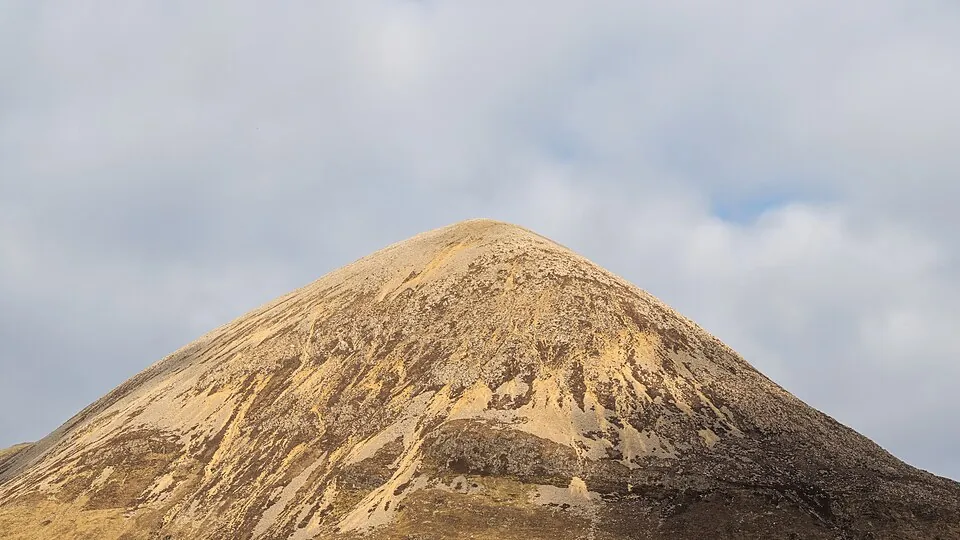
“White Peak”
“White Peak”
Sgùrr Bàn is a 989m Munro in the Ullapool region, its Gaelic name meaning “white peak”. It stands 162nd of the 282 Munros by height. The usual ascent — Fisherfield circuit from Shenavall — is a 42.5km round trip taking 10.9–14.2 hours, rated very hard (5/5).
There are 2 routes to the summit of Sgùrr Bàn, ranging from 20km.
Sgùrr Bàn rises to 989 metres in the remote Fisherfield wilderness near Ullapool, one of Scotland's most distant and…
Sgùrr Bàn rises to 989 metres in the remote Fisherfield wilderness near Ullapool, one of Scotland's most distant and committing mountain areas. The ascent forms part of either the Fisherfield circuit or the legendary Fisherfield Six, both graded 5/5 for difficulty. The shorter route covers 20 kilometres over 11-14 hours, while the full circuit extends to 42.5 kilometres requiring 11-14 hours of sustained effort.
Starting from Corrie Hallie or the nearby layby, you'll first face a long approach to Shenavall bothy, crossing rough, pathless terrain. The bog level is severe at 4/5, making this one of Scotland's wettest and most challenging approaches. Waterproof boots, gaiters, and patience are essential as you navigate through extensive peat bogs and waterlogged ground.
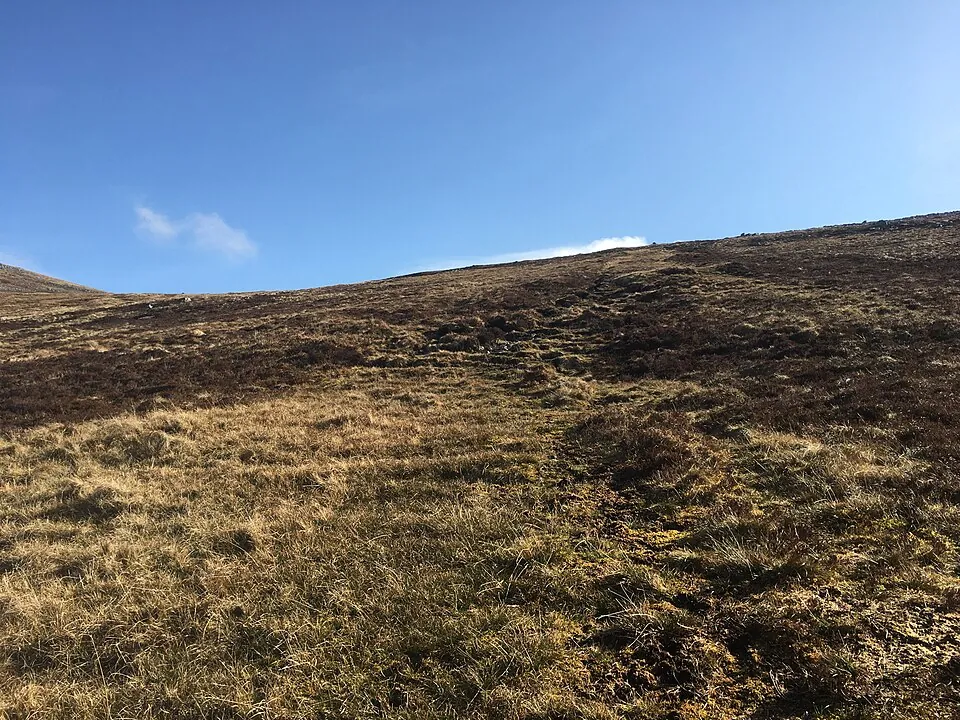
Beyond Shenavall, the climbing of Sgùrr Bàn itself begins, with steep, pathless slopes requiring careful navigation and stamina. The terrain improves as you gain height, becoming rockier and firmer, but the approach and return will test your resolve. Path quality is poor to non-existent across much of the route, with navigation skills absolutely critical. The remoteness is profound, with limited escape options and no facilities.
Sgùrr Bàn rewards the committed hillwalker with wild, unspoiled Highland character and genuine wilderness experience.
Sgùrr Bàn and the Fisherfield area are best tackled between late May and early September when daylight is longest and…
Sgùrr Bàn and the Fisherfield area are best tackled between late May and early September when daylight is longest and conditions are most favourable. Even in midsummer, the length of the routes demands an alpine start, often departing before dawn to ensure safe completion in daylight. The northwest Highlands receive prodigious rainfall, and the extensive bogs around Sgùrr Bàn become nightmarish after wet periods.
Choose a spell of settled, dry weather if possible, ideally after several dry days when ground conditions are less saturated. Summer offers the most reliable weather windows, though Highland conditions remain unpredictable. The extreme remoteness means weather deterioration creates serious problems, with long, difficult retreat through pathless, boggy terrain.
Winter ascents of Sgùrr Bàn are major mountaineering expeditions requiring winter camping or exceptional fitness, full winter skills, and willingness to turn back if conditions deteriorate. Spring can offer excellent conditions with firm ground where snow has melted and bogs are still frozen, but requires flexibility. Autumn brings spectacular colours but rapidly shortening days that make the long routes increasingly marginal or impossible.
At 989 metres, Sgùrr Bàn sits in cloud on many days, with visibility often limited. Midges from late May through August can be oppressive, particularly around Shenavall and on the approaches. Many experienced mountaineers consider Fisherfield Scotland's most challenging mountain area, demanding respect, preparation, and humility.
Access to Sgùrr Bàn begins at Corrie Hallie or the nearby layby on the A832 between Braemore Junction and Dundonnell.…
Access to Sgùrr Bàn begins at Corrie Hallie or the nearby layby on the A832 between Braemore Junction and Dundonnell. This remote location in the northwest Highlands is reached via the A835 from Inverness towards Ullapool, then the A832 through spectacular but demanding Highland scenery. The layby parking is limited and fills early during good weather or peak season, so arrive before dawn if possible.
There are no facilities whatsoever at the roadside start, so come fully self-sufficient with all food, water, and equipment. The nearest services are in Dundonnell Hotel a few kilometres away, offering limited facilities, or Ullapool approximately 40 minutes north with full shops, fuel, and accommodation. Mobile phone signal is non-existent from the trailhead onwards, so download all maps, route information, and weather forecasts before leaving civilisation.
The walk to Shenavall bothy takes 2-3 hours across rough, boggy terrain, and many parties use the bothy as a base for multi-day expeditions to spread the immense distances. Respect the bothy code if using Shenavall, leaving it clean and carrying out all rubbish. The remoteness of Sgùrr Bàn cannot be overstated: you are entirely self-reliant once you leave the road.
Inform someone responsible of your plans and expected return time, and consider carrying a personal locator beacon for this genuinely wild area.
The summit of Sgùrr Bàn at 989 metres is a wild, remote peak in the heart of the Fisherfield wilderness. The name means…
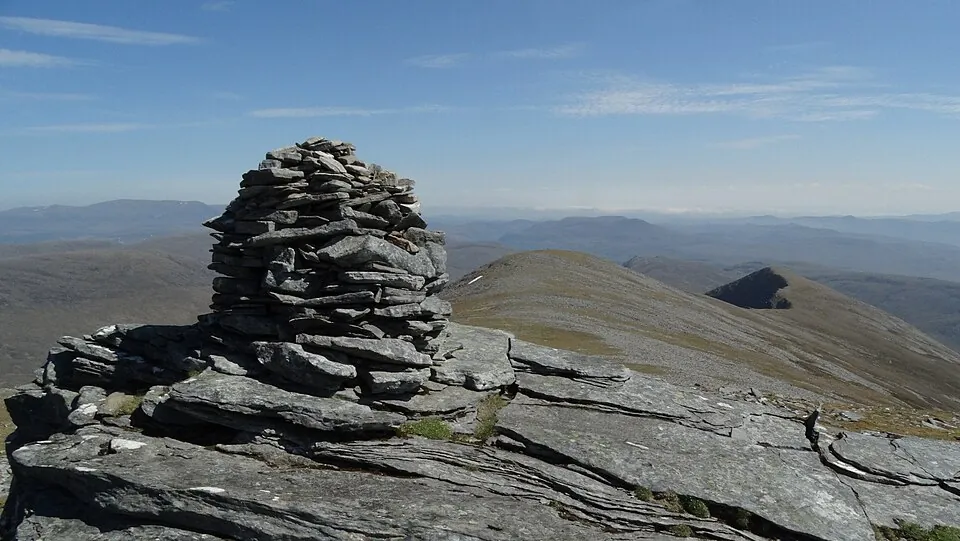
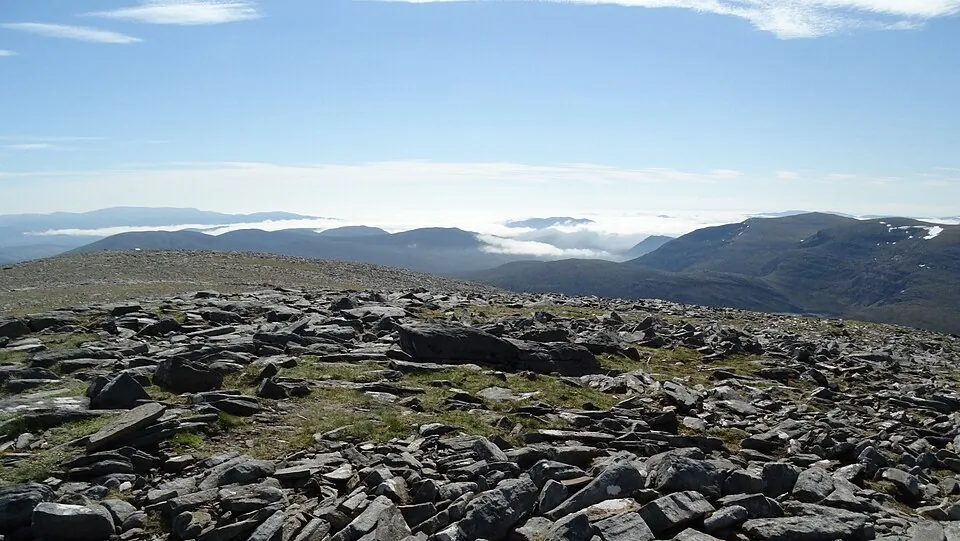
The summit of Sgùrr Bàn at 989 metres is a wild, remote peak in the heart of the Fisherfield wilderness. The name means 'White Peak', possibly referring to quartzite bands in the rock or to winter snow that lingers late into spring. The top is marked by a cairn on rocky, exposed ground with extensive views across one of Scotland's last great wildernesses.
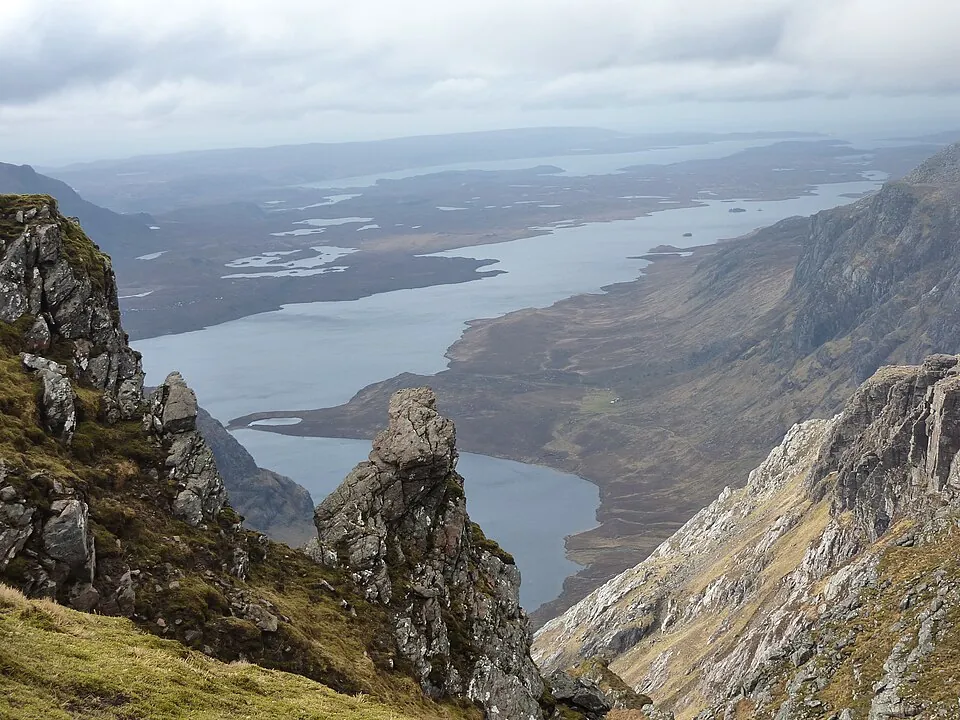
On clear days, the panorama is magnificent, with An Teallach's dramatic ridges dominating the northern view, the peaks of the Fisherfield round stretching in all directions, and the Atlantic visible to the west. The sense of remoteness is profound and humbling, with virtually no signs of human presence in the vast landscape. Shelter from wind is minimal, so don't plan lengthy summit stops in harsh conditions.
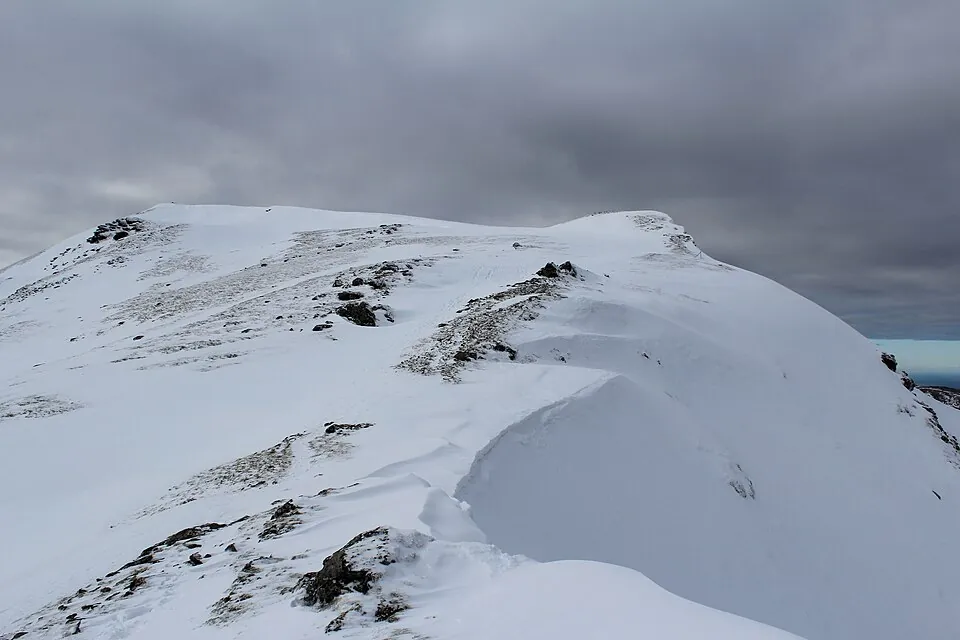
The achievement of reaching Sgùrr Bàn is substantial, knowing you've crossed some of Scotland's most challenging terrain to stand on this distant peak. If you're attempting the Fisherfield Six, the summit represents one milestone in an epic mountain day. In winter, the summit can be heavily corniced and snow-covered, transforming Sgùrr Bàn into a serious winter mountaineering objective.
The descent requires sustained concentration and careful navigation, particularly in mist when the pathless terrain and complex topography create significant route-finding challenges across the featureless bogs below.
The Fisherfield wilderness and Sgùrr Bàn support some of Scotland's finest mountain ecology. The extensive bogs on the…
The Fisherfield wilderness and Sgùrr Bàn support some of Scotland's finest mountain ecology. The extensive bogs on the approaches are dominated by sphagnum mosses, sedges, cotton grass, and bog asphodel, creating a wet but botanically rich environment. As you climb through the middle elevations, heather moorland gives way to alpine heath with bilberry, crowberry, and dwarf shrubs.
The higher slopes of Sgùrr Bàn support montane communities with mosses, lichens, and hardy alpine plants clinging to the rocky terrain. Red deer are abundant throughout the area, and the remoteness means they're often less disturbed than in more accessible locations. Golden eagles are regularly seen over Fisherfield, soaring on thermals and scanning the vast landscape for prey. White-tailed sea eagles from the coastal reintroduction sometimes venture into the mountains.
Above 900 metres, ptarmigan inhabit the summit areas of Sgùrr Bàn, perfectly camouflaged against the rocky ground. Mountain hares frequent the higher slopes, and wildcats may persist in this remote sanctuary, though sightings are extremely rare. Ravens and buzzards are common, while ring ouzels breed on the rocky slopes. The northwest location brings high rainfall, supporting luxuriant moss growth on boulders and in sheltered gullies.
Alpine flowers including starry saxifrage and purple saxifrage add colour to rocky ledges in spring and summer. The Fisherfield area's pristine wilderness character makes wildlife encounters particularly special on Sgùrr Bàn.
Attempting Sgùrr Bàn requires exceptional preparation, fitness, and mountain experience. This is one of Scotland's most…
Attempting Sgùrr Bàn requires exceptional preparation, fitness, and mountain experience. This is one of Scotland's most remote and demanding Munros, with 20-42 kilometres of extremely challenging terrain. The bog level of 4/5 is severe, making waterproof boots, gaiters, and mental resilience essential. Navigation skills must be expert-level, as the pathless, featureless terrain becomes seriously disorientating in mist.
Carry map, compass, GPS with spare batteries, and the confidence to navigate in zero visibility across complex ground. Pack generous food and water for an extremely long day, plus substantial emergency rations. The remoteness means self-rescue is your only option if injured, so carry first aid supplies and consider a personal locator beacon. Mobile phone signal is completely absent, so leave detailed plans with someone responsible.
Weather can deteriorate rapidly, and retreat through the bogs is long and arduous, so only attempt Sgùrr Bàn in settled conditions. Pack full waterproofs, warm layers, emergency shelter, and be prepared for Highland weather even in summer. Many parties overnight at Shenavall bothy to split the immense distances, carrying sleeping bags and stoves. Winter conditions make Sgùrr Bàn an extreme mountaineering expedition beyond most capabilities.
The Fisherfield area demands absolute respect: this is genuine wilderness where mistakes have serious consequences. Be realistic about your fitness, skills, and commitment before attempting this magnificent but unforgiving mountain.
Explore more peaks near Ullapool.
Common questions about climbing Sgùrr Bàn.
Sgùrr Bàn stands at 989 metres (3,245 feet), making it the 162nd tallest of all 282 Munros in Scotland.
The name Sgùrr Bàn translates from Scottish Gaelic as “White Peak”.
Climbing Sgùrr Bàn typically takes between 10.9 and 14.3 hours round trip. This varies with fitness, weather, and the route chosen — there are 2 routes to the summit.
There is dedicated parking at the standard starting point for the main route up Sgùrr Bàn, in the Ullapool area. The exact car park location, map pin and arrival guidance are in the free Munros app.
Sgùrr Bàn is rated Very Hard (difficulty 5/5). Route difficulty varies across the 2 available routes.
The most popular route up Sgùrr Bàn covers 20km, 11–14.3 hours round trip. There are 2 routes to the summit in total, ranging from Very Hard to Very Hard difficulty.
Sgùrr Bàn (difficulty 5/5 at 989m in the Ullapool area) is one of Scotland's most demanding Munros, requiring experience on exposed and technical mountain terrain.
Sgùrr Bàn is in the Ullapool region of Scotland. Nearby Munros include A' Chailleach (Fannichs), A' Mhaighdean, Am Faochagach.
Step-by-step directions, GPS navigation, exact parking and offline maps for Sgùrr Bàn — free in the Munros app.
Free — Download on theApp StoreTrack all 282 Munros, plan routes, and log every summit. Join 2,400+ hillwalkers already using Munros.app.