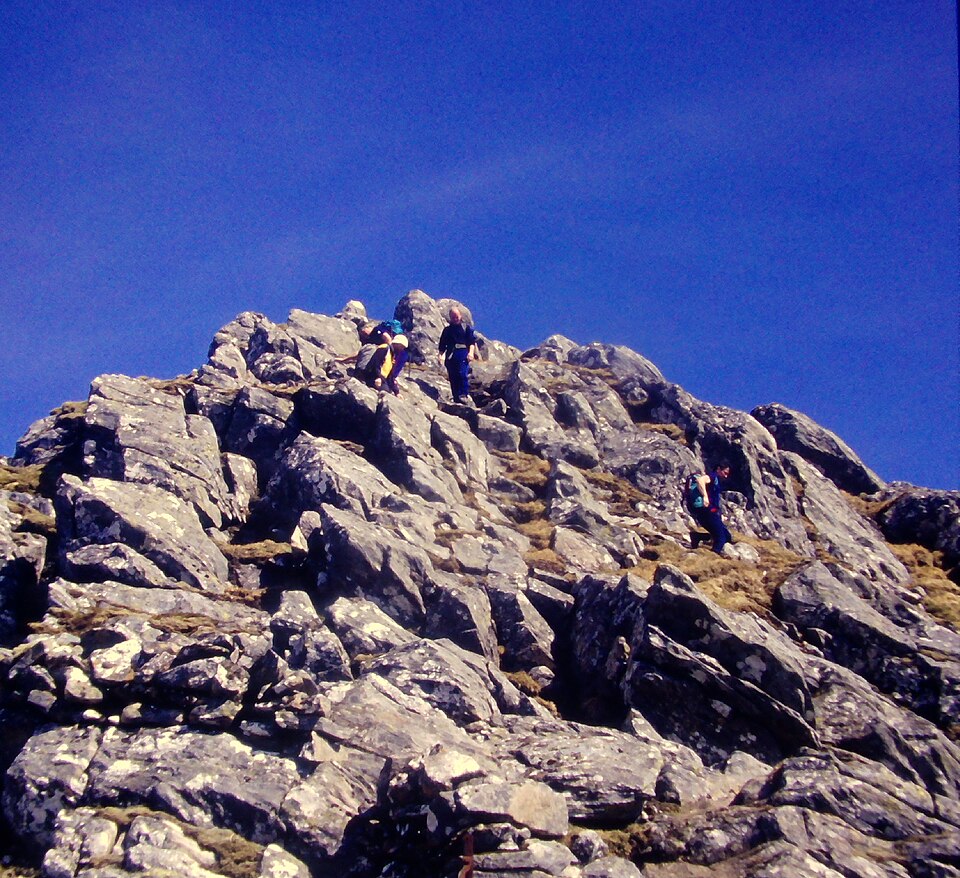
Drive west from Invergarry on the A87 and, once you crest the watershed at Cluanie, the character of the hills changes. The rounded grassy lumps of the Great Glen give way to a landscape of long, high ridges and steep-sided peaks that plunge straight into the glen. This is Kintail and Glen Shiel — arguably the finest concentration of ridge walking anywhere on the Munro list, and one of the great destinations for anyone who loves a long day moving along a skyline.
What makes this area special is the geometry. The Munros here line up in near-continuous chains, so a single day can deliver three, five or even seven summits without ever losing much height. If you enjoy the rhythm of a big traverse — the sense of covering ground, of watching the view swing round as you go — few places give you more for your effort. It is also, mercifully, well served by the A87, so the walk-ins are shorter than the remote hills further north.
Getting There and Where to Base Yourself
The A87 is the spine of the region, running from Invergarry through Glen Shiel to Shiel Bridge and on towards the Skye bridge. Almost every route starts from a layby or car park on this road, which keeps logistics simple. The Cluanie Inn, sitting at the eastern end of Glen Shiel, is the traditional base and the natural jumping-off point for the South Glen Shiel Ridge and the hills around Loch Cluanie.
Further west, Shiel Bridge and the National Trust campsite at Morvich put you at the foot of the Five Sisters and Beinn Fhada. Morvich is the classic starting point for the northern hills and for the walk into Beinn Fhada and A' Ghlas-bheinn. There is a good spread of accommodation between Cluanie, Shiel Bridge and Dornie, but book ahead in summer — this is a busy tourist corridor. For an overview of what the region holds, the Kintail Munros page lists every hill.
The Five Sisters of Kintail
The Five Sisters are the postcard skyline of the region — a soaring wall of peaks on the north side of Glen Shiel that you cannot miss as you drive through. Despite the name, only three of the summits are full Munros: Sgurr Fhuaran (the highest at 1,067m), Sgurr na Ciste Duibhe, and Sgurr na Carnach, with the two western "sisters" being tops rather than separate Munros.
The traverse is a serious mountain day. Most walkers start from the layby in Glen Shiel and climb steeply to the bealach below Sgurr nan Spainteach, then take on the ridge from east to west, finishing with the long descent off Sgurr Fhuaran. It is relentless — a lot of ascent, some easy scrambling, and no easy escape once you commit — but the position is magnificent, with the ridge dropping away on both sides and views out to Skye. Reckon on a full day and pick settled weather; the descent is steep and unpleasant in the wet.
The South Glen Shiel Ridge
If the Five Sisters are the most photographed hills here, the South Glen Shiel Ridge is the one every list-ticker dreams about. This is the single most efficient Munro day in Scotland: seven Munros in one continuous traverse, strung along a high ridge on the south side of the glen. The peaks include Druim Shionnach, Aonach air Chrith (the high point of the ridge at 1,021m), Sgurr an Doire Leathain and Sgurr an Lochain, along with Creag a' Mhaim, Maol Chinn-dearg and Creag nan Damh at either end.
The usual approach climbs from the old military road near Cluanie up onto the eastern end, then simply follows the crest westward, dropping and reclimbing over each summit. The walking is mostly straightforward — grassy ridge with a couple of narrower, rockier sections — but the sheer length is the challenge. It is a long day, typically eight to ten hours, and the sting in the tail is the return along the glen once you descend at the far end. A bicycle stashed at the finish, or a second car, saves a weary road walk. This is a day that rewards good fitness; if you are building towards it, our notes on Munro bagging fitness training are worth a read.
The Saddle and the Forcan Ridge
For scramblers, the Saddle is the jewel of Glen Shiel. This shapely peak is usually climbed by the Forcan Ridge, one of the best moderate scrambles on the mainland — a narrow, exposed crest of firm rock that gives sustained hands-on climbing at around Grade 2, with an airy pinnacle section near the top. It is genuinely exposed in places, and a slip would be serious, so it is a route for a dry day and a steady head. There is an easier bypass path below the crest for those who want the summit without the scramble.
Many walkers combine the Saddle with its neighbour Sgurr na Sgine to make a satisfying two-Munro circuit from the Glen Shiel roadside. If the Forcan Ridge appeals, it is worth first getting comfortable on easier ground — the best Munro ridge walks guide covers where to build that confidence.
The Brothers, Ciste Dhubh and the Cluanie Hills
North of the glen, opposite the South Glen Shiel Ridge, sits the group often called the Brothers of Kintail: Aonach Meadhoin, Sgurr a' Bhealaich Dheirg and Saileag. These three make a fine, less-trodden traverse, and the shapely Ciste Dhubh can be added or taken on its own from the Cluanie Inn.
At the eastern end, above Loch Cluanie, lies another cluster: A' Chralaig and Mullach Fraoch-choire to the north, and Sgurr nan Conbhairean with Carn Ghluasaid and Sail Chaorainn to the east. The Conbhairean group makes a straightforward horseshoe from the A87 and is a good choice when the higher, rockier ridges are shrouded in cloud.
When to Go and What to Expect
These are big, committing hills with long ridges and few easy escape routes, so the weather matters more than usual here. Late spring and early autumn tend to give the best combination of long daylight, firm ground and clearer air. Summer works but brings midges to the glens and the risk of low cloud sitting on the tops for days. Winter transforms the area into serious mountaineering terrain — the Forcan Ridge and the narrow sections of the Five Sisters become full winter routes needing axe, crampons and the skills to use them. Before any trip, check the forecast properly; our guide on how to check Munro weather explains what to look at.
Kintail feels remote despite the road running through it. Once you are on the ridges, the glen falls away and you are committed to your line, often for hours. Carry a map and compass and know how to use them, because a navigational error on these long crests in cloud can cost you badly. Log each summit in the Munros app, which stores offline maps and the routes for the Five Sisters and South Glen Shiel Ridge so you can follow your progress along the crest even without a signal.
Few areas reward the ridge-walker as generously as this one. Give it a settled spell of weather and a couple of days, and Kintail will hand you some of the best skyline miles in Scotland.
Related guides
- Best Munro ridge walks — where to cut your teeth before the Forcan Ridge and the Five Sisters.
- Munro bagging fitness training — build the endurance the South Glen Shiel Ridge demands.
- Munro bagging in the Northwest Highlands — the wider region Kintail belongs to.
Munros in this article
Browse Related Hubs
Track your Munros
Log summits, get summit weather, and follow GPS routes for all 282 Munros. Free on the App Store.
Download the Free App