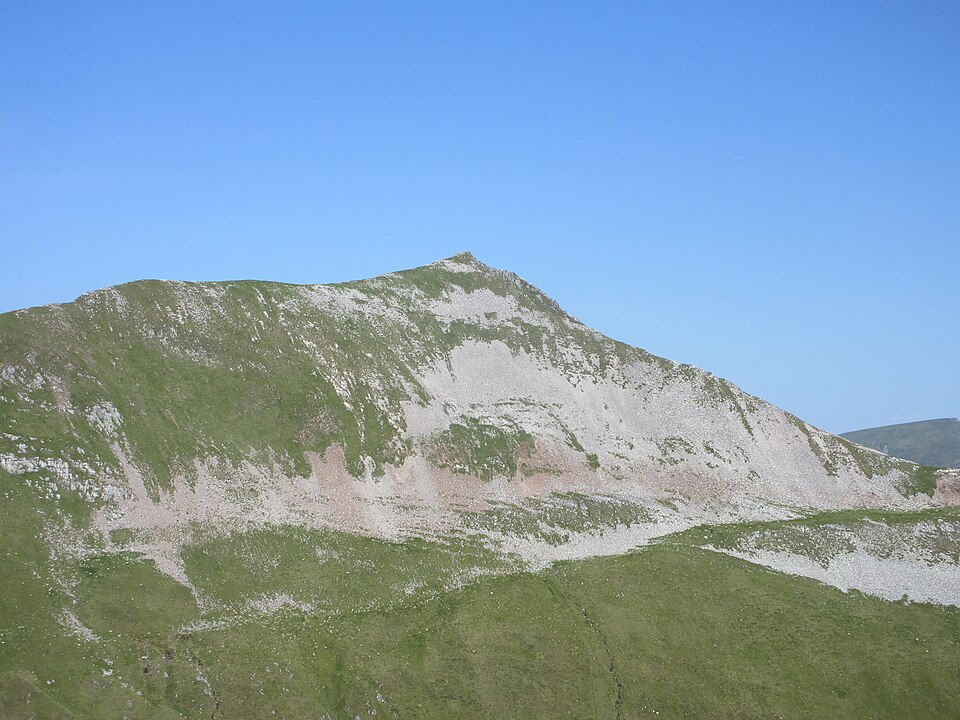
Look south from the summit of Ben Nevis and your eye is drawn to a long, graceful line of peaks arranged like a switchback across the horizon. That is the Mamores — ten Munros linked by narrow, elegant ridges that curve and dip between Glen Nevis and Kinlochleven. Where Ben Nevis and the Aonachs are bulky and brooding, the Mamores are all sweeping lines and airy crests. For many hillwalkers they are the most enjoyable ridge country in the Fort William area, and a place you come back to again and again.
The beauty of the Mamores is how they connect. The ridges link summit to summit with little wasted descent, so you can chain three, four or five Munros in a day and spend most of it high on a crest with the ground falling away on both sides. It is walking that flows, punctuated by a couple of genuine scrambles for those who want them.
Where to Base Yourself
Kinlochleven sits directly beneath the eastern Mamores and is the natural base for the Binnein Mor group and the eastern tops. It has accommodation, a shop and the West Highland Way passing through, so it is well set up for walkers. Glen Nevis, reached from Fort William, gives access to the western end and to the celebrated Ring of Steall via the wire bridge at the head of the glen road. Fort William itself is the largest hub, with everything you need and a short drive to either approach. For the full picture of the surrounding hills, see the Fort William Munros page.
The Ring of Steall
The Ring of Steall is the classic Mamores round and one of the best mountain days in the country. It takes in four Munros — An Gearanach, Stob Coire a' Chairn, Am Bodach and Sgurr a' Mhaim — in a horseshoe around the Steall waterfall.
Most people start from the Glen Nevis car park, crossing the famous three-wire bridge over the river (a small adventure in itself) and heading up to An Gearanach. From there the ridge narrows dramatically over the An Gearanach to An Garbhanach arete — a short, exposed rocky crest that involves easy scrambling and demands a steady head. The round then curves over Stob Coire a' Chairn and Am Bodach before the finale: the traverse to Sgurr a' Mhaim along the Devil's Ridge.
The Devil's Ridge
The Devil's Ridge is the reason many walkers do the Ring of Steall in the first place. Running out to Sgurr a' Mhaim over the top of Stob Coire a' Mhail, it is a narrow, sensational crest of firm rock with real exposure — a slip on the wrong side would be serious. The scrambling itself is only about Grade 1, with hands needed in a couple of places and one slightly awkward step, but the airy position makes it feel bigger than the technical grade suggests. There is a faint bypass path on the flank for the worst of it, though the ridge is far better taken direct in dry conditions.
Sgurr a' Mhaim, with its pale quartzite cap that can look like snow from a distance, is a magnificent viewpoint and a fitting end to the round before the long, steep descent back to Glen Nevis. If you are new to this kind of ground, build up to it gradually — the best Munro ridge walks guide suggests where to start.
Binnein Mor and the Eastern Mamores
Binnein Mor (1,130m) is the highest of the Mamores and the anchor of the eastern group. Its steep, narrow summit ridge is a fine place to stand, with the whole chain laid out to the west. It pairs naturally with Na Gruagaichean just to the south, and many walkers link the two in a single circuit from Kinlochleven.
Off to the east sits Sgurr Eilde Mor, a shapely cone standing slightly apart above its own lochan. It is often combined with Binnein Mor and Na Gruagaichean — and with the neighbouring Binnein Beag — to make a big eastern round from Kinlochleven, though the extra distance makes for a long day. These eastern hills feel quieter and more remote than the busy Ring of Steall, and the walk in from Kinlochleven has a real sense of heading into the hills.
The Western Mamores and Stob Ban
At the western end, Stob Ban is a striking peak whose pale quartzite summit gives it a distinctly alpine look. It is usually climbed with its neighbour Mullach nan Coirean in a compact horseshoe from Glen Nevis — a shorter, less committing day than the Ring of Steall, and a good introduction to the area or a fine choice when the forecast is marginal. Stob Ban's summit rocks are notoriously slippery when wet, so watch your footing on the descent.
The western horseshoe is often overlooked by walkers fixated on the Ring of Steall, which is a shame — it gives you the essential Mamores experience of a clean, curving ridge with big views, at a scale that suits a half day or an easier outing. On a clear afternoon the panorama from Stob Ban across to the Ben and round to the rest of the chain is as good as anything the range offers, and you will likely have it to yourself.
When to Go and Staying Safe
Late spring through early autumn is the sweet spot: long daylight, firmer ground and the best chance of the clear conditions that make the ridges worth doing. High summer brings midges to Glen Nevis and Kinlochleven, so carry repellent and start early. The scrambling sections — the An Garbhanach arete and the Devil's Ridge — are best kept for dry, settled days, as wet rock and exposure are a poor combination.
In winter the Mamores become a different proposition entirely. Those narrow crests hold snow and ice, cornices build on the leeward sides, and the Devil's Ridge in particular becomes a serious mountaineering route needing axe, crampons and the judgement to use them. If you are heading up in the colder months, treat it as a full winter day and read our winter Munro bagging guide first. Whatever the season, check the forecast carefully — the weather funnelling off Ben Nevis can change fast up here.
Stringing the Munros Together
The great appeal of the Mamores is how many summits you can link. Strong walkers sometimes traverse the entire chain in a single huge day, but for most people the sensible approach is to break it into two or three rounds: the Ring of Steall from Glen Nevis, the Binnein Mor group from Kinlochleven, and the Stob Ban horseshoe at the west. Spread over a long weekend, that is a superb way to collect a big share of the ten Munros. If a wild camp appeals, the high lochans of the eastern Mamores make lovely pitches — our guide to wild camping Scotland's Munros covers doing it responsibly.
These are high, exposed ridges, and the weather off Ben Nevis can change fast, so check the forecast carefully and carry proper navigation. Log each summit in the Munros app, which stores offline maps and routes for the Ring of Steall and the eastern round so you can follow the ridge line even when the cloud comes down. Few places let you walk so far, so high, with so little wasted effort — that is what keeps drawing walkers back to the Mamores.
Related guides
- Best Munro ridge walks — how the Ring of Steall compares to Scotland's other great ridges.
- Munro bagging in Glen Coe and Ben Nevis — the neighbouring hills and how to combine them.
- Wild camping Scotland's Munros — how to camp high in the Mamores responsibly.
Munros in this article
Browse Related Hubs
Track your Munros
Log summits, get summit weather, and follow GPS routes for all 282 Munros. Free on the App Store.
Download the Free App