Sgùrr Èilde Mòr
“Big Peak of the Hind”
Sgùrr Èilde Mòr is a 1,010m Munro in the Fort William region, its Gaelic name meaning “big peak of the hind”. It stands 126th of the 282 Munros by height. The usual ascent — Sgùrr Èilde Mòr from Kinlochleven (Blackwater) — is a 23km round trip taking 7.3–9.5 hours, rated hard (4/5).
There is 1 route to the summit of Sgùrr Èilde Mòr, covering 23km.
The ascent of Sgùrr Èilde Mòr from Kinlochleven is a substantial undertaking, covering 23km with a 4/5 difficulty rating…
The ascent of Sgùrr Èilde Mòr from Kinlochleven is a substantial undertaking, covering 23km with a 4/5 difficulty rating that reflects both distance and terrain complexity. The route via the Blackwater reservoir area involves significant ascent to reach the 1010m summit, with moderate 3/5 bog levels meaning you'll encounter wet ground on approaches but nothing too severe.
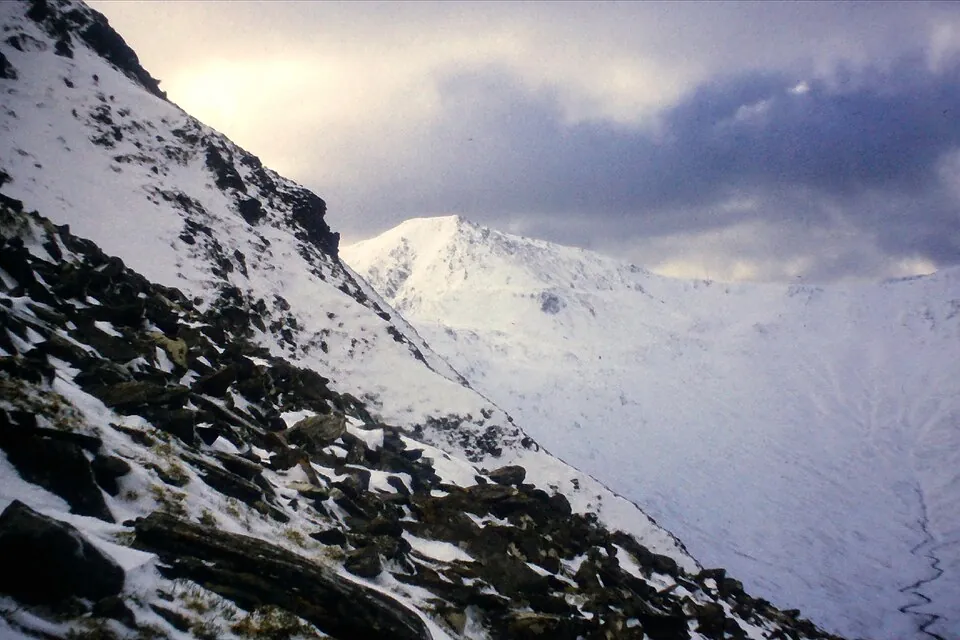
Paths are intermittent, with well-defined sections giving way to rougher, more broken ground as you gain height toward Sgùrr Èilde Mòr. The terrain becomes increasingly rocky higher up, with some hands-on scrambling possible on the steeper flanks depending on your chosen line. Gradients are sustained rather than brutal, but the cumulative effect over the long approach demands good fitness.
The Big Peak of the Hind rises commandingly above the surrounding glens, requiring respect and proper pacing to reach its summit successfully.
Sgùrr Èilde Mòr is best climbed during late spring through early autumn when daylight extends long enough for the 7-9…
Sgùrr Èilde Mòr is best climbed during late spring through early autumn when daylight extends long enough for the 7-9 hour expedition. The Fort William region experiences high rainfall year-round, being fully exposed to Atlantic weather systems that sweep in with little warning. Summer months offer the most reliable conditions, though afternoon cloud development is common even on good days.
The 1010m summit frequently enters cloud, making navigation skills essential rather than optional. Winter transforms Sgùrr Èilde Mòr into a serious mountaineering objective requiring crampons, ice axe, and winter experience, with avalanche risk in certain gullies and slopes. Early starts are advisable regardless of season, ensuring you complete the route in daylight with time in hand for unexpected delays.
Check mountain weather forecasts carefully, and be prepared to turn back if conditions deteriorate—the long approach means retreat takes significant time.
Access to Sgùrr Èilde Mòr begins at Kinlochleven, a village at the head of Loch Leven offering parking for hillwalkers.…
Access to Sgùrr Èilde Mòr begins at Kinlochleven, a village at the head of Loch Leven offering parking for hillwalkers. The settlement is reached via the B863 from the A82, making it relatively straightforward to find. Parking is available in the village, though spaces can be limited during busy summer periods and weekends. Kinlochleven offers shops, cafes, and accommodation, making it a good base for early starts or post-climb recovery.
The village marks the transition from lowland to Highland, with Sgùrr Èilde Mòr rising to the south. Mobile signal is reasonable in Kinlochleven itself but becomes unreliable once you're into the hills. The area around the Blackwater reservoir has a fascinating industrial archaeology history, though your focus will be on the mountain rising ahead. Ensure you have full supplies before leaving the village, as there are no facilities once you're committed to the route.
The summit of Sgùrr Èilde Mòr at 1010m provides an excellent viewpoint across the complex topography of the Fort William…
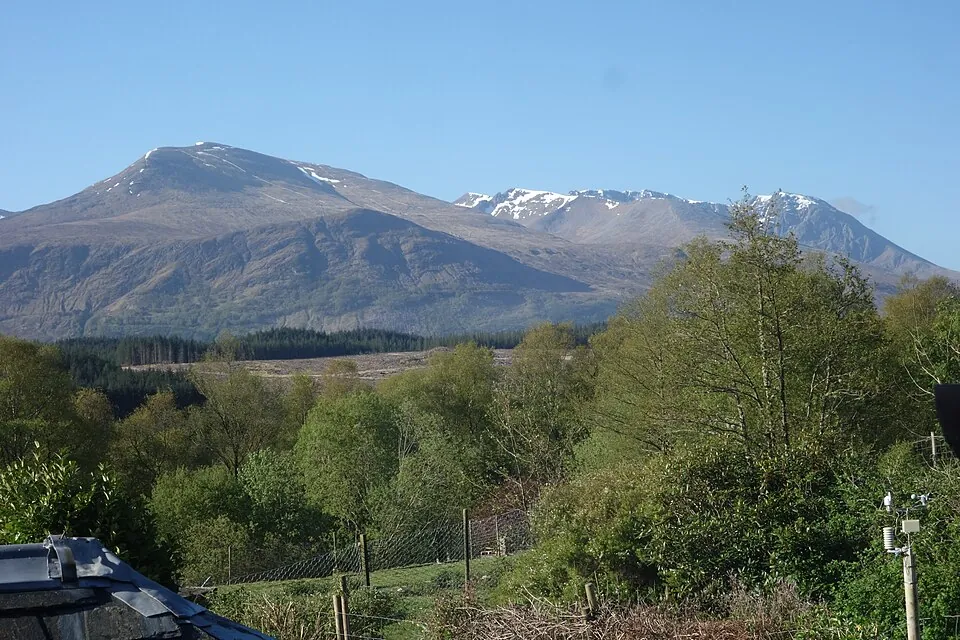
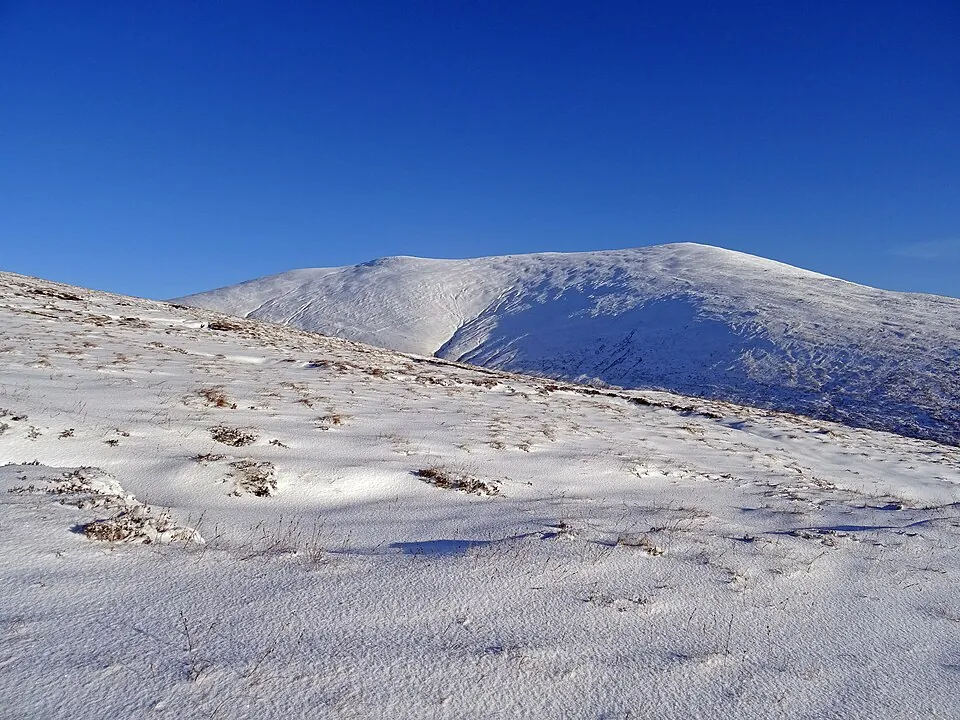
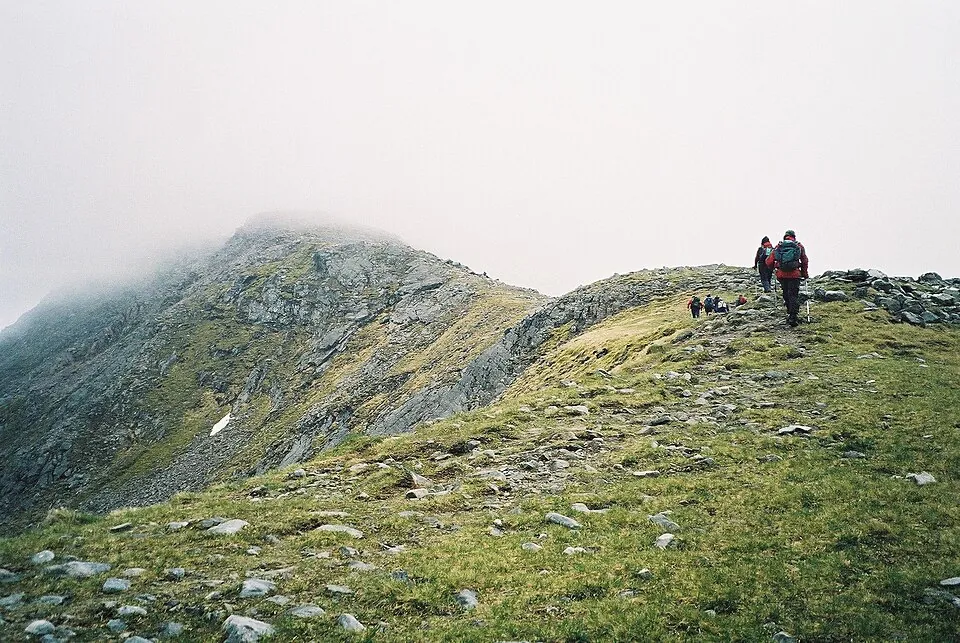
The summit of Sgùrr Èilde Mòr at 1010m provides an excellent viewpoint across the complex topography of the Fort William hills, with the cairn marking a rocky, exposed high point. Shelter is minimal, with the prevailing westerlies sweeping unimpeded across the summit plateau. On clear days, you're rewarded with extensive views across neighboring peaks and down to the glens far below, revealing the scale of the landscape you've crossed.
The summit area features broken rock underfoot, providing secure footing in dry conditions but demanding care when wet or icy. The Peak of the Hind lives up to its elevated position, offering a sense of significant achievement after the long approach. You won't want to linger in poor weather, as exposure to wind and rain is severe with no natural shelter.
The descent requires concentration, particularly if you're tired from the long day already invested in reaching Sgùrr Èilde Mòr.
The approaches to Sgùrr Èilde Mòr traverse diverse habitats reflecting the Fort William region's high rainfall. Lower…
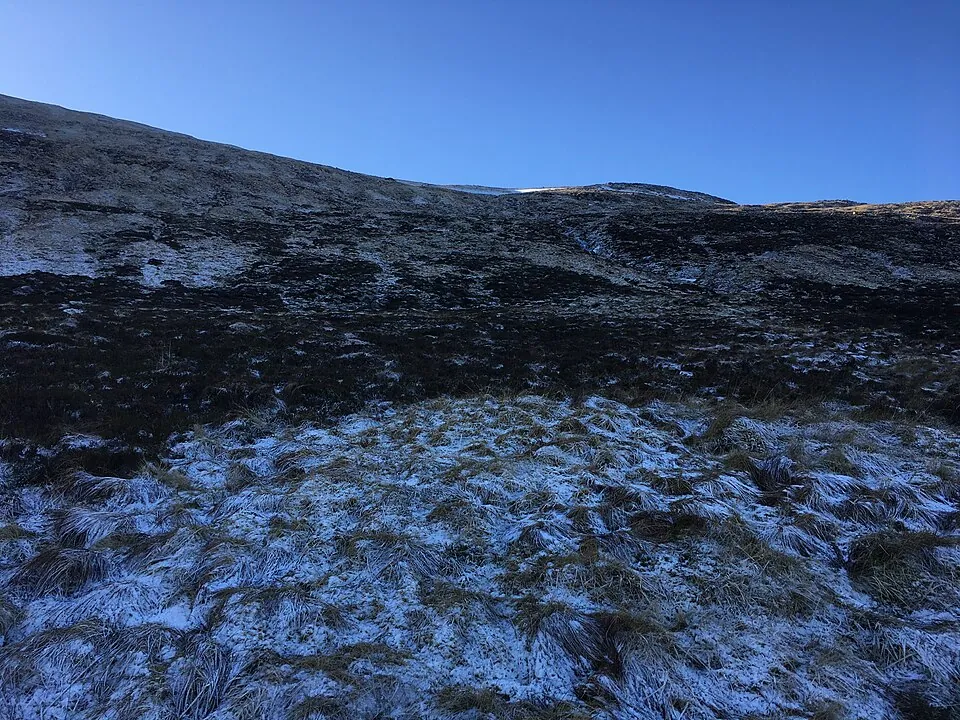
The approaches to Sgùrr Èilde Mòr traverse diverse habitats reflecting the Fort William region's high rainfall. Lower sections feature heather moorland interspersed with areas of bog myrtle and cross-leaved heath where the 3/5 bog rating manifests in wetter ground. Purple moor grass dominates damper areas, while drier hummocks support bell heather and ling. Red deer are abundant throughout these hills, frequently visible on distant slopes as you gain height.
As you ascend Sgùrr Èilde Mòr, vegetation transitions to montane communities with bilberry, cowberry, and mat-grass on the better-drained ground. Higher still, only hardy mosses and lichens colonize the rocky terrain near the summit. Golden eagles hunt across these remote hills, their broad wings allowing them to cover vast territories. Ravens are common, while ring ouzels may be spotted during breeding season.
Above 900m, watch for ptarmigan in their seasonally changing plumage.
Sgùrr Èilde Mòr demands thorough preparation given the 23km distance and 4/5 difficulty rating. Carry full navigation…
Sgùrr Èilde Mòr demands thorough preparation given the 23km distance and 4/5 difficulty rating. Carry full navigation equipment including map, compass, and GPS, as the terrain becomes complex in mist and escape routes are limited. Waterproof boots are essential for the moderate bog levels, and gaiters help manage wet ground. Pack substantially more food and water than you might for a shorter outing, as the 7-9 hour duration can easily extend if conditions slow your pace.
Weather in the Fort William area changes rapidly, so carry warm and waterproof layers even on promising mornings. Mobile signal is unreliable once you're beyond Kinlochleven, making self-reliance critical. Leave detailed route plans with someone responsible, including your expected return time. Headtorches should be packed even in summer, as finishing in darkness is possible if you're delayed.
The remoteness of Sgùrr Èilde Mòr means rescue would take considerable time, making good planning your best safety strategy.
Explore more peaks near Fort William.
Common questions about climbing Sgùrr Èilde Mòr.
Sgùrr Èilde Mòr stands at 1,010 metres (3,314 feet), making it the 126th tallest of all 282 Munros in Scotland.
The name Sgùrr Èilde Mòr translates from Scottish Gaelic as “Big Peak of the Hind”.
Climbing Sgùrr Èilde Mòr typically takes between 7.3 and 9.5 hours round trip. This varies with fitness, weather, and the route chosen.
There is dedicated parking at the standard starting point for the main route up Sgùrr Èilde Mòr, in the Fort William area. The exact car park location, map pin and arrival guidance are in the free Munros app.
Sgùrr Èilde Mòr is rated Hard (difficulty 4/5).
The most popular route up Sgùrr Èilde Mòr covers 23km, 7.3–9.5 hours round trip.
Sgùrr Èilde Mòr (difficulty 4/5 at 1,010m) is best suited to experienced hillwalkers in the Fort William area. Expect sustained steep terrain and the need for confident navigation in poor visibility.
Sgùrr Èilde Mòr is in the Fort William region of Scotland. Nearby Munros include Am Bodach, An Gearanach, Aonach Beag (Nevis Range).
Step-by-step directions, GPS navigation, exact parking and offline maps for Sgùrr Èilde Mòr — free in the Munros app.
Free — Download on theApp StoreTrack all 282 Munros, plan routes, and log every summit. Join 2,400+ hillwalkers already using Munros.app.