Beinn Dòrain
1,076m
Argyll
“Mountain of the Otter”
1,076mHeight
13.8kmRound trip
4.8–6.2hWalk time
ModerateDifficulty 2/5
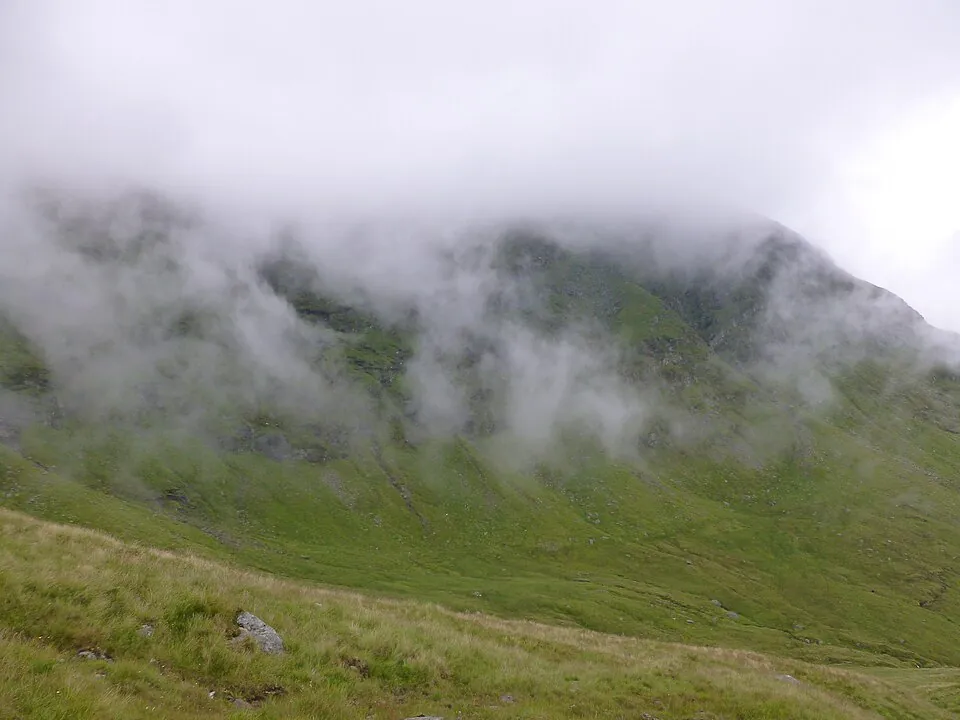
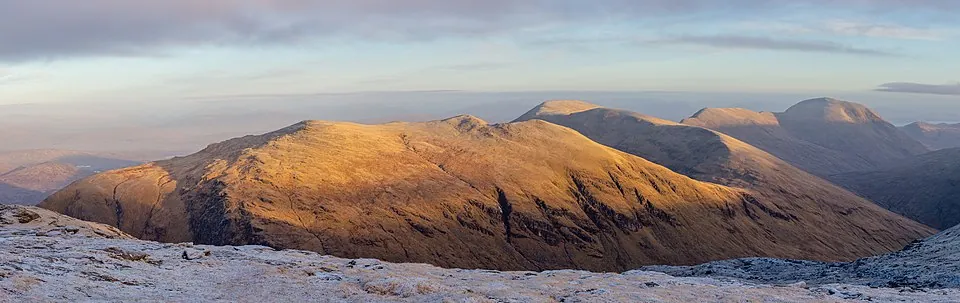
Photo: Podzemnik · CC BY-SA 4.0
“Mountain of the Otter”
Beinn Dòrain is a 1,076m Munro in the Argyll region, its Gaelic name meaning “mountain of the otter”. It stands 66th of the 282 Munros by height. The usual ascent — Beinn Dòrain and Beinn an Dòthaidh from Auch Glen — is a 13.8km round trip taking 4.8–6.2 hours, rated moderate (2/5).
There are 2 routes to the summit of Beinn Dòrain, ranging from 13.8km.
Beinn Dòrain presents a classic and rewarding ascent from Bridge of Orchy, with well-established paths taking you up its…
Beinn Dòrain presents a classic and rewarding ascent from Bridge of Orchy, with well-established paths taking you up its graceful cone-shaped profile. The route from Auch Glen begins with a steady climb through open moorland, where the path is generally good underfoot with a moderate bog level of 2 out of 5. You'll appreciate the straightforward nature of this ascent, which is among the more accessible Munros in the region.
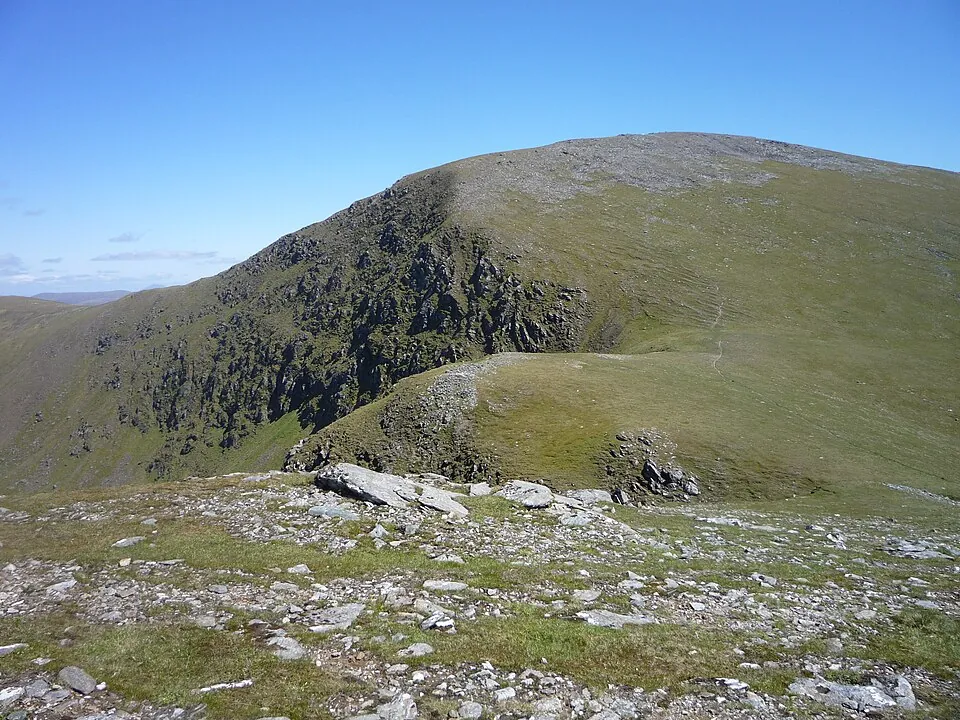
The gradient steepens as you approach the summit ridge of Beinn Dòrain, but the effort is consistent rather than punishing. The upper slopes consist of firm, rocky terrain that provides good footing even in damp conditions. This mountain can be combined with Beinn an Dòthaidh for a satisfying 13.8-kilometre circuit, though Beinn Dòrain stands as an excellent objective in its own right for those seeking a shorter day.
Beinn Dòrain is accessible throughout much of the year, making it a popular choice from spring through autumn. The…
Beinn Dòrain is accessible throughout much of the year, making it a popular choice from spring through autumn. The relatively short approach time of 5 to 6 hours means you can tackle this mountain even with moderate daylight hours in spring and autumn. Summer offers the longest days and generally the most stable weather, though the mountain's elevation means summit conditions can still be challenging.
Winter transforms Beinn Dòrain into a different proposition, with snow and ice on the upper slopes requiring crampons and ice axe. The Argyll region experiences substantial rainfall, particularly in autumn and winter, but the dry underfoot conditions make this mountain more forgiving than many in wetter conditions. Check the forecast for strong winds, as the exposed summit ridge can be buffeted severely in poor weather.
Your starting point is Bridge of Orchy Car Park, conveniently located in the village of Bridge of Orchy on the A82,…
Your starting point is Bridge of Orchy Car Park, conveniently located in the village of Bridge of Orchy on the A82, approximately 40 kilometres north of Tyndrum. The car park is well marked and easily accessible, with the added advantage of being right on the West Highland Railway line, meaning you can access Beinn Dòrain by train if you prefer to leave the car behind.
Bridge of Orchy Station provides an excellent option for walkers using public transport, with regular services from Glasgow. This makes Beinn Dòrain one of the more environmentally friendly Munros to access. The village itself offers basic facilities including accommodation and refreshments, useful for an early start or post-climb recuperation. From the car park, clear signage points you towards the trails into Auch Glen.
The summit of Beinn Dòrain at 1076 metres is a relatively compact rocky top crowned with a trig point and cairn. The…
The summit of Beinn Dòrain at 1076 metres is a relatively compact rocky top crowned with a trig point and cairn. The apex provides a superb viewpoint, particularly impressive given the mountain's isolated position rising prominently above Bridge of Orchy. In clear conditions, you're treated to sweeping vistas across Rannoch Moor's desolate expanse to the east.
To the north, the peaks of the Black Mount and Glencoe mountains dominate the skyline, while westward views extend towards the mountains of Argyll. Shelter on Beinn Dòrain's summit is limited, so in poor weather you won't want to linger long. The descent route is clear, following your ascent line back down the well-defined ridge, making navigation straightforward even in deteriorating visibility.
The lower slopes of Beinn Dòrain are cloaked in heather moorland with scattered patches of grass and sedge, particularly…
The lower slopes of Beinn Dòrain are cloaked in heather moorland with scattered patches of grass and sedge, particularly lush in the wetter hollows. Red deer frequently graze these lower elevations, and you'll often spot them moving across the hillside, particularly in early morning or evening. The relatively dry conditions mean the vegetation is less saturated than on western mountains.
As you climb Beinn Dòrain beyond 700 metres, you enter montane heath zones where bilberry, crowberry, and alpine lady's mantle become more prevalent. The rocky upper reaches provide habitat for mountain-adapted birds including ptarmigan, which change their plumage with the seasons for camouflage. Ravens are regular visitors to the summit area, their deep croaking calls echoing across the ridge.
In summer, you might spot ring ouzels in the rocky corries, these upland thrushes favouring the broken terrain around Beinn Dòrain's flanks.
Despite Beinn Dòrain's moderate difficulty rating of 2 out of 5, you should still approach this mountain with proper…
Despite Beinn Dòrain's moderate difficulty rating of 2 out of 5, you should still approach this mountain with proper preparation and equipment. The weather at 1076 metres can be vastly different from conditions at the car park, so carry full waterproofs, warm layers, and adequate food and water. Navigation in cloud requires careful attention, though the well-defined ridge helps with route-finding.
The path can be steep in sections, so walking poles are beneficial for both ascent and descent. While underfoot conditions are generally dry, carry waterproof boots for the occasional boggy patch in the lower sections. Mobile phone coverage is reasonable near Bridge of Orchy but becomes patchy higher up.
If combining Beinn Dòrain with Beinn an Dòthaidh, ensure you have sufficient time and energy for the extended route, and be prepared to adjust your plans if weather deteriorates.
Explore more peaks near Argyll.
Common questions about climbing Beinn Dòrain.
Beinn Dòrain stands at 1,076 metres (3,530 feet), making it the 66th tallest of all 282 Munros in Scotland.
The name Beinn Dòrain translates from Scottish Gaelic as “Mountain of the Otter”.
Climbing Beinn Dòrain typically takes between 4.6 and 6.2 hours round trip. This varies with fitness, weather, and the route chosen — there are 2 routes to the summit.
There is dedicated parking at the standard starting point for the main route up Beinn Dòrain, in the Argyll area. The exact car park location, map pin and arrival guidance are in the free Munros app.
Beinn Dòrain is rated Moderate (difficulty 2/5). Route difficulty varies across the 2 available routes.
The most popular route up Beinn Dòrain covers 13.8km, 4.8–6.2 hours round trip. There are 2 routes to the summit in total, ranging from Moderate to Moderate difficulty.
Beinn Dòrain in the Argyll area is well suited to walkers with some hillwalking experience. Rated difficulty 2/5 at 1,076m, the paths are clear and the terrain is not technically demanding.
Beinn Dòrain is in the Argyll region of Scotland. Nearby Munros include Beinn a' Chlèibh, Beinn a' Chochuill, Beinn a' Chreachain.
Step-by-step directions, GPS navigation, exact parking and offline maps for Beinn Dòrain — free in the Munros app.
Free — Download on theApp StoreTrack all 282 Munros, plan routes, and log every summit. Join 2,400+ hillwalkers already using Munros.app.