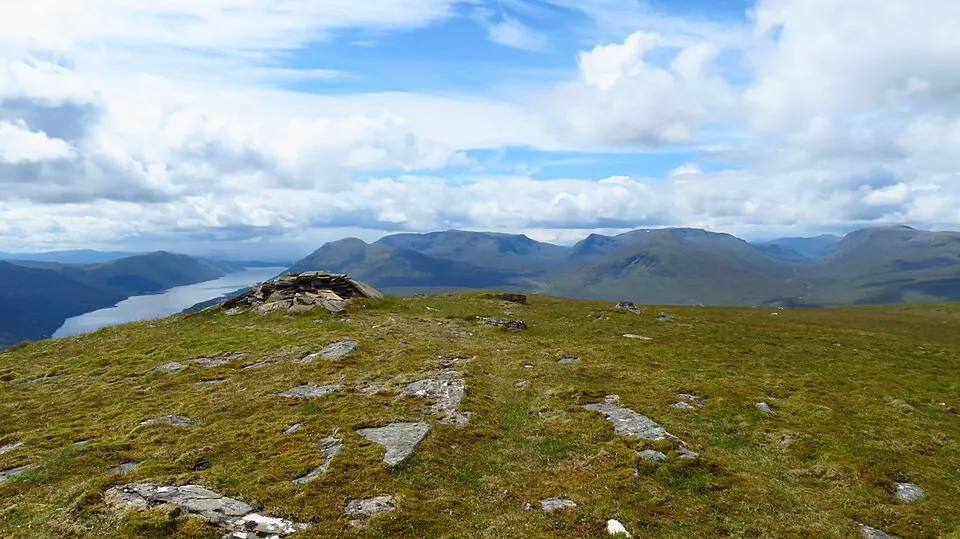
Càrn Dearg (Loch Pattack)
“Red Cairn”
“Red Cairn”
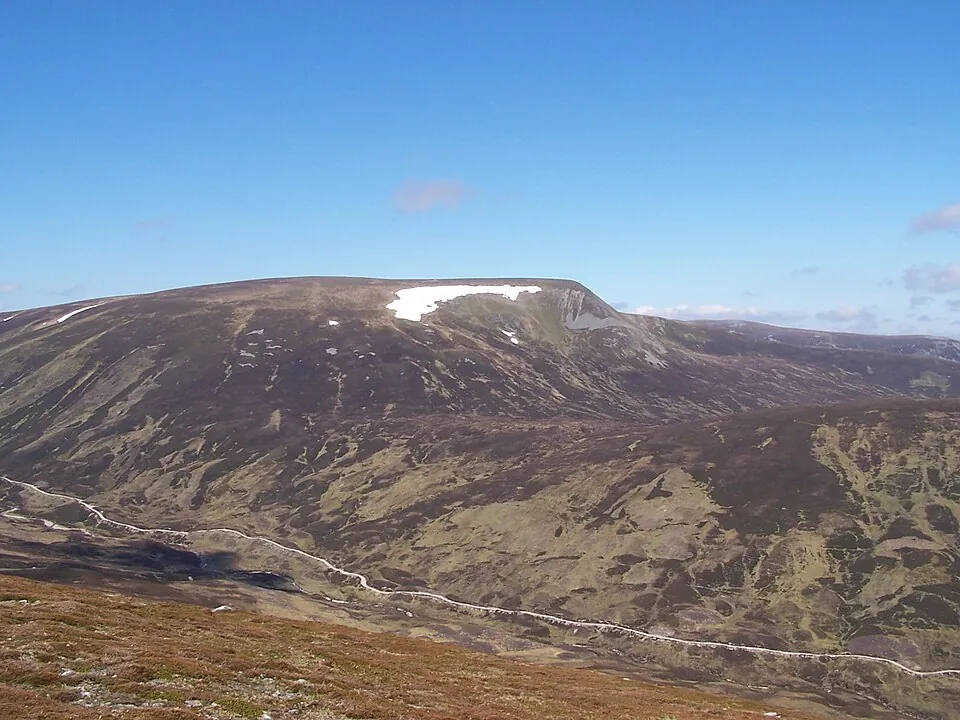
Càrn Dearg (Loch Pattack) is a 1,034m Munro in the Cairngorms region, its Gaelic name meaning “red cairn”. It stands 102nd of the 282 Munros by height. The usual ascent — Càrn Dearg from Loch Pattack (Dalwhinnie) — is a 21.3km round trip taking 7.4–9.6 hours, rated hard (4/5).
There is 1 route to the summit of Càrn Dearg (Loch Pattack), covering 21.3km.
The ascent of Càrn Dearg (Loch Pattack) from Dalwhinnie is a significant undertaking, with a 21.3-kilometre route…
The ascent of Càrn Dearg (Loch Pattack) from Dalwhinnie is a significant undertaking, with a 21.3-kilometre route requiring 7.4 to 9.6 hours of sustained effort. The approach follows estate tracks along Loch Pattack before striking across more pathless terrain toward the mountain itself. With a difficulty rating of 4/5, Càrn Dearg demands fitness, experience, and strong navigation skills.
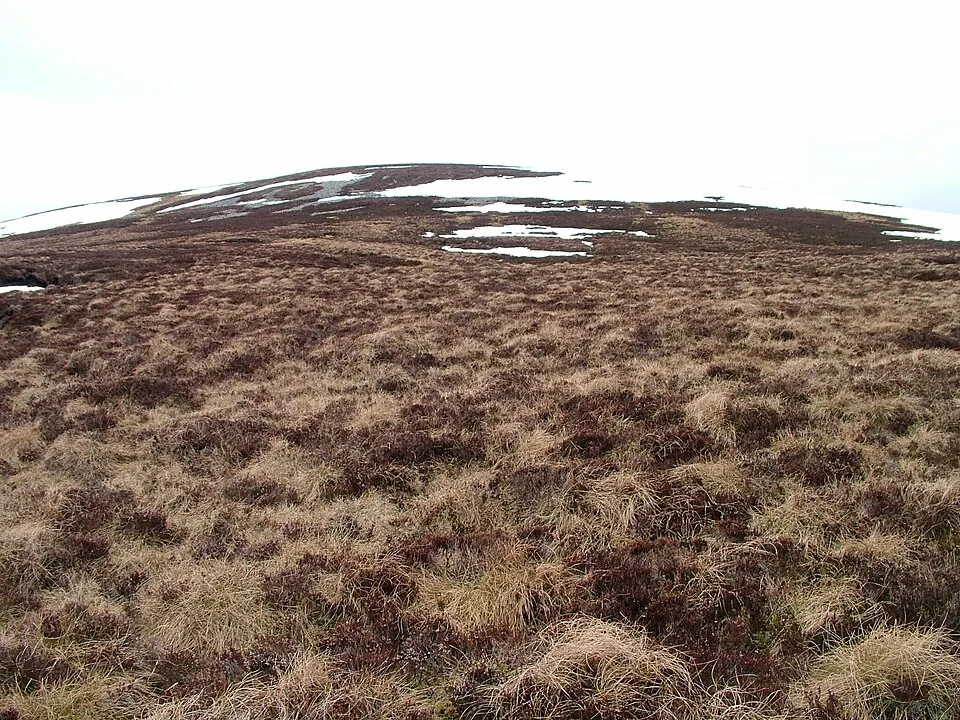
The bog level of 3/5 indicates moderately wet ground in places, though conditions are drier than further west. Gradients are generally manageable, with the mountain's bulk gained steadily rather than through steep scrambles. The terrain on Càrn Dearg varies from good estate tracks to rougher moorland and stony mountain slopes. At 1034 metres, this is a substantial peak requiring considerable ascent from the valley floor.
The length of the route means you'll spend much of the day in remote country far from roads or habitation, making self-sufficiency essential.
Càrn Dearg (Loch Pattack) is best climbed during the long days of late spring through early autumn, when you have…
Càrn Dearg (Loch Pattack) is best climbed during the long days of late spring through early autumn, when you have sufficient daylight for a route that can take up to 9.6 hours. Summer provides the most reliable weather and maximum daylight, with starts possible from around 6am to ensure completion in good time. Autumn can be superb, with clear skies, fresh air, and the deer rutting season adding drama to the glens, though days shorten rapidly as September turns to October.
Winter ascents of Càrn Dearg are serious mountaineering expeditions, with snow cover, short days, and potential avalanche risk requiring full winter skills and equipment. The mountain's height of 1034 metres means summit conditions can be severe even when the valley is mild. The Cairngorms' continental climate brings drier weather than the west but also colder temperatures and rapid changes.
Check forecasts carefully before setting out for Càrn Dearg, and be prepared to turn back if conditions deteriorate. The long approach means early starts are wise to maximise daylight and allow contingency time.
Access to Càrn Dearg (Loch Pattack) begins from Dalwhinnie, the small village on the A9 between Perth and Inverness,…
Access to Càrn Dearg (Loch Pattack) begins from Dalwhinnie, the small village on the A9 between Perth and Inverness, known for its distillery and its position as one of the highest villages in Scotland. Parking is available in the village, though spaces may be limited, and you should park considerately without blocking access or disrupting local residents.
Dalwhinnie is easily reached via the A9, with good road access year-round from both Perth (approximately 60 miles south) and Inverness (approximately 60 miles north). The village has basic facilities including a shop, distillery visitor centre, and railway station on the Highland Main Line, offering an alternative access option by train from Edinburgh, Glasgow, Perth, or Inverness.
The walk begins by following estate tracks along Loch Pattack, navigating through sporting estate land where walkers are generally welcome but should respect deer stalking activities during the season from mid-August through October. There are no facilities at the trailhead, so arrive fully equipped for a long mountain day.
Standing at 1034 metres, the summit of Càrn Dearg (Loch Pattack) offers commanding views across the Central Highlands.…
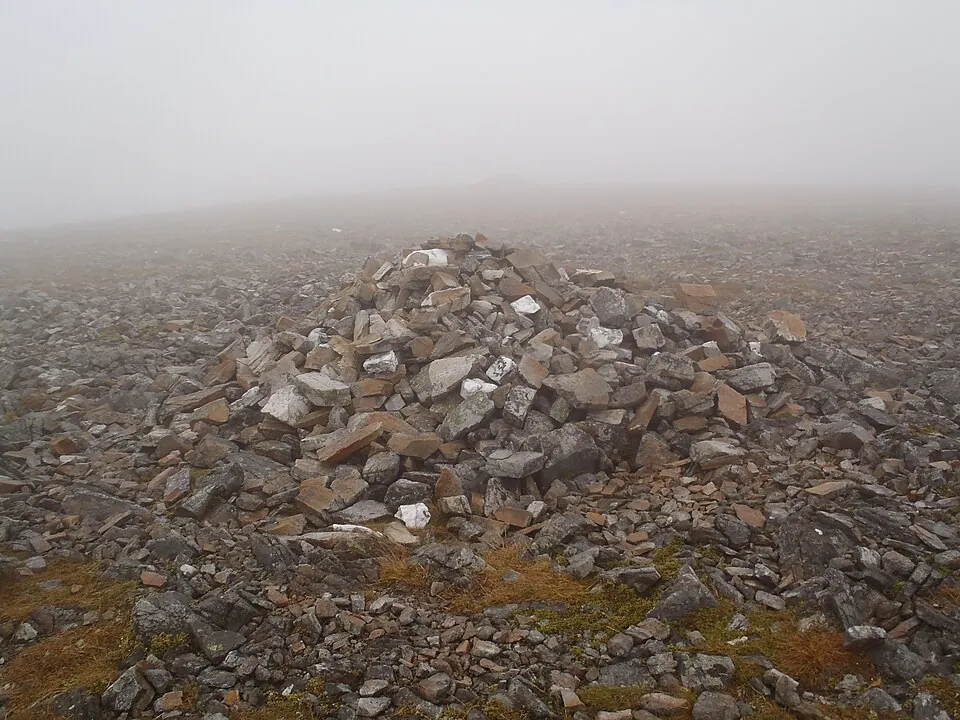
Standing at 1034 metres, the summit of Càrn Dearg (Loch Pattack) offers commanding views across the Central Highlands. The top is marked by a substantial cairn on a broad, dome-shaped summit, characteristic of these rounded Cairngorm peaks. The meaning 'Red Cairn' likely refers to iron-stained rocks or the reddish hues of weathered granite visible in the mountain's structure.
On clear days, you'll enjoy panoramic vistas extending to Ben Nevis and the western peaks, across to the main Cairngorm massif in the northeast, and south over the vast expanse of the Central Highland plateau. The summit of Càrn Dearg is exposed and windswept, offering little natural shelter beyond the cairn itself, so appropriate clothing is essential even on summer visits. The terrain is predominantly stony and well-drained, supporting sparse alpine vegetation.
The sense of space and remoteness is profound, with wilderness extending in every direction and human impact minimal. The achievement of reaching this isolated summit is considerable.
The ecology of Càrn Dearg (Loch Pattack) reflects its Central Highland location at considerable altitude. The long…
The ecology of Càrn Dearg (Loch Pattack) reflects its Central Highland location at considerable altitude. The long approach through the glen takes you past Loch Pattack, habitat for red-throated divers, common sandpipers, and other wetland birds. The lower slopes are cloaked in heather moorland, with ling, bell heather, and cross-leaved heath creating the classic Highland landscape.
As you gain height on Càrn Dearg, vegetation transitions to montane heath communities dominated by blaeberry, crowberry, and dwarf willow, with scattered patches of alpine lady's mantle. Above 900 metres, the vegetation becomes sparser, with arctic-alpine species like moss campion and three-pointed rush clinging to the exposed summit dome. Red deer are abundant throughout this area, with large herds frequently seen on the moorland and lower slopes.
Mountain hares inhabit the higher ground, their pelage changing from brown to white with the seasons. Ptarmigan breed on the summit plateau of Càrn Dearg. Golden eagles patrol these hills, and you may spot them soaring on thermals. Red grouse are common in the heather, their distinctive call echoing across the moor.
The length and remoteness of Càrn Dearg (Loch Pattack) demand thorough preparation and experienced mountain craft. With…
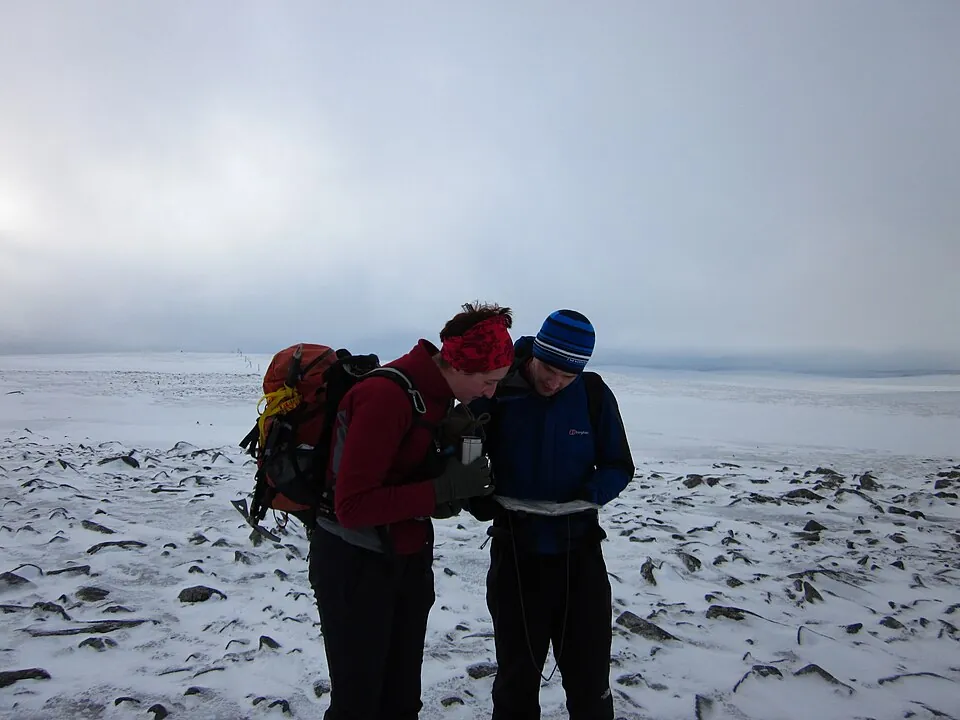
The length and remoteness of Càrn Dearg (Loch Pattack) demand thorough preparation and experienced mountain craft. With over 21 kilometres to cover and up to 9.6 hours on the hill, you need strong fitness and stamina. Navigation skills are essential, as sections of the route are pathless and the terrain can be featureless, particularly in poor visibility.
Carry full hill-walking equipment including waterproofs, warm layers, map, compass, GPS if available, first aid kit, emergency shelter, and head torch. Take more food and water than you calculate needing; this is a long day and maintaining energy and hydration is crucial. Mobile phone signal is unreliable or absent across much of the route, so don't depend on being able to summon help.
Weather at 1034 metres can be dramatically different from valley conditions, with wind chill, rain, or snow possible at any time of year. If walking during deer stalking season (mid-August to mid-October), check with the estate regarding stalking activity. In winter, Càrn Dearg requires full mountaineering skills and equipment. Always leave detailed plans with someone responsible and stick to your schedule.
If conditions deteriorate or you fall behind schedule, turn back; the mountain will wait for another day.
Explore more peaks near Cairngorms.
Common questions about climbing Càrn Dearg (Loch Pattack).
Càrn Dearg (Loch Pattack) stands at 1,034 metres (3,392 feet), making it the 102nd tallest of all 282 Munros in Scotland.
The name Càrn Dearg (Loch Pattack) translates from Scottish Gaelic as “Red Cairn”.
Climbing Càrn Dearg (Loch Pattack) typically takes between 7.4 and 9.6 hours round trip. This varies with fitness, weather, and the route chosen.
There is dedicated parking at the standard starting point for the main route up Càrn Dearg (Loch Pattack), in the Cairngorms area. The exact car park location, map pin and arrival guidance are in the free Munros app.
Càrn Dearg (Loch Pattack) is rated Hard (difficulty 4/5).
The most popular route up Càrn Dearg (Loch Pattack) covers 21.3km, 7.4–9.6 hours round trip.
Càrn Dearg (Loch Pattack) (difficulty 4/5 at 1,034m) is best suited to experienced hillwalkers in the Cairngorms area. Expect sustained steep terrain and the need for confident navigation in poor visibility.
Càrn Dearg (Loch Pattack) is in the Cairngorms region of Scotland. Nearby Munros include A' Bhuidheanach Bheag, A' Chailleach (Monadhliath), A' Mharconaich.
Step-by-step directions, GPS navigation, exact parking and offline maps for Càrn Dearg (Loch Pattack) — free in the Munros app.
Free — Download on theApp StoreTrack all 282 Munros, plan routes, and log every summit. Join 2,400+ hillwalkers already using Munros.app.