Stùcd an Lochain
960m
Isle of Skye
“Peak of the Little Loch”
960mHeight
20kmRound trip
4.6–6hWalk time
Very HardDifficulty 5/5
“Peak of the Little Loch”
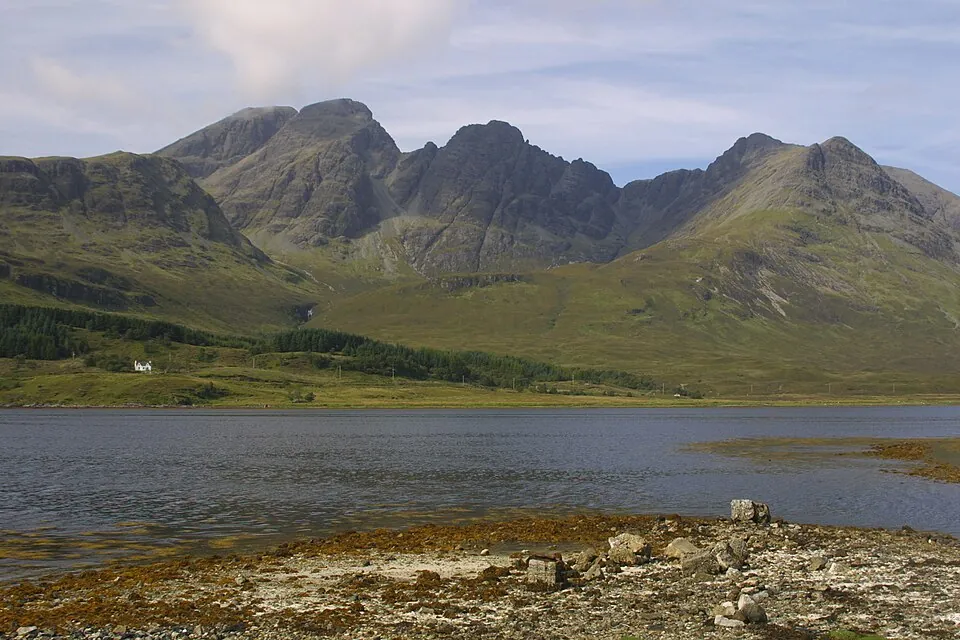
Stùcd an Lochain is a 960m Munro in the Isle of Skye region, its Gaelic name meaning “peak of the little loch”. It stands 199th of the 282 Munros by height. The usual ascent — Stùcd an Lochain via Coire Lagan from Glen Brittle — is a 20km round trip taking 4.6–6 hours, rated very hard (5/5).
There is 1 route to the summit of Stùcd an Lochain, covering 20km.
The ascent of Stùcd an Lochain via Coire Lagan from Glen Brittle is one of Scotland's most serious Munro expeditions.…
The ascent of Stùcd an Lochain via Coire Lagan from Glen Brittle is one of Scotland's most serious Munro expeditions. Despite the relatively modest 960m height, this 20km route rated 5/5 for difficulty takes 4.6 to 6 hours of sustained effort. Starting from Glen Brittle on Skye, you'll traverse wild, rocky terrain with significant exposure.
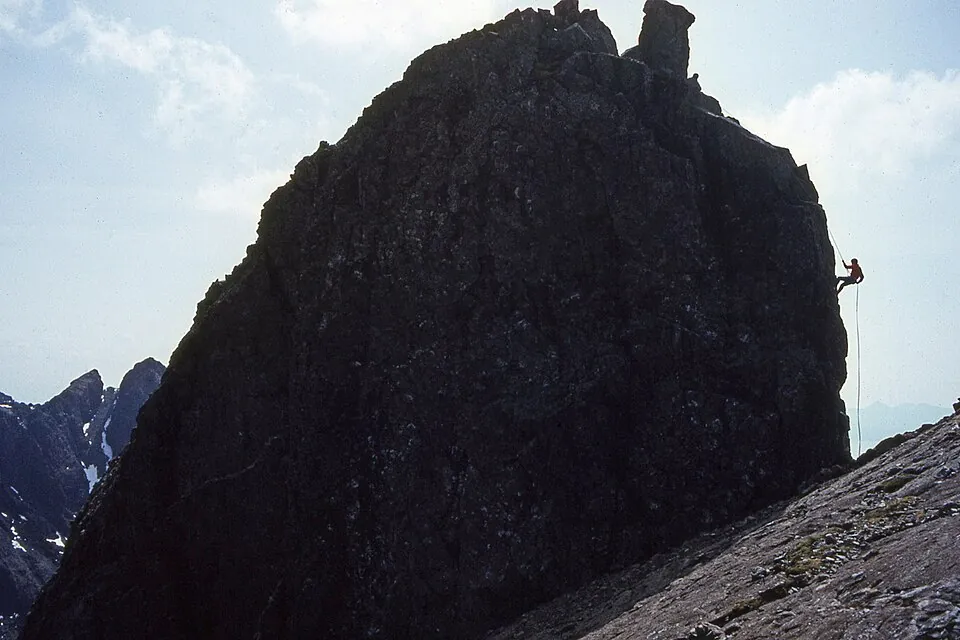
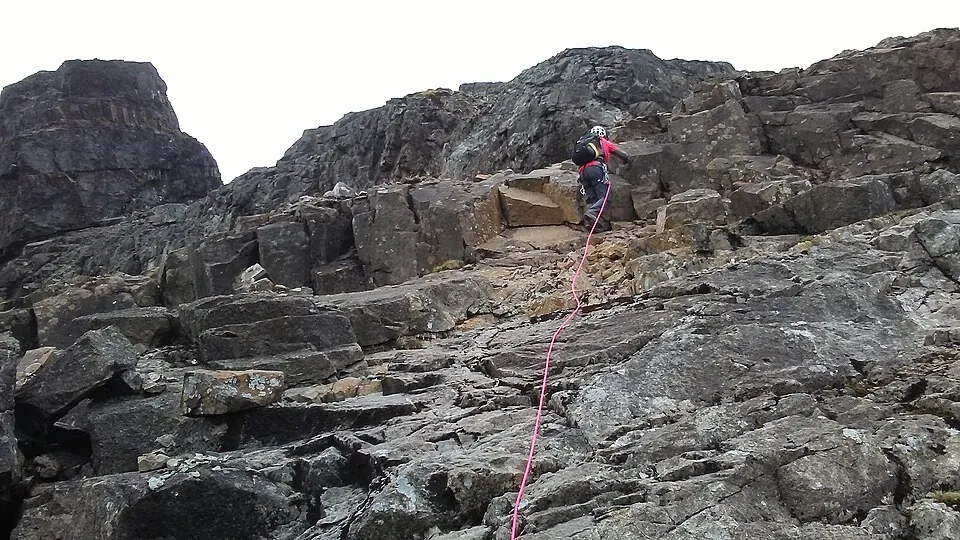
The ground is generally dry underfoot at 1/5 bog level, but this is compensated by the technical nature of the scrambling and rocky terrain you'll encounter. The route into Coire Lagan is spectacular but demanding, with steep, rough paths leading into the dramatic corrie surrounded by Skye's iconic jagged peaks. Stùcd an Lochain requires confident scrambling ability and a good head for heights, with sections of exposure that will test your nerve.
The Cuillin are notorious for their magnetic rock which can affect compass readings, adding to the navigational challenge. This is a committing mountain day requiring experience and confidence in technical terrain.
Stùcd an Lochain on Skye demands careful timing and weather watching. The best months are May through September when you…
Stùcd an Lochain on Skye demands careful timing and weather watching. The best months are May through September when you have maximum daylight for this serious 4.6 to 6 hour climb. Skye's western position means it catches Atlantic weather systems with full force, bringing frequent rain and strong winds even in summer.
The Isle of Skye experiences some of Scotland's most unpredictable weather, and conditions at 960m on Stùcd an Lochain can be vastly different from Glen Brittle below. Mist and cloud are common, and given the serious nature of the terrain and the unreliability of magnetic compasses in the Cuillin, you should only attempt this route in good visibility unless you're highly experienced.
Summer offers the longest days and best chance of settled weather, though you should always be prepared for wet and windy conditions. Winter climbing on Stùcd an Lochain is extremely serious, requiring full winter mountaineering skills and should only be attempted by experienced winter climbers. Spring and autumn can bring stunning conditions but also rapid weather changes.
The summit of Stùcd an Lochain at 960m places you in the heart of the dramatic Cuillin ridge. You'll find yourself on…
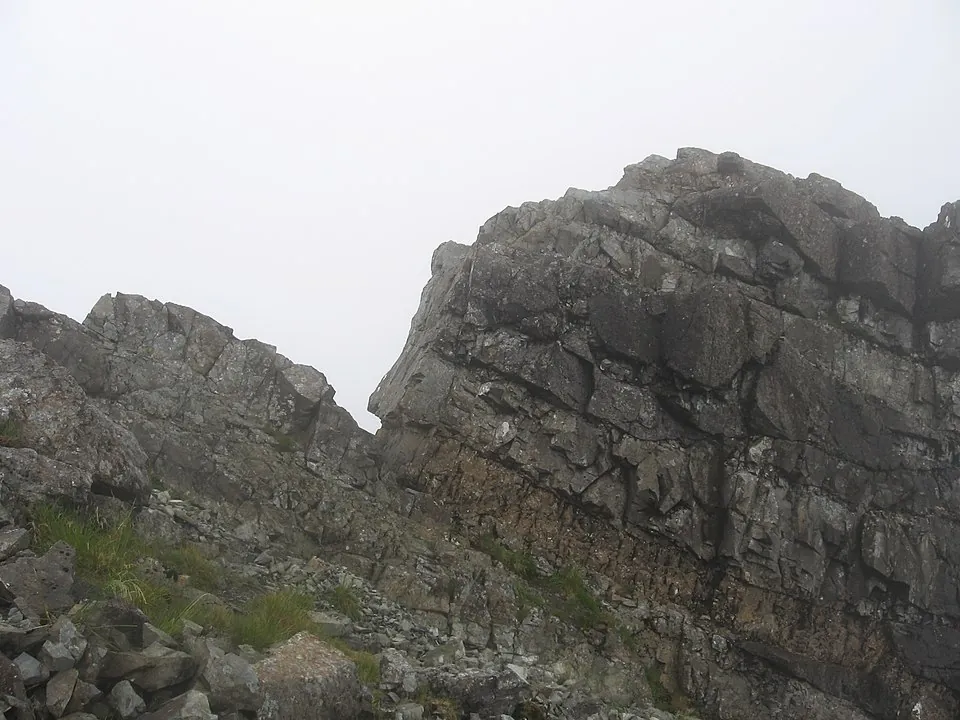
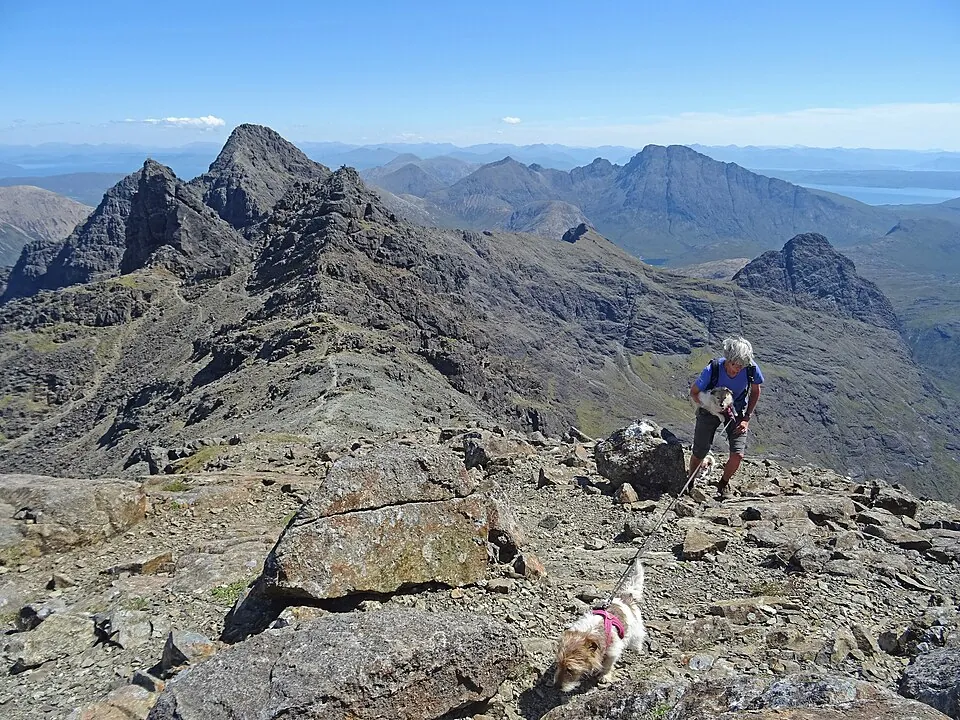
The summit of Stùcd an Lochain at 960m places you in the heart of the dramatic Cuillin ridge. You'll find yourself on rocky, exposed terrain with dramatic drops on multiple sides. The summit area is characterized by the dark gabbro rock that defines the Cuillin, rough and textured, providing excellent grip even when wet. Shelter is non-existent on this exposed peak, you're fully at the mercy of the elements.
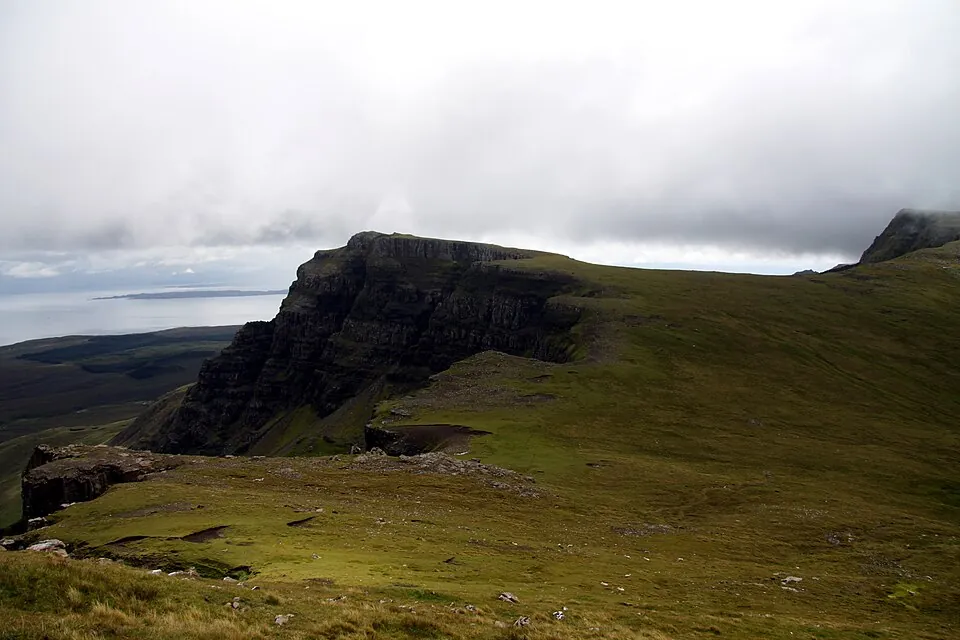
In clear conditions, the views are among Scotland's finest: the jagged peaks of the Black Cuillin surround you, while Loch Coruisk lies far below and the Isle of Rum rises from the sea to the south. The Inner and Outer Hebrides spread across the western horizon, while the mainland mountains are visible to the east. The rocky summit of Stùcd an Lochain offers little space for lounging, this is raw mountain terrain where the priority is safe navigation rather than comfort.
The sense of remoteness and wildness from this summit is exceptional, you're truly in the wilderness heart of Skye.
The approach to Stùcd an Lochain through Glen Brittle and Coire Lagan takes you through Skye's unique island ecology.…
The approach to Stùcd an Lochain through Glen Brittle and Coire Lagan takes you through Skye's unique island ecology. Lower slopes feature rough grassland, heather, and in wetter areas, bog cotton and mosses, though the route itself is relatively dry at 1/5 bog level. The Skye hills are home to red deer which you may encounter on the approach.
As you enter Coire Lagan and climb toward Stùcd an Lochain, the terrain becomes increasingly rocky and barren, with only hardy alpine plants clinging to crevices in the gabbro. Ravens are common in the Cuillin, their calls echoing off the rock walls. Golden eagles hunt across Skye and you may spot one soaring above the peaks. At 960m on Stùcd an Lochain, vegetation is sparse with only the hardiest lichens and mosses colonizing the rock.
Ptarmigan inhabit the higher Cuillin though their populations have declined. The island's western position brings high rainfall, creating lush conditions in the glens while the rocky peaks remain stark. In summer, the lower approaches may be carpeted with wildflowers including orchids and bog asphodel.
Stùcd an Lochain is rated 5/5 difficulty and is among Scotland's most serious Munros. This is not a walk, it's a…
Stùcd an Lochain is rated 5/5 difficulty and is among Scotland's most serious Munros. This is not a walk, it's a mountaineering expedition requiring scrambling skills, a head for heights, and extensive mountain experience. The 20km route takes 4.6 to 6 hours but don't let the time fool you, the terrain is highly technical. Carry a rope if you're uncertain of scrambling ability, though ideally you should be very comfortable on exposed rock before attempting this peak.
Navigation is challenging as magnetic compasses can be unreliable in the Cuillin's gabbro rock, carry a GPS device and know the route thoroughly. Only attempt Stùcd an Lochain in good visibility unless you're highly experienced. Carry full mountain kit including waterproofs, warm layers, plenty of food and water, and emergency shelter. Mobile signal is virtually non-existent, you're on your own if things go wrong.
The rough gabbro rock is hard on boots and hands, consider gloves for scrambling sections. Weather on Skye can deteriorate with frightening speed, be prepared to retreat if conditions worsen. Let someone know your plans and expected return time.
Explore more peaks near Isle of Skye.
Common questions about climbing Stùcd an Lochain.
Stùcd an Lochain stands at 960 metres (3,150 feet), making it the 199th tallest of all 282 Munros in Scotland.
The name Stùcd an Lochain translates from Scottish Gaelic as “Peak of the Little Loch”.
Climbing Stùcd an Lochain typically takes between 4.6 and 6 hours round trip. This varies with fitness, weather, and the route chosen.
There is dedicated parking at the standard starting point for the main route up Stùcd an Lochain, in the Isle of Skye area. The exact car park location, map pin and arrival guidance are in the free Munros app.
Stùcd an Lochain is rated Very Hard (difficulty 5/5).
The most popular route up Stùcd an Lochain covers 20km, 4.6–6 hours round trip.
Stùcd an Lochain (difficulty 5/5 at 960m in the Isle of Skye area) is one of Scotland's most demanding Munros, requiring experience on exposed and technical mountain terrain.
Stùcd an Lochain is in the Isle of Skye region of Scotland. Nearby Munros include Am Basteir, Blà Bheinn, Bruach na Frìthe.
Step-by-step directions, GPS navigation, exact parking and offline maps for Stùcd an Lochain — free in the Munros app.
Free — Download on theApp StoreTrack all 282 Munros, plan routes, and log every summit. Join 2,400+ hillwalkers already using Munros.app.