Binnein Beag
“Little Peak”
“Little Peak”
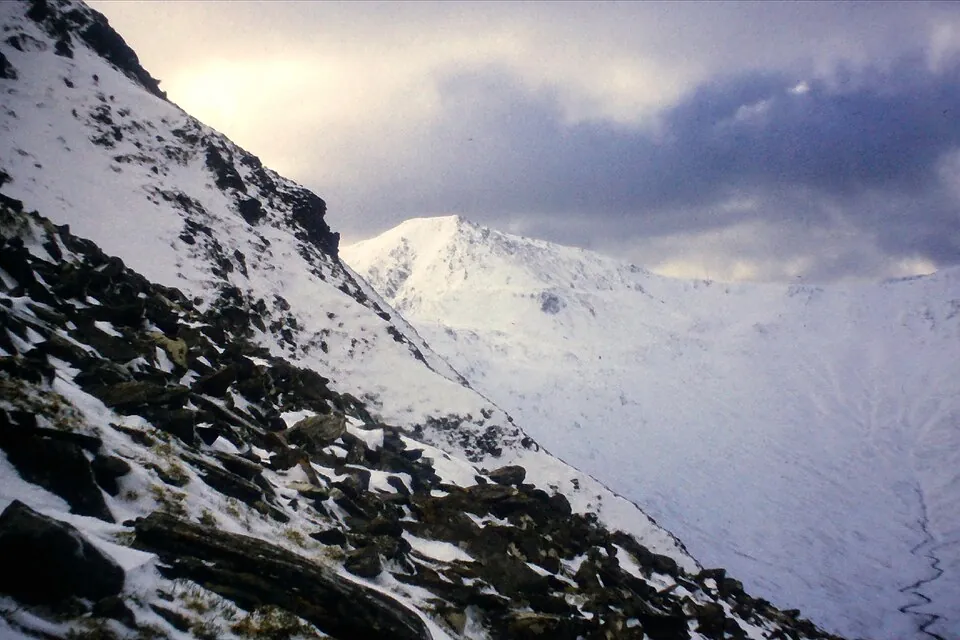
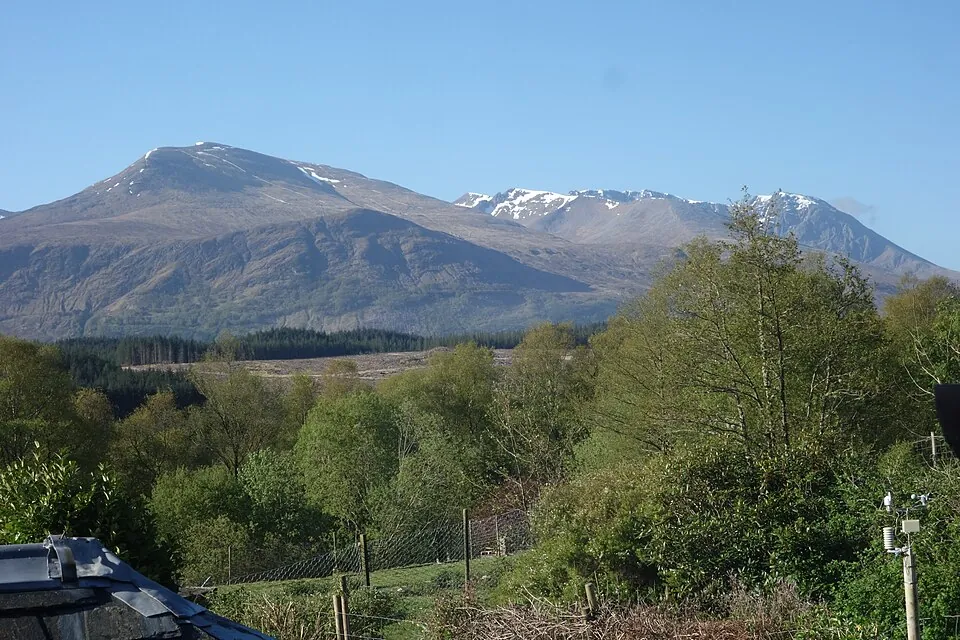
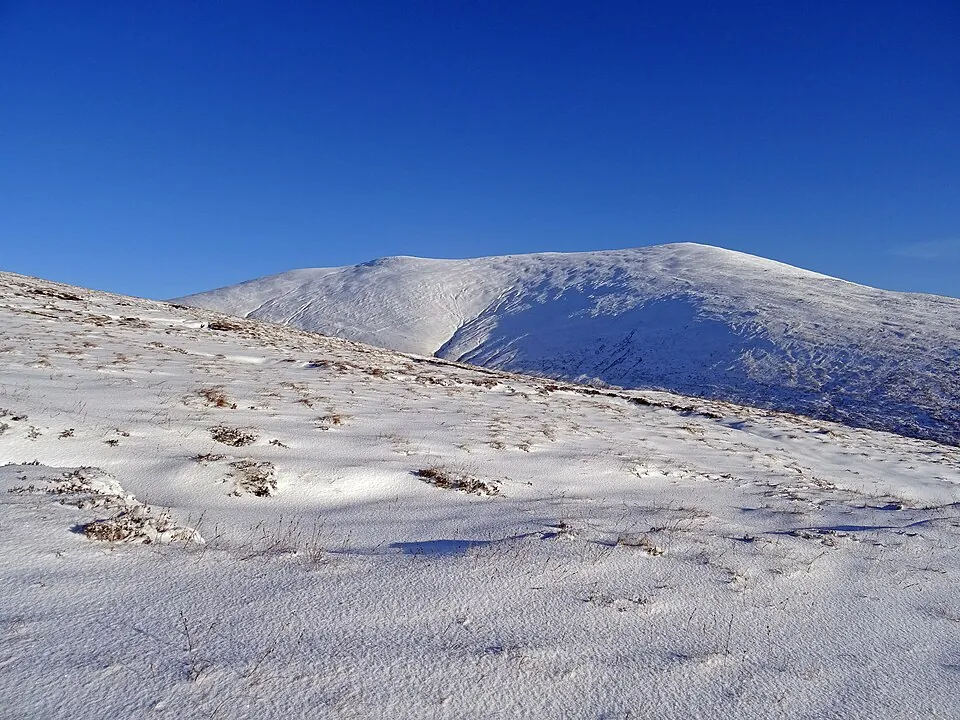
Binnein Beag is a 943m Munro in the Fort William region, its Gaelic name meaning “little peak”. It stands 231st of the 282 Munros by height. The usual ascent — Grey Corries traverse — is a 22.8km round trip taking 7.9–10.3 hours, rated hard (4/5).
There is 1 route to the summit of Binnein Beag, covering 22.8km.
The ascent of Binnein Beag is a serious undertaking that forms part of the demanding Grey Corries traverse, a 22.8km…
The ascent of Binnein Beag is a serious undertaking that forms part of the demanding Grey Corries traverse, a 22.8km expedition that will test your mountain fitness and commitment. You'll encounter long distances across complex terrain, with the route demanding sustained effort over its 8-10 hour duration.
The generally dry underfoot conditions on Binnein Beag are a blessing given the technical nature of the traverse, though the 4/5 difficulty rating reflects the navigational challenges and exposed ridge walking involved. The gradient changes are significant as you work your way along the corrie ridge system, with steep sections interspersed with more moderate terrain that allows brief respite before the final push to Binnein Beag's 943m summit.
Given the length and commitment of the Grey Corries traverse, you should plan your ascent of Binnein Beag for the long…
Given the length and commitment of the Grey Corries traverse, you should plan your ascent of Binnein Beag for the long daylight hours of late spring through early autumn, ideally May through September. The 8-10 hour route requires an early start even in midsummer, and attempting this in winter adds significant time and technical difficulty.
Weather conditions in the Fort William area can change rapidly, and Binnein Beag's position on an exposed ridge makes it particularly vulnerable to strong winds. The mountain's elevation at 943m means cloud can descend quickly, making navigation challenging across the complex traverse. Settled high-pressure systems offer the best conditions, as visibility is crucial for safe route-finding along the ridge.
The Grey Corries traverse begins from Spean Bridge, a well-connected village on the A86 between Fort William and the A9.…
The Grey Corries traverse begins from Spean Bridge, a well-connected village on the A86 between Fort William and the A9. Parking is available in Spean Bridge, and you should arrive early to secure a space during busy periods.
The approach to Binnein Beag is part of a linear traverse, so you'll need to consider transport logistics carefully. Many hillwalkers arrange a car shuttle or use local taxi services to avoid a long road walk at the end of an already demanding day. The roads are well-maintained major routes, making access straightforward in all seasons, though you should check local conditions during winter when snow can affect parking areas.
The summit of Binnein Beag rewards your efforts with a commanding position along the Grey Corries ridge. At 943m, you'll…
The summit of Binnein Beag rewards your efforts with a commanding position along the Grey Corries ridge. At 943m, you'll find a cairn marking the highest point, typical of these peaks in the Fort William massif.
The summit terrain is rocky and exposed, offering little shelter from the elements, so you'll want to layer up appropriately in wind or rain. The true reward of Binnein Beag is the panoramic vista along the undulating ridge system, with the bigger peaks of the Grey Corries forming an impressive skyline. On clear days, the views extend across the Fort William area, though the summit's character is defined by its place within the ridge rather than as an isolated viewpoint.
The approach to Binnein Beag takes you through diverse ecological zones, starting in the Glen with birch and remnant…
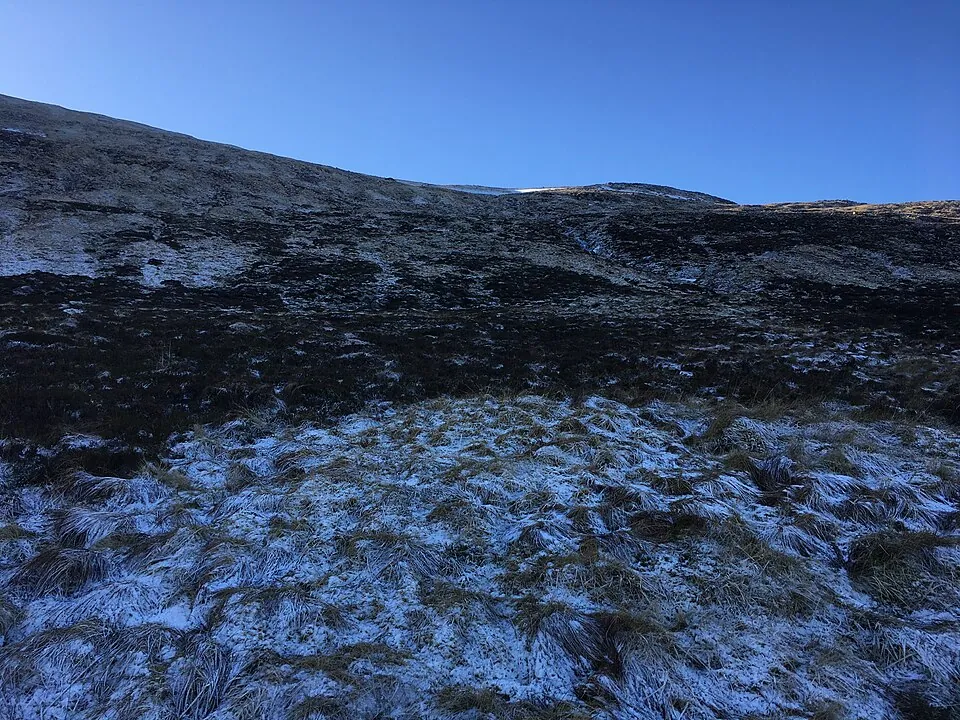
The approach to Binnein Beag takes you through diverse ecological zones, starting in the Glen with birch and remnant Caledonian pine woodland where you might spot red deer grazing in the early morning. As you gain height, the vegetation transitions to heather moorland mixed with rough grasses.
At the higher elevations of Binnein Beag, around 900m, you're in true montane heath habitat where hardy alpine plants cling to rocky crevices and windswept plateaus. Keep your eyes open for ptarmigan, particularly in the quieter sections of the ridge—these mountain grouse are masters of camouflage. Mountain hares, turning white in winter, also inhabit these heights.
The exposed nature of the Grey Corries makes this prime territory for golden eagles, which patrol the ridges hunting for prey.
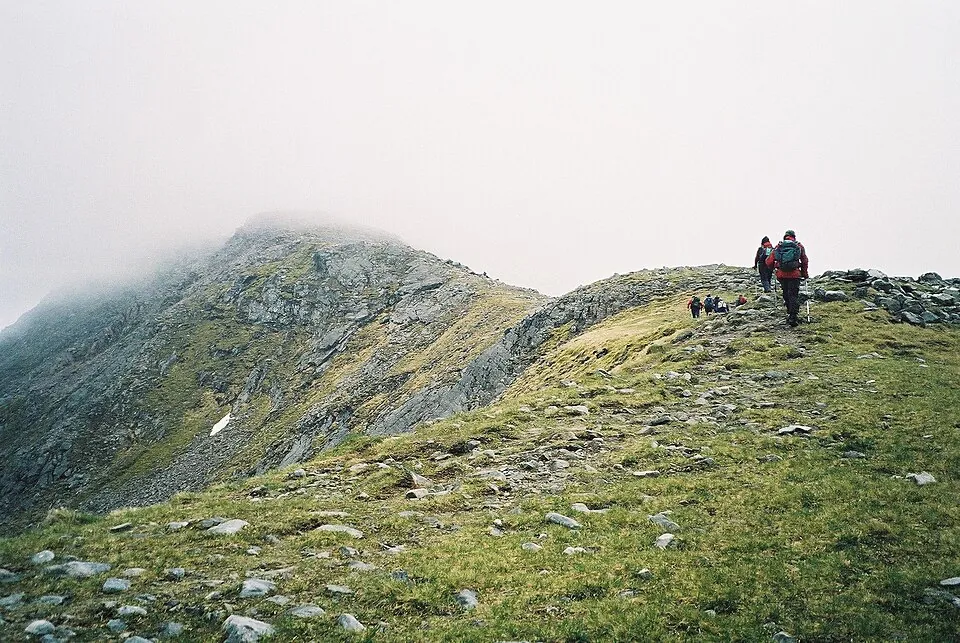
The Grey Corries traverse is a serious mountain expedition, and attempting Binnein Beag requires thorough preparation.…
The Grey Corries traverse is a serious mountain expedition, and attempting Binnein Beag requires thorough preparation. Navigation skills are essential—the 4/5 difficulty rating reflects the complexity of the terrain and the need for precise route-finding, particularly in cloud when the ridge can become disorientating.
Carry plenty of water as there are limited reliable sources along the exposed ridge, and bring high-energy food for the long day. The weather can deteriorate rapidly in the Fort William area, so pack full waterproofs and warm layers even on promising days. Mobile phone signal is unreliable across much of the route, so inform someone of your plans and expected return time.
The commitment of this traverse means escape routes are limited, so be prepared to turn back if conditions deteriorate.
Explore more peaks near Fort William.
Common questions about climbing Binnein Beag.
Binnein Beag stands at 943 metres (3,094 feet), making it the 231st tallest of all 282 Munros in Scotland.
The name Binnein Beag translates from Scottish Gaelic as “Little Peak”.
Climbing Binnein Beag typically takes between 7.9 and 10.3 hours round trip. This varies with fitness, weather, and the route chosen.
There is dedicated parking at the standard starting point for the main route up Binnein Beag, in the Fort William area. The exact car park location, map pin and arrival guidance are in the free Munros app.
Binnein Beag is rated Hard (difficulty 4/5).
The most popular route up Binnein Beag covers 22.8km, 7.9–10.3 hours round trip.
Binnein Beag (difficulty 4/5 at 943m) is best suited to experienced hillwalkers in the Fort William area. Expect sustained steep terrain and the need for confident navigation in poor visibility.
Binnein Beag is in the Fort William region of Scotland. Nearby Munros include Am Bodach, An Gearanach, Aonach Beag (Nevis Range).
Step-by-step directions, GPS navigation, exact parking and offline maps for Binnein Beag — free in the Munros app.
Free — Download on theApp StoreTrack all 282 Munros, plan routes, and log every summit. Join 2,400+ hillwalkers already using Munros.app.