Càrn na Caim
941m
Cairngorms
“Cairn of the Curve”
941mHeight
19kmRound trip
7.6–9.9hWalk time
ModerateDifficulty 2/5
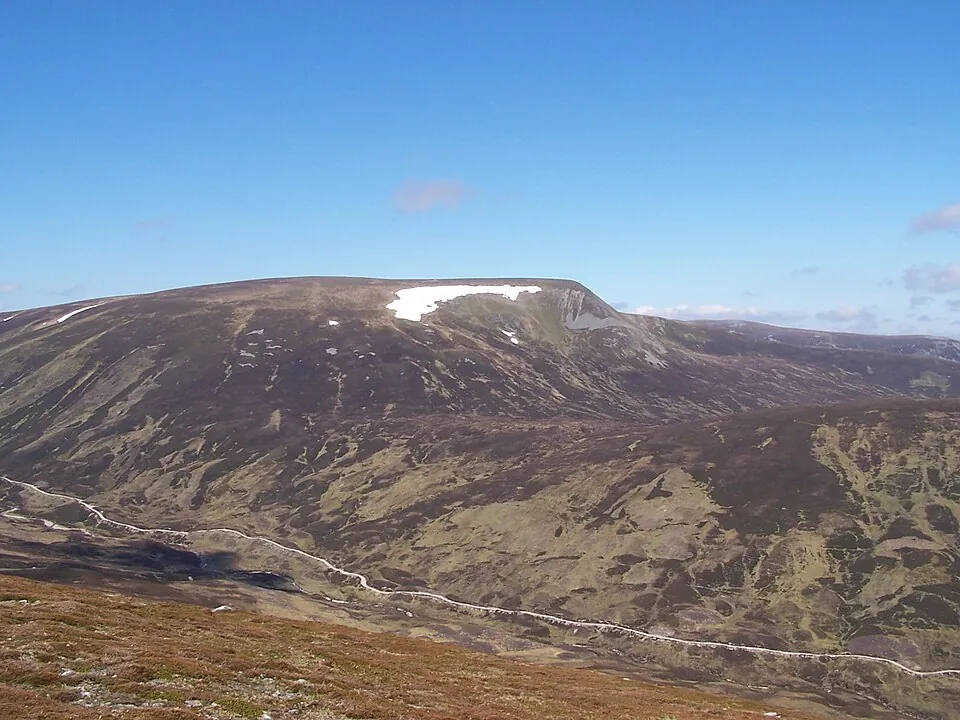
Photo: Panoramio upload bot · CC BY-SA 3.0
“Cairn of the Curve”
Càrn na Caim is a 941m Munro in the Cairngorms region, its Gaelic name meaning “cairn of the curve”. It stands 234th of the 282 Munros by height. The usual ascent — Càrn na Caim and A' Bhuidheanach Bheag from Drumochter — is a 19km round trip taking 7.6–9.9 hours, rated moderate (2/5).
There is 1 route to the summit of Càrn na Caim, covering 19km.
The ascent of Càrn na Caim from Drumochter presents a deceptively challenging day that combines impressive distance with…
The ascent of Càrn na Caim from Drumochter presents a deceptively challenging day that combines impressive distance with surprisingly gentle gradients. The route covering Càrn na Caim and A' Bhuidheanach Bheag stretches for 19 kilometres, making this one of the longer expeditions on a moderate difficulty grading. From Balsporran, you'll set out across the Drumochter plateau, a vast expanse of rolling moorland that feels genuinely remote despite the nearby A9.
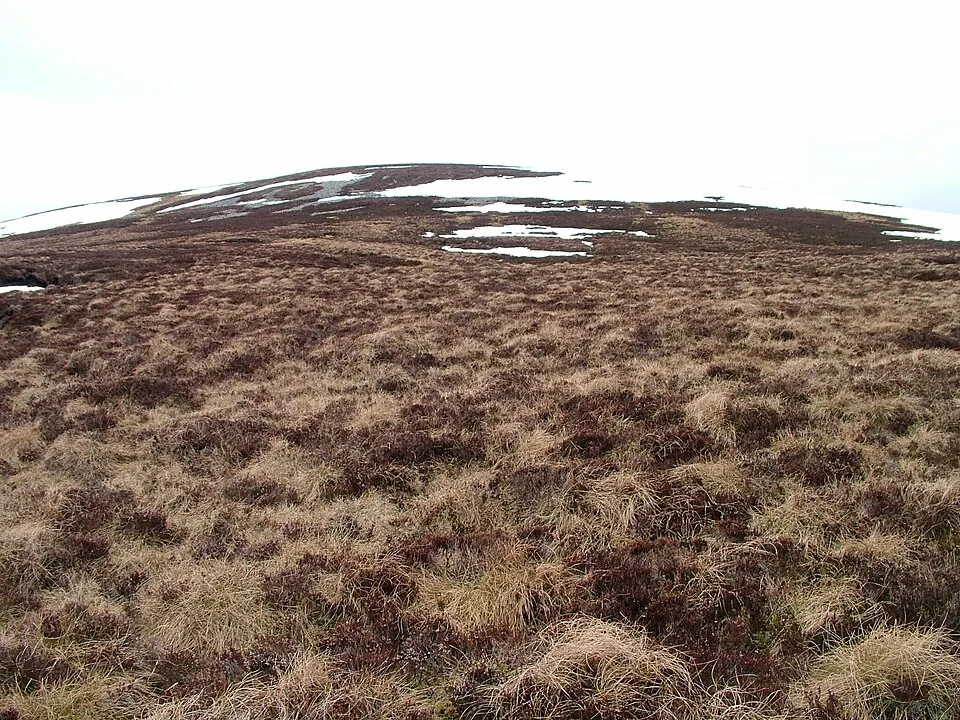
The terrain is characteristically Cairngorms: broad, rounded slopes with extensive areas of bog to navigate, particularly in the transition zones between summits. Path quality varies significantly—some sections follow stalkers' tracks, while others require pathless navigation across tussocky ground. The gradient to Càrn na Caim at 941 metres is steady and unrelenting rather than steep, the height gained gradually over many kilometres.
This is a test of endurance and navigation rather than technical difficulty, with the distance and bog levels presenting the main challenges.
Càrn na Caim rewards careful seasonal planning, with the 19-kilometre distance making daylight hours a critical…
Càrn na Caim rewards careful seasonal planning, with the 19-kilometre distance making daylight hours a critical consideration. Summer offers the longest days and most stable weather, essential for completing this extensive circuit comfortably. The Cairngorms climate is more continental than the west coast—drier overall but prone to rapid weather changes and surprisingly low temperatures even in summer months.
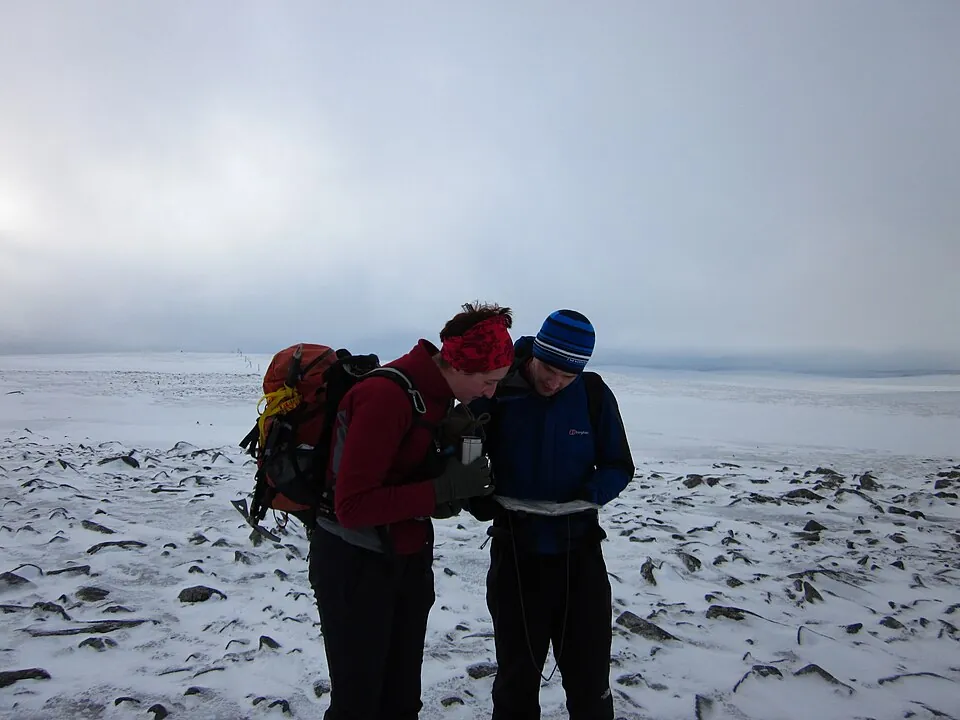
Winter transforms Càrn na Caim into a serious proposition, with navigation across the featureless plateau requiring advanced winter skills and the shortened daylight making the distance extremely challenging. Spring and autumn provide excellent conditions for experienced hillwalkers, with autumn colours spectacular across the Drumochter moorlands. The plateau's exposure means wind is a constant factor—what feels manageable in the glen can become exhausting at 900 metres.
Snow can linger well into spring on north-facing slopes, though the rounded nature of Càrn na Caim means serious cornices are less of a concern than on more dramatic peaks.
Access to Càrn na Caim begins at Balsporran, conveniently located just off the A9 at Drumochter Pass—one of Scotland's…
Access to Càrn na Caim begins at Balsporran, conveniently located just off the A9 at Drumochter Pass—one of Scotland's highest main roads. The parking area is straightforward to find, situated between the northbound and southbound carriageways with access from the northbound side. Facilities are basic: space for several vehicles but no toilets or other amenities.
The location's accessibility is both blessing and curse—while it's easy to reach from Perth, Inverness, or anywhere along the A9 corridor, the limited parking can fill during busy weekends. The dramatic Drumochter landscape surrounds you from the moment you park, with the rounded Munros rising on either side of the pass. Mobile signal is generally good here thanks to proximity to the A9, though it fades as you gain height onto the plateau.
The starting elevation is already substantial—over 400 metres—giving you a helpful boost toward Càrn na Caim's 941-metre summit.
The summit of Càrn na Caim presents a broad, gently rounded plateau that epitomises the Cairngorms character. At 941…
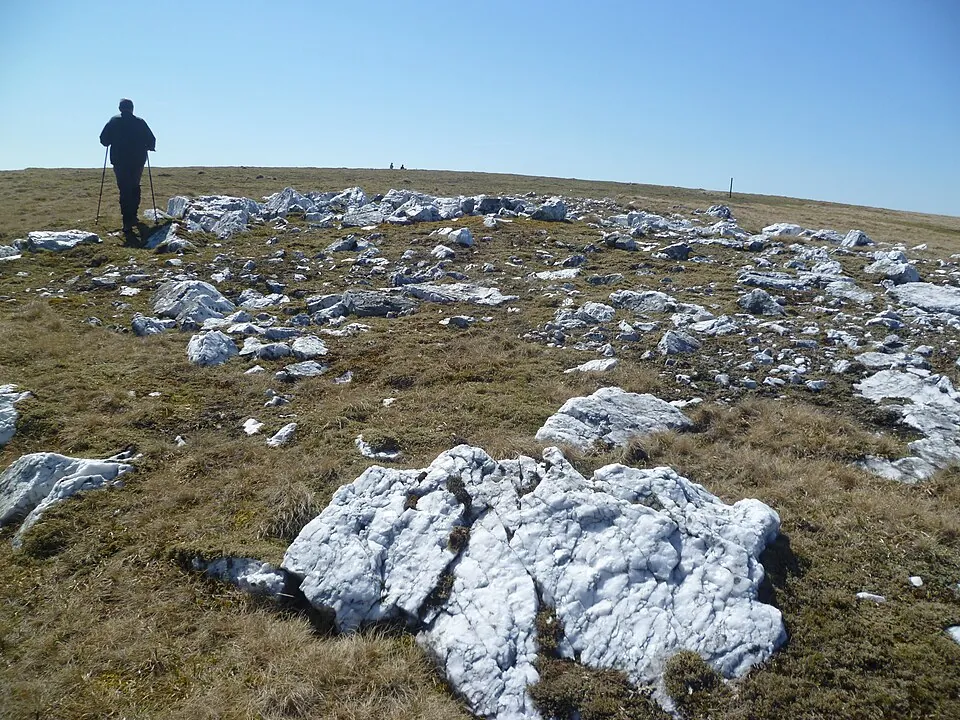
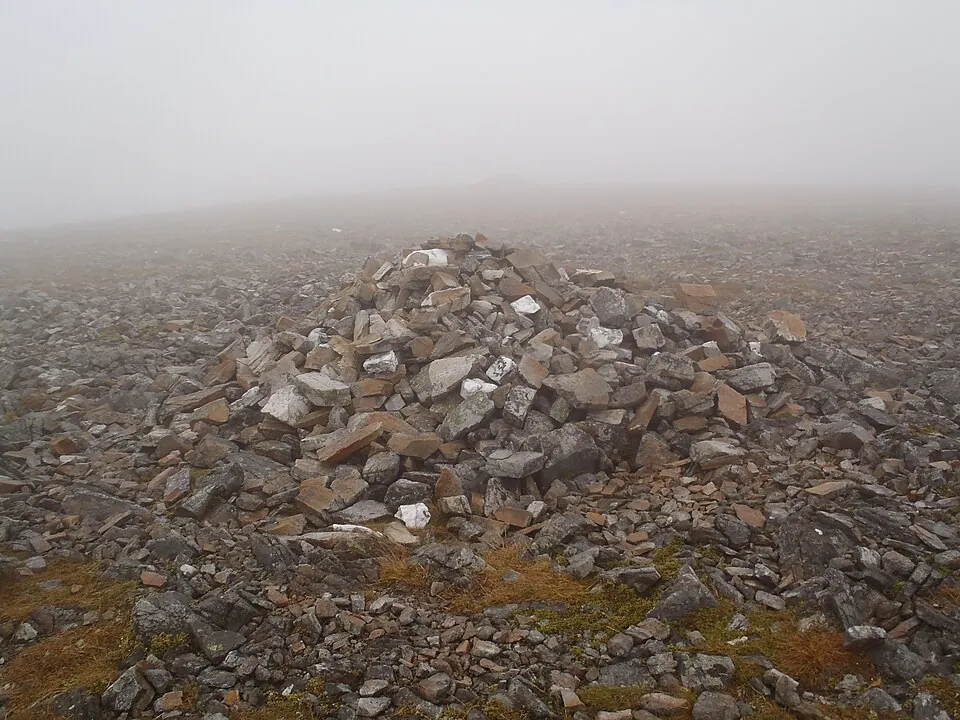
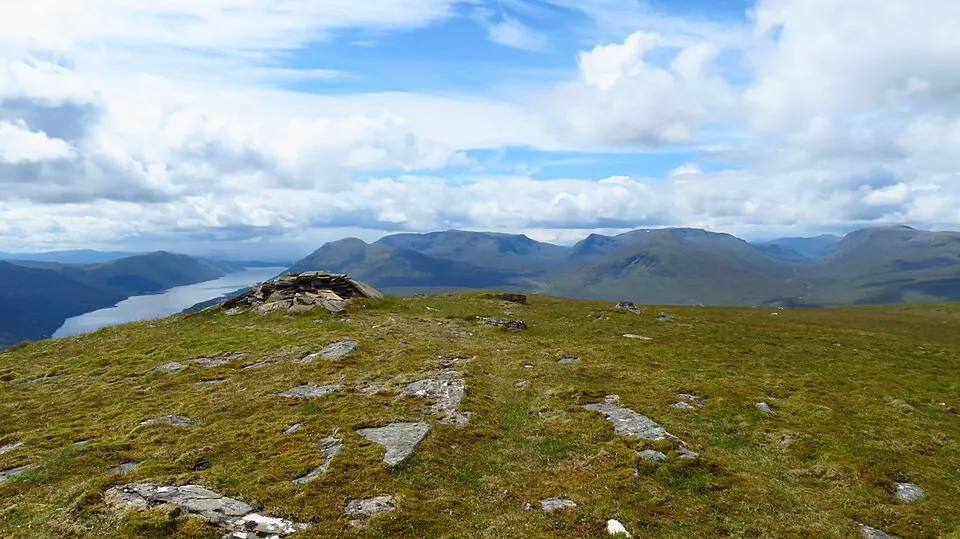
The summit of Càrn na Caim presents a broad, gently rounded plateau that epitomises the Cairngorms character. At 941 metres, you're standing on substantial high ground with extensive views across the surrounding plateau and distant peaks. The cairn is modest compared to more dramatic summits, offering limited shelter on this exposed location. The terrain is predominantly grassy with patches of stones and gravel, the vegetation cropped short by wind and grazing deer.
Looking around, you'll appreciate the scale of the Drumochter landscape: vast, rolling moorland stretching to every horizon with the A9 visible far below as a ribbon through the wilderness. The summit area feels genuinely remote despite the proximity to major roads, with a sense of space and sky that's characteristic of the central Cairngorms.
On clear days, you can identify distant Munros in multiple directions, while nearby A' Bhuidheanach Bheag rises across the linking plateau for those continuing the circuit.
Càrn na Caim supports a rich ecosystem adapted to the exposed plateau environment of the central Cairngorms. Red deer…
Càrn na Caim supports a rich ecosystem adapted to the exposed plateau environment of the central Cairngorms. Red deer are abundant across these hills, and you'll likely encounter small herds grazing the slopes or crossing the plateau. The lower moorland is classic heather habitat where red grouse thrive, their distinctive 'go-back, go-back' calls accompanying your ascent. Golden plovers nest on the plateau in spring and summer, their haunting calls echoing across the bog.
At higher elevations, the vegetation transitions to montane heath with hardy grasses, sedges, and dwarf shrubs that can withstand the harsh exposure. Ptarmigan inhabit the summit areas of Càrn na Caim, though they're well-camouflaged and easily overlooked. Mountain hares browse the slopes, their coats changing from brown to white as winter approaches.
The extensive bog systems support unique plant communities including sphagnum mosses, cotton grass, and insectivorous sundews. Eagles patrol these hills regularly, both golden eagles from the surrounding mountains and occasionally white-tailed sea eagles ranging inland from the coast.
The Càrn na Caim circuit demands respect for its distance rather than technical difficulty, making thorough preparation…
The Càrn na Caim circuit demands respect for its distance rather than technical difficulty, making thorough preparation essential. Navigation skills are critical—the featureless plateau can be disorienting in poor visibility, with few landmarks to guide you across the broad, boggy terrain. Carry full navigation equipment including map, compass, and ideally a GPS device with the route pre-loaded.
The 19-kilometre distance means you'll need adequate food and water; streams are available but consider carrying a filter given the extensive peat bogs. Waterproof boots and gaiters are highly recommended given the 3/5 bog level throughout the route. Start early to ensure completion in daylight, particularly outside midsummer months when seven to ten hours of walking can push close to sunset.
Mobile signal is unreliable beyond the initial stages, so inform someone of your route and expected return time. The distance and boggy ground can be energy-sapping, so allow extra time and don't underestimate this 2/5 difficulty rating.
Explore more peaks near Cairngorms.
Common questions about climbing Càrn na Caim.
Càrn na Caim stands at 941 metres (3,087 feet), making it the 234th tallest of all 282 Munros in Scotland.
The name Càrn na Caim translates from Scottish Gaelic as “Cairn of the Curve”.
Climbing Càrn na Caim typically takes between 7.6 and 9.9 hours round trip. This varies with fitness, weather, and the route chosen.
There is dedicated parking at the standard starting point for the main route up Càrn na Caim, in the Cairngorms area. The exact car park location, map pin and arrival guidance are in the free Munros app.
Càrn na Caim is rated Moderate (difficulty 2/5).
The most popular route up Càrn na Caim covers 19km, 7.6–9.9 hours round trip.
Càrn na Caim in the Cairngorms area is well suited to walkers with some hillwalking experience. Rated difficulty 2/5 at 941m, the paths are clear and the terrain is not technically demanding.
Càrn na Caim is in the Cairngorms region of Scotland. Nearby Munros include A' Bhuidheanach Bheag, A' Chailleach (Monadhliath), A' Mharconaich.
Step-by-step directions, GPS navigation, exact parking and offline maps for Càrn na Caim — free in the Munros app.
Free — Download on theApp StoreTrack all 282 Munros, plan routes, and log every summit. Join 2,400+ hillwalkers already using Munros.app.