Beinn a' Chaorainn (Cairngorms)
“Mountain of the Rowan”
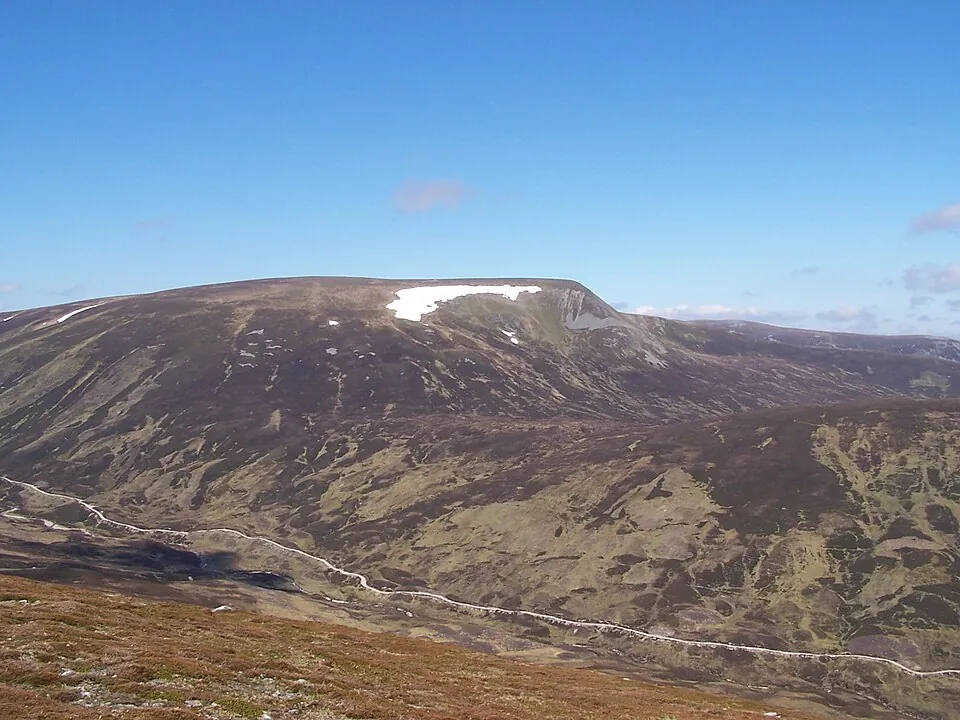
Beinn a' Chaorainn (Cairngorms) is a 1,082m Munro in the Cairngorms region, its Gaelic name meaning “mountain of the rowan”. It stands 62nd of the 282 Munros by height. The usual ascent — Beinn a' Chaorainn and Beinn Bhreac from Glen Derry — is a 23.4km round trip taking 8.4–10.9 hours, rated hard (4/5).
There are 2 routes to the summit of Beinn a' Chaorainn (Cairngorms), ranging from 23.4km.
Beinn a' Chaorainn in the Cairngorms is accessed via Glen Derry from the Linn of Dee, involving a lengthy 23.4km…
Beinn a' Chaorainn in the Cairngorms is accessed via Glen Derry from the Linn of Dee, involving a lengthy 23.4km expedition into remote mountain country. You'll begin with several kilometres of estate track walking through ancient pine forests before emerging onto open moorland and striking towards the mountain.
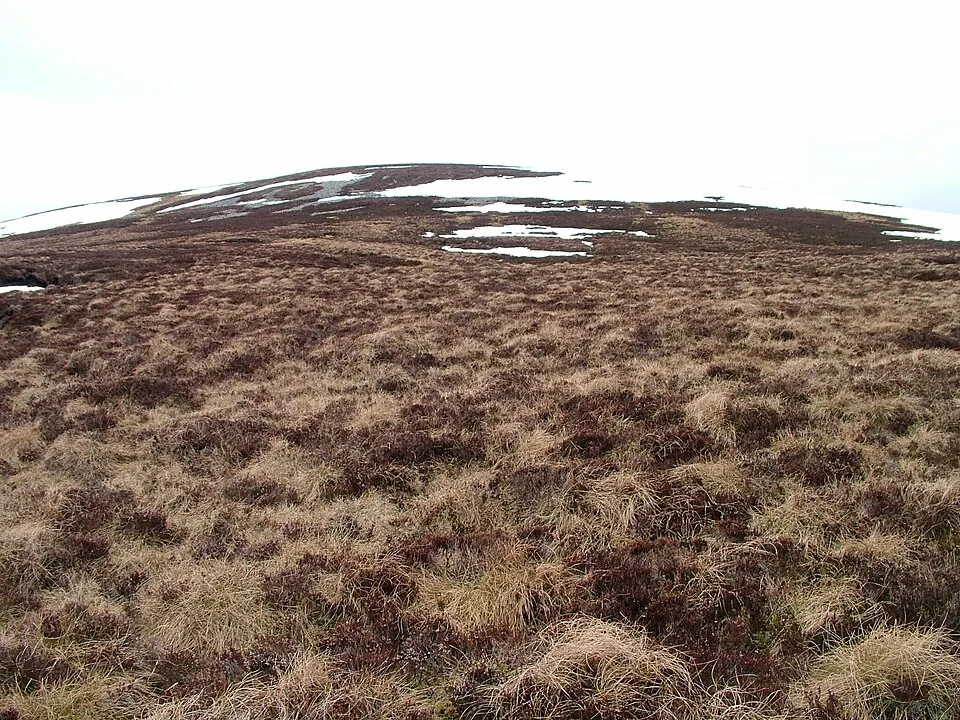
The approach involves crossing boggy ground that can be slow and energy-sapping, particularly after rain or during spring snowmelt when the 3/5 bog rating becomes very apparent.
The ascent of Beinn a' Chaorainn itself involves climbing to 1082m over terrain that becomes progressively rockier and firmer as you gain altitude. The mountain is typically climbed in conjunction with Beinn Bhreac, forming a demanding double-Munro day that tests fitness and navigation skills. The 4/5 difficulty rating reflects the remote nature, long distances, and pathless sections where you must navigate across featureless terrain.
The time estimate of 8 to 11 hours demands an early start and sustained effort throughout a long mountain day.
Beinn a' Chaorainn (Cairngorms) requires long daylight hours, making late May through early September the optimal period…
Beinn a' Chaorainn (Cairngorms) requires long daylight hours, making late May through early September the optimal period for ascent. The lengthy approach and 8 to 11-hour time estimate mean you need maximum daylight even in summer, and attempting this route outside the long-day season risks being caught by darkness on the return through Glen Derry. Winter in the Cairngorms is severe and prolonged, with heavy snowfall transforming this into a serious mountaineering expedition.
Summer provides the most stable weather opportunities, though conditions can deteriorate rapidly even in July and August at this altitude. The remote nature of Beinn a' Chaorainn means you're committed once you've walked deep into Glen Derry, so choose settled periods with good visibility. The Cairngorms experience harsh weather year-round, with sudden storms possible even in summer.
Early autumn can offer crisp, clear conditions if you catch high-pressure systems, but daylight hours shorten quickly from September. The boggy sections are at their worst following heavy rain or during spring thaw.
Access to Beinn a' Chaorainn (Cairngorms) begins at the Linn of Dee Car Park, located at the end of the public road west…
Access to Beinn a' Chaorainn (Cairngorms) begins at the Linn of Dee Car Park, located at the end of the public road west of Braemar in Royal Deeside. The car park is reached via minor roads from Braemar on the A93, with the final section being single track. Parking is available but can fill during peak summer periods as this trailhead serves multiple popular routes into the Cairngorms.
From the car park, you face a substantial walk-in along estate tracks through Glen Derry, penetrating deep into the mountains. Some hillwalkers use mountain bikes for the approach tracks to reduce the walking distance, though the mountain itself must be climbed on foot over rough terrain. The remote location means mobile phone signal is unreliable once you leave the immediate car park area.
There are basic facilities at Linn of Dee but nothing beyond the car park, so come prepared with all necessary supplies. The serious length of this expedition demands an early start to ensure adequate daylight.
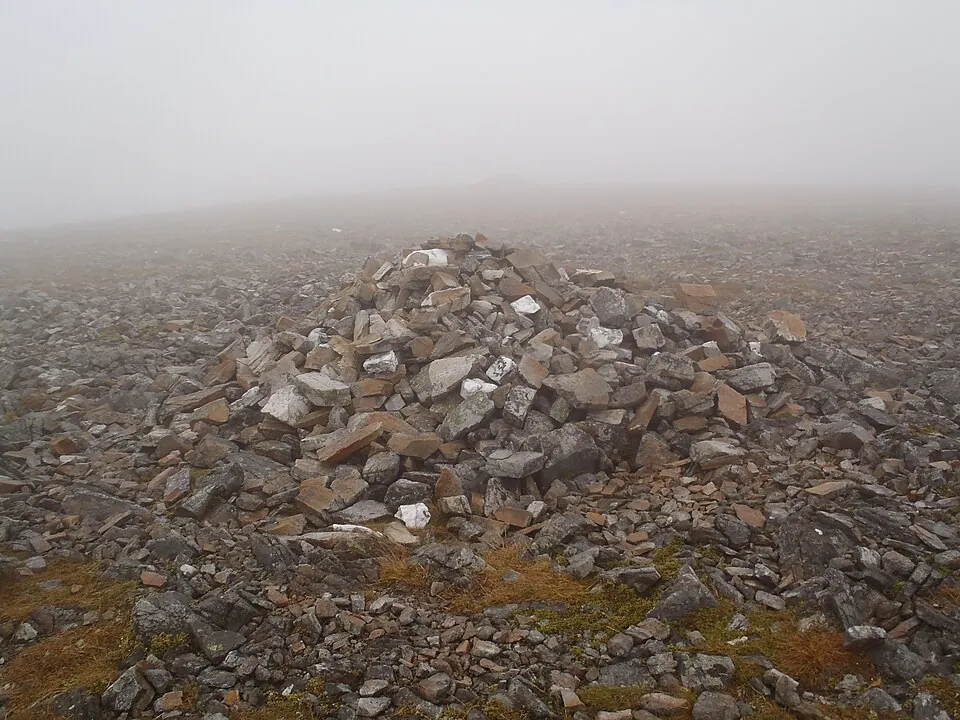
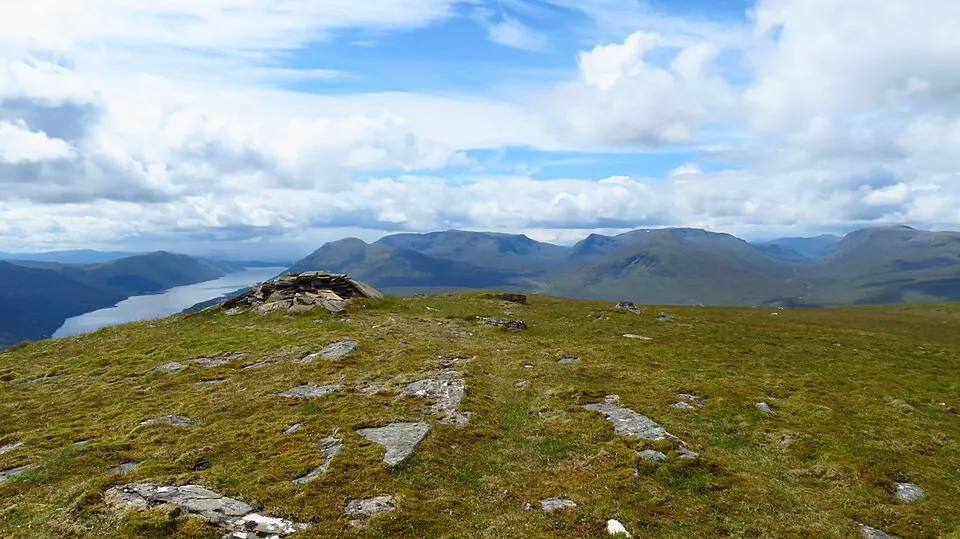
The summit of Beinn a' Chaorainn sits at 1082m, marked by a cairn on the rounded, somewhat featureless top typical of…
The summit of Beinn a' Chaorainn sits at 1082m, marked by a cairn on the rounded, somewhat featureless top typical of many Cairngorms peaks. The name translates as 'Mountain of the Rowan', though you'll find no rowan trees at this altitude, only sparse montane vegetation clinging to the thin soils. The summit area provides limited natural shelter from wind, making this an exposed place in poor weather conditions.
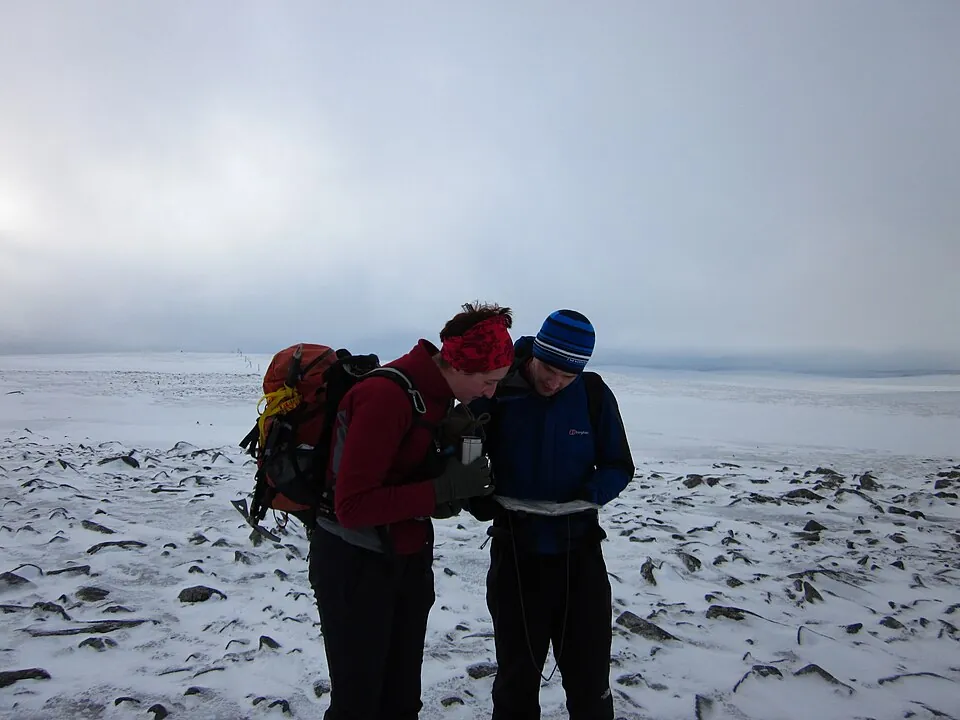
On clear days, the views from Beinn a' Chaorainn extend across the vast Cairngorms landscape, with multiple peaks visible in all directions and the sense of being deep in genuine mountain wilderness. The rounded summit plateau can be challenging to navigate in mist, as the featureless terrain offers few landmarks for orientation. You'll appreciate the remote, wild character of this mountain, surrounded by uninhabited country stretching for miles.
The descent requires careful navigation, particularly in poor visibility when the plateau's subtle features become impossible to distinguish without confident compass and GPS work.
The approach through Glen Derry takes you past remnants of the ancient Caledonian pine forest, one of Scotland's most…
The approach through Glen Derry takes you past remnants of the ancient Caledonian pine forest, one of Scotland's most precious habitats. Red deer are abundant throughout this area, and you'll frequently spot herds on the open hillsides. The pine forests support crossbills, crested tits, and Scottish wildcats in the more undisturbed areas, though the latter are rare and elusive. Golden eagles regularly patrol these glens, and you may see one soaring on the thermals.
As you climb onto Beinn a' Chaorainn's higher slopes, vegetation transitions from heather moorland to montane heath communities with crowberry, bilberry, and hardy grasses. Above 900m, watch for ptarmigan among the rocks and mountain hares that inhabit the boulder fields. The eastern Cairngorms location means drier conditions than western mountains, with plant communities adapted to lower rainfall.
The vast, undisturbed landscape surrounding Beinn a' Chaorainn provides important habitat for species requiring wild, remote country away from human disturbance. Ravens are common companions on the mountain, their calls echoing across the corries.
The 4/5 difficulty rating for Beinn a' Chaorainn (Cairngorms) demands comprehensive mountain safety preparation. Carry…
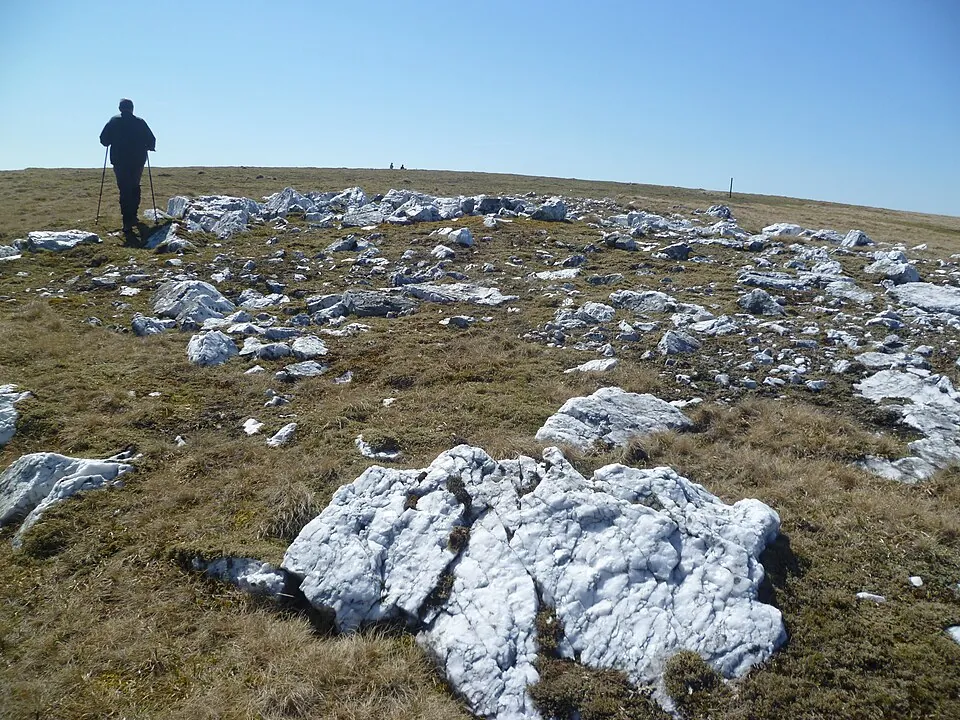
The 4/5 difficulty rating for Beinn a' Chaorainn (Cairngorms) demands comprehensive mountain safety preparation. Carry full navigation equipment including map, compass, GPS device, and spare batteries. The featureless terrain makes navigation in poor visibility extremely challenging, and confident skills are essential. The route length requires carrying sufficient food and water for 8-plus hours, along with emergency rations and spare high-energy snacks.
The 3/5 bog level means waterproof boots and gaiters are essential, particularly for approach sections that can be very wet. Mobile phone signal is unreliable throughout this remote area, so inform someone of your detailed route plan and expected return time. The limited escape options mean careful weather assessment before committing to the long approach. Carry full waterproofs, multiple warm layers, hat and gloves even in summer, and an emergency shelter.
A headtorch is essential even for summer attempts in case of delays. The serious, remote nature of Beinn a' Chaorainn means this mountain demands respect, experience, and conservative decision-making for safe completion.
Explore more peaks near Cairngorms.
Common questions about climbing Beinn a' Chaorainn (Cairngorms).
Beinn a' Chaorainn (Cairngorms) stands at 1,082 metres (3,550 feet), making it the 62nd tallest of all 282 Munros in Scotland.
The name Beinn a' Chaorainn (Cairngorms) translates from Scottish Gaelic as “Mountain of the Rowan”.
Climbing Beinn a' Chaorainn (Cairngorms) typically takes between 8.2 and 10.9 hours round trip. This varies with fitness, weather, and the route chosen — there are 2 routes to the summit.
There is dedicated parking at the standard starting point for the main route up Beinn a' Chaorainn (Cairngorms), in the Cairngorms area. The exact car park location, map pin and arrival guidance are in the free Munros app.
Beinn a' Chaorainn (Cairngorms) is rated Hard (difficulty 4/5). Route difficulty varies across the 2 available routes.
The most popular route up Beinn a' Chaorainn (Cairngorms) covers 23.4km, 8.4–10.9 hours round trip. There are 2 routes to the summit in total, ranging from Hard to Hard difficulty.
Beinn a' Chaorainn (Cairngorms) (difficulty 4/5 at 1,082m) is best suited to experienced hillwalkers in the Cairngorms area. Expect sustained steep terrain and the need for confident navigation in poor visibility.
Beinn a' Chaorainn (Cairngorms) is in the Cairngorms region of Scotland. Nearby Munros include A' Bhuidheanach Bheag, A' Chailleach (Monadhliath), A' Mharconaich.
Step-by-step directions, GPS navigation, exact parking and offline maps for Beinn a' Chaorainn (Cairngorms) — free in the Munros app.
Free — Download on theApp StoreTrack all 282 Munros, plan routes, and log every summit. Join 2,400+ hillwalkers already using Munros.app.