Photo: Panoramio upload bot · CC BY 3.0
Overview
About this Munro
Driesh is a 947m Munro in the Angus Glens region, its Gaelic name meaning “bramble”. It stands 220th of the 282 Munros by height. The usual ascent — Driesh and Mayar from Glen Doll — is a 13.4km round trip taking 5.3–6.9 hours, rated easy (1/5).
Plan your day
Routes & Navigation
There are 2 routes to the summit of Driesh, ranging from 13.4km.
Route preview
Driesh and Mayar from Glen Doll
Easy5.3–6.9h round trip13.4km distance↑758m ascent
Bog ratingSlight
ParkingGlen Doll Car Park
Step-by-step guideIn the app
Route preview
Mayar and Driesh from Glen Doll
Easy5.2–6.8h round trip16.7km distance↑758m ascent
Bog ratingSlight
ParkingGlen Doll Car Park
Step-by-step guideIn the app
Climbing Driesh
The ascent of Driesh from Glen Doll offers one of the more straightforward Munro experiences in the Angus Glens. You'll…
Climbing Driesh
The ascent of Driesh from Glen Doll offers one of the more straightforward Munro experiences in the Angus Glens. You'll…
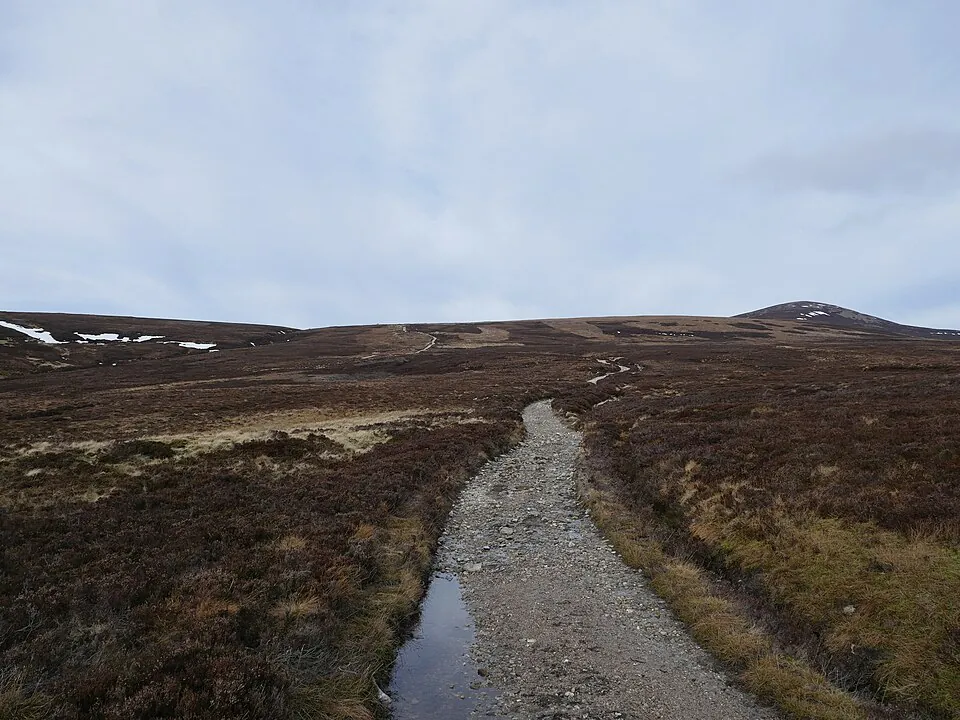
The ascent of Driesh from Glen Doll offers one of the more straightforward Munro experiences in the Angus Glens. You'll begin at Glen Doll Car Park and follow a clear path that winds steadily upward through heather moorland. The gradient is consistent rather than punishing, making Driesh an excellent introduction to Munro-bagging for less experienced hillwalkers.
Path quality is generally good, particularly on the lower slopes where the route is well-established and maintained. As you gain height, the terrain opens up into rolling upland with manageable rocky sections near the summit. Driesh is typically climbed alongside neighbouring Mayar, creating a satisfying horseshoe route. The bog level is relatively low compared to many Scottish hills, with generally dry underfoot conditions making progress straightforward.
At 13-17 kilometres depending on your chosen route, this represents a reasonable day out with 5-7 hours of walking time.
Best Time to Climb Driesh
Driesh is accessible across much of the year, though each season brings its own character to this Angus Glen peak.…
Best Time to Climb Driesh
Driesh is accessible across much of the year, though each season brings its own character to this Angus Glen peak.…
Driesh is accessible across much of the year, though each season brings its own character to this Angus Glen peak. Summer months from May through September offer the most settled weather and longest daylight, making navigation straightforward on the open hillside. Spring brings fresh greenery to the glen approaches, while autumn paints the landscape in russets and golds that contrast beautifully with the grey summit rocks.
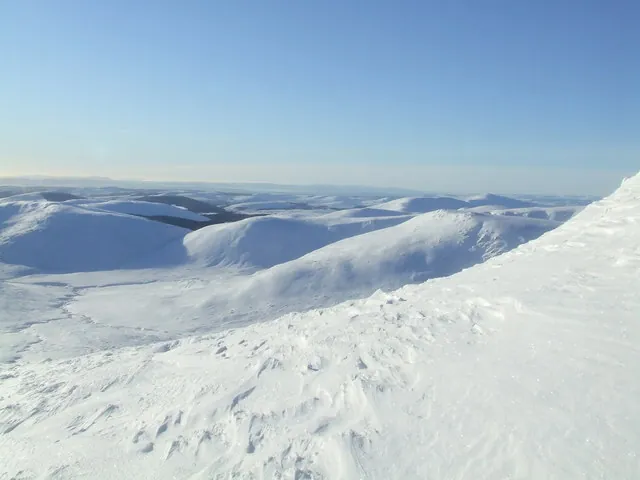
Winter transforms Driesh into a more serious proposition, requiring winter skills and equipment, though at 947 metres it doesn't carry the same severity as higher peaks. The Angus Glens can be surprisingly dry compared to western ranges, benefiting from a rain shadow effect, though you should never underestimate Scottish weather.
Driesh's relatively moderate altitude means conditions are often a touch milder than on higher Cairngorm peaks, though the summit can still be cold and windy. Visit midweek if possible to avoid the weekend crowds drawn to Glen Doll's accessible peaks.
Getting to Driesh
Glen Doll Car Park serves as your starting point for Driesh, offering convenient access at the head of Glen Clova. The…
Getting to Driesh
Glen Doll Car Park serves as your starting point for Driesh, offering convenient access at the head of Glen Clova. The…
Glen Doll Car Park serves as your starting point for Driesh, offering convenient access at the head of Glen Clova. The car park is well-signposted and reached via a single-track road that winds up through the scenic Angus countryside. From Kirriemuir, the drive takes approximately 30 minutes, following the increasingly narrow road as it penetrates deeper into the glens.
Glen Doll Car Park is a popular facility and can reach capacity on fine summer weekends, so early arrival is advisable. The parking area includes basic facilities and clear information boards showing the various routes available. From here, Driesh lies to the north, with paths departing directly from the car park.
The accessibility of Glen Doll makes Driesh particularly appealing to those seeking a genuine Munro experience without the epic approach walks required by more remote peaks. The road is usually passable year-round, though winter conditions may require care.
Driesh Summit
The summit of Driesh presents a rounded, stony dome crowned with a substantial cairn at 947 metres. You'll find yourself…
Driesh Summit
The summit of Driesh presents a rounded, stony dome crowned with a substantial cairn at 947 metres. You'll find yourself…
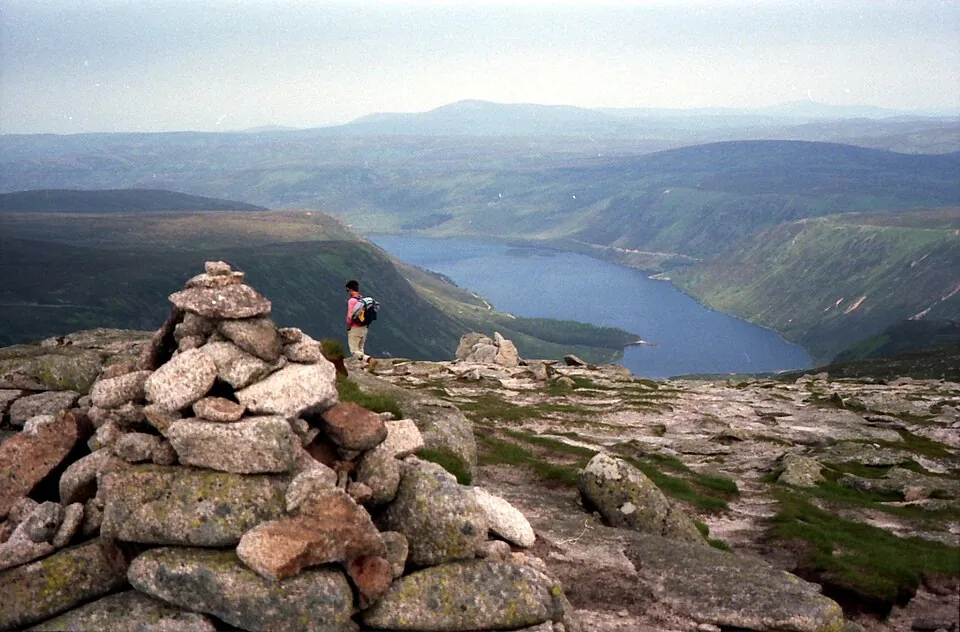
The summit of Driesh presents a rounded, stony dome crowned with a substantial cairn at 947 metres. You'll find yourself on relatively level ground after the sustained climb, with rocks and boulders scattered across the flattened top. The panorama encompasses the rolling Angus Glens to the south and the higher Cairngorm peaks to the north and west, creating an impressive sense of position within the Scottish mountain landscape.
To the west, Mayar stands close by—most walkers combine both peaks in a single outing. Driesh's summit plateau offers some shelter among the rocks if you need to escape the wind, though truly stormy conditions demand full exposure to the elements. The cairn makes an excellent lunch spot on calm days, with views stretching across Strathmore towards the distant sea.
Despite its modest altitude compared to Scotland's highest peaks, Driesh delivers genuine summit satisfaction and a real sense of achievement, particularly for those new to Munro-bagging.
Wildlife on Driesh
The lower slopes of Driesh are carpeted in heather that blooms purple in late summer, creating stunning displays across…
Wildlife on Driesh
The lower slopes of Driesh are carpeted in heather that blooms purple in late summer, creating stunning displays across…
The lower slopes of Driesh are carpeted in heather that blooms purple in late summer, creating stunning displays across the Angus hillsides. As you climb, watch for red grouse bursting from the heather with their distinctive alarm call—the glens are well-known for these gamebirds. Mountain hares may be spotted on higher ground, their coats turning white in winter for camouflage against snow.
Driesh sits at a height where you'll encounter the transition from heather moorland to montane grassland, with mat-grass and bilberry featuring prominently. Red deer are common throughout the area, often seen grazing on the hillsides particularly during early morning. The Angus Glens provide habitat for raptors including buzzards and the occasional golden eagle soaring on thermals. Ravens and hooded crows are frequent companions on the mountain.
While Driesh doesn't reach the altitude where true arctic-alpine species thrive, you'll still find hardy mountain plants adapted to the exposed conditions. The eastern location means slightly drier conditions than western ranges, influencing the vegetation patterns.
Driesh Tips
Despite Driesh being rated as one of the more accessible Munros, proper preparation remains essential for a safe and…
Driesh Tips
Despite Driesh being rated as one of the more accessible Munros, proper preparation remains essential for a safe and…
Despite Driesh being rated as one of the more accessible Munros, proper preparation remains essential for a safe and enjoyable day. Carry standard hillwalking equipment including map and compass, as cloud can descend rapidly and obscure the broad summit area. While the paths are generally good, the upper slopes of Driesh can be confusing in mist, particularly when navigating between the summit and Mayar.
Take adequate food and water for a 5-7 hour day, though the relatively short distance means you won't need the excessive supplies required for longer routes. Mobile phone signal is patchy at best once you leave the glen, so ensure someone knows your intended route and expected return time. Weather at 947 metres can be significantly worse than in the car park, so pack warm and waterproof layers regardless of conditions at the start.
The terrain is generally straightforward, but rocky sections near the summit of Driesh require attention, particularly in wet conditions. Consider extending your day to include Mayar for a classic Angus horseshoe.
Keep bagging
Nearby Munros in Angus Glens
Explore more peaks near Angus Glens.
Frequently Asked Questions
Common questions about climbing Driesh.
How tall is Driesh?
Driesh stands at 947 metres (3,107 feet), making it the 220th tallest of all 282 Munros in Scotland.
What does Driesh mean in Gaelic?
The name Driesh translates from Scottish Gaelic as “Bramble”.
How long does it take to climb Driesh?
Climbing Driesh typically takes between 5.2 and 6.9 hours round trip. This varies with fitness, weather, and the route chosen — there are 2 routes to the summit.
Where do I park for Driesh?
There is dedicated parking at the standard starting point for the main route up Driesh, in the Angus Glens area. The exact car park location, map pin and arrival guidance are in the free Munros app.
How difficult is Driesh to climb?
Driesh is rated Easy (difficulty 1/5). Route difficulty varies across the 2 available routes.
What is the best route up Driesh?
The most popular route up Driesh covers 13.4km, 5.3–6.9 hours round trip. There are 2 routes to the summit in total, ranging from Easy to Easy difficulty.
Is Driesh good for beginners?
Driesh is an excellent choice for beginners in the Angus Glens area. Rated difficulty 1/5 at 947m, it has well-marked paths and straightforward terrain — a great first Munro.
What region is Driesh in?
Driesh is in the Angus Glens region of Scotland. Nearby Munros include Broad Cairn, Mayar, Mount Keen.